
Compressive Crushing Strength Testing Service – Accredited Bulk and Single‑Particle Crush Resistance Evaluation for Global Markets
Our internationally accredited laboratory provides a specialist compressive crushing strength testing service that enables manufacturers of catalysts, adsorbents, proppants, granular chemicals, construction aggregates, pharmaceutical pellets and industrial filter media worldwide to quantify the mechanical resistance of their materials to crushing, fracture and attrition under compressive loads. Every measurement is performed within the rigorous framework of ISO/IEC 17025, and each report bearing the ILAC mark is unconditionally accepted by regulatory authorities, notified bodies and supply‑chain partners in all major economies. The compressive crushing strength test subjects individual pellets, extrudates, spheres, tablets, grains or bulk samples to a precisely controlled, increasing compressive force until failure, recording the maximum force sustained, the deformation behaviour and the fracture mode. By employing calibrated single‑particle crushing testers, bulk‑crush‑cell assemblies, diametral‑compression platens and high‑resolution load cells, we deliver the legally robust, defensible mechanical data that underpin product specification, process control, quality assurance and compliance with the relevant ASTM, ISO, API and customer‑specified standards.
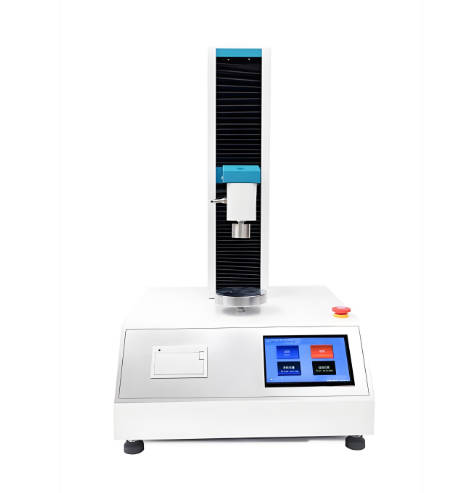
Product Samples We Regularly Subject to Compressive Crushing Strength Tests
Our single‑particle test frames, bulk‑crush vessels and precision force‑transducers accommodate a vast variety of granular, pelletised and agglomerated materials. The following categories represent the items most frequently evaluated through our compressive crushing strength test programme:
- Catalysts and adsorbents – spherical, cylindrical and multi‑lobed catalyst pellets for refining, petrochemical and emission‑control applications; activated‑carbon granules, molecular‑sieve beads and zeolite extrudates
- Proppants and ceramic beads – sintered bauxite, sand and resin‑coated proppants for hydraulic fracturing; grinding‑media beads and ceramic‑ball supports
- Pharmaceutical tablets and nutraceutical pellets – compressed tablets, multi‑particulate pellets, herbal‑extract granules and controlled‑release spheres where the crushing strength governs the disintegration and the dissolution behaviour
- Granular fertilisers and agrochemical prills – urea, ammonium‑nitrate and compound‑fertiliser granules; pesticide prills and seed‑coating spheres where the crush resistance determines the spreading uniformity and the storage stability
- Construction aggregates and lightweight fillers – crushed stone, gravel, expanded‑clay aggregates, perlite and vermiculite evaluated for the bulk‑crushing resistance under the confined compressive load
- Industrial minerals and filter media – silica‑sand filter granules, anthracite filter media, ion‑exchange resin beads and diatomaceous‑earth aggregates
- Food and confectionery products – extruded cereal pellets, confectionery‑centre spheres, pet‑food kibbles and textured‑vegetable‑protein pieces where the crush strength influences the mouthfeel and the packaging durability
Compressive Crushing Strength of Granular Materials, Catalyst Supports and Adsorbents – ASTM D4179, ASTM D7084 and ISO 13583
- Determination of the single‑pellet crushing strength of formed catalyst and adsorbent particles according to ASTM D4179 (Standard Test Method for Single Pellet Crush Strength of Formed Catalyst and Catalyst Carriers) and ASTM D7084 (Standard Test Method for Determination of Bulk Crush Strength of Catalysts and Catalyst Carriers): a single pellet is placed between two parallel, hardened‑steel platens, and a compressive load is applied at a constant displacement rate until the pellet fractures. The maximum force sustained, expressed in newtons or pounds, and the deformation at fracture are recorded. A minimum of 20 to 50 individual pellets are tested, and the mean crush strength, the standard deviation and the Weibull characteristic strength are reported. This compressive crushing strength test is the primary quality‑control parameter for the catalyst‑pellet manufacturers and the refinery operators, and it is directly referenced in the purchase specifications for the hydro‑treating, the reforming and the fluid‑catalytic‑cracking catalysts.
- Bulk crush strength of a bed of catalyst or adsorbent particles according to ASTM D7084 and the internal protocols of the petrochemical industry: a known volume or mass of the particulate material is placed in a cylindrical crush cell with a close‑fitting piston, and the compressive load is applied to the top of the bed at a controlled rate. The pressure required to produce a specified fraction of the fines – typically 0.5 % or 1 % by weight of the particles that are crushed to below a defined size – is reported in megapascals or pounds per square inch. The test simulates the load that the catalyst bed experiences in a down‑flow reactor and provides the data that the reactor designer uses to specify the maximum‑permissible bed depth and the catalyst‑support strength.
- Diametral and axial crushing strength of cylindrical and hollow‑cylindrical extrudates: the pellet is tested in the radial direction (diametral compression) or in the axial direction, and the crush strength and the fracture pattern are reported. The test identifies the anisotropic mechanical behaviour of the extruded catalyst and guides the optimisation of the extrusion‑die design and the drying‑and‑calcination process.
- Influence of the moisture, the thermal ageing and the chemical exposure on the crushing strength of the catalyst and the adsorbent: the pellets are conditioned in a humid atmosphere, aged at the reactor‑operating temperature or exposed to the process‑gas or the liquid environment, and the residual crush strength is measured and compared with the fresh‑pellet value. The experiment predicts the mechanical degradation of the catalyst during the start‑up, the operation and the regeneration cycles.
- Crushing‑strength distribution and the statistical process‑control reporting for the pelletised products: the single‑pellet data are plotted as a histogram, and the mean, the coefficient of variation and the Weibull modulus are trended on a control chart. The compressive crushing strength test service alerts the manufacturer to any shift in the pellet‑forming or the calcination conditions that could affect the reactor‑pressure‑drop and the campaign length.
Compressive Crushing Strength of Proppants, Ceramic Beads and Filter Media – ISO 13503‑2 and API RP 19C
- Determination of the crush resistance of hydraulic‑fracturing proppants according to ISO 13503‑2 (Petroleum and natural gas industries – Completion fluids and materials – Part 2: Measurement of properties of proppants used in hydraulic fracturing and gravel‑packing operations) and API RP 19C: a specified mass of the proppant sample is placed in a crush cell of a defined diameter and compressed at a controlled rate to a specified stress – typically 15 000 psi or 20 000 psi – and held for two minutes. The mass of the fines generated, expressed as a percentage of the original sample mass, is reported. The maximum‑allowed fines content is specified by the API and the ISO standards for each proppant grade, and the test certifies the proppant for the use in the hydraulic‑fracturing treatment of the oil‑and‑gas wells.
- Single‑bead crushing strength of ceramic grinding‑media and catalyst‑support balls: individual spherical beads are crushed, and the Weibull characteristic strength and the minimum‑guaranteed strength are reported. The data are used to predict the bead‑breakage rate in the stirred‑media mills, the ball‑mills and the catalytic‑reactor beds.
- Bulk crush resistance of the ion‑exchange resin beads and the water‑filtration media: the resin or the filter‑sand sample is subjected to the confined compressive load, and the percentage of the fractured or the attrited particles is determined. The test verifies that the media will withstand the back‑wash and the service‑pressure cycles in the water‑treatment plant.
- Crushing strength of the lightweight aggregate and the thermal‑insulation granules: the bulk‑crushing resistance of the expanded‑clay, the perlite and the vermiculite is measured according to the relevant EN and ASTM standards, and the data support the specification of the aggregate for the lightweight concrete, the horticultural substrate and the cryogenic insulation.
Compressive Crushing Strength of Constructed Materials – Concrete, Aggregate and Rock – ASTM C39, ASTM C133 and EN 196‑1
- Determination of the compressive strength of concrete cubes and cylinders according to ASTM C39/C39M (Standard Test Method for Compressive Strength of Cylindrical Concrete Specimens) and EN 12390‑3: the specimen is loaded to failure between two rigid platens, and the maximum compressive stress in megapascals is reported. This compressive crushing strength test is the fundamental acceptance criterion for the structural concrete in the building and the civil‑engineering projects, and the data are used to verify the conformity with the design‑strength class and the construction specification.
- Point‑load and uniaxial compressive strength of rock, stone and aggregate according to ASTM D5731 and the ISRM suggested methods: irregular lump specimens or drilled cores are compressed between the conical platens or the parallel‑flat platens, and the point‑load index and the unconfined compressive strength are reported, providing the geotechnical design parameters for the foundations, the tunnels and the rock‑mechanics analyses.
- Crushing resistance of the pharmaceutical tablets and the compacted pellets according to the European Pharmacopoeia (Ph. Eur. 2.9.8) and the USP ⟨1217⟩: the tablet is diametrally compressed, and the crushing strength in newtons or kiloponds is measured. The test is used for the routine quality control of the tablet hardness, which directly affects the disintegration, the dissolution and the film‑coating integrity.
- Compression‑crushing test of the ash, the slag and the waste‑derived aggregates for the road‑building and the landfill construction: the bulk‑crushing resistance is measured, and the data are compared with the acceptance criteria of the local transportation or the environmental authority, providing the evidence that the recycled material is suitable for the intended engineering application.
Report Acceptance and Global Regulatory Compliance
All measurements performed within our compressive crushing strength testing service are executed under the fully accredited scope of our ISO/IEC 17025 quality management system. Each test report that carries the ILAC mark is therefore automatically recognised by regulatory authorities, notified bodies, customs offices and supply‑chain partners in all major economies. For catalyst and adsorbent manufacturers, proppant and ceramic‑bead suppliers, pharmaceutical and nutraceutical producers, construction‑material testers and industrial‑mineral processors anywhere in the world, the report constitutes legally robust, internationally accepted evidence that the single‑particle and the bulk‑crushing resistance, the fracture strength and the mechanical durability of the granular or the agglomerated material have been determined in accordance with the applicable ASTM, ISO, API, Ph. Eur. and customer‑specified methods. The documentation can be directly used to support CE marking, the issue of inspection certificates according to EN 10204 or equivalent national standards, the compilation of technical files for type‑examination, and the resolution of commercial and technical disputes concerning the compressive mechanical performance of any pelletised, granular or agglomerated product.




