Composite Material Tensile Testing Service – Accredited Mechanical Characterization of Composite Laminates for Global Markets
Our internationally accredited laboratory delivers a comprehensive composite material tensile test service that provides aerospace manufacturers, automotive lightweighting teams, wind‑energy blade producers, sporting‑goods engineers and composite material developers worldwide with the independent, traceable data they need to verify the strength, stiffness and failure behaviour of their fibre‑reinforced polymer laminates. Every test is performed within the rigorous framework of ISO/IEC 17025, and each report bearing the ILAC mark is unconditionally accepted by regulatory authorities, notified bodies and supply‑chain partners in all major economies. The composite material tensile test determines the tensile modulus, ultimate tensile strength, failure strain, Poisson's ratio and the complete stress‑strain curve of the composite in the fibre direction, the transverse direction and, where required, in off‑axis or multi‑axial loading configurations. For a carbon‑fibre‑reinforced polymer prepreg supplier qualifying a new material for a wing‑skin application, a glass‑fibre epoxy laminate producer certifying a structural part for a bridge deck, or a natural‑fibre composite developer validating a prototype, this service provides the legally robust, defensible data that underpin design‑allowable generation, finite‑element model validation and compliance with the relevant ISO, ASTM, EN and customer‑specified standards.
Product Samples We Regularly Subject to Composite Material Tensile Tests
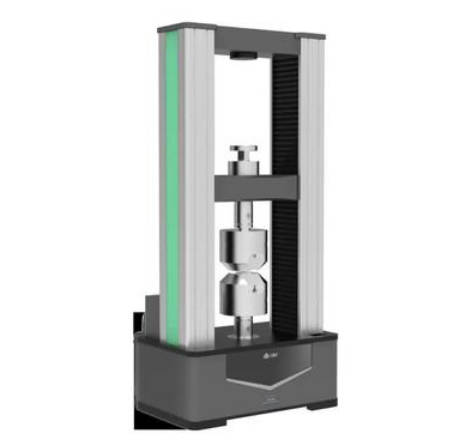
Our servo‑hydraulic and electromechanical test frames, precision extensometers, non‑contact video‑extensometry systems and environmental chambers accommodate specimens from a single lamina to thick multi‑directional laminates. The following categories represent the materials most frequently evaluated through our composite material tensile test programme:
- Carbon‑fibre‑reinforced polymer (CFRP) laminates – unidirectional, cross‑ply and quasi‑isotropic lay‑ups in epoxy, bismaleimide, polyetheretherketone and cyanate‑ester matrices for primary aerospace structures, Formula 1 components and high‑performance sporting goods
- Glass‑fibre‑reinforced polymer (GFRP) composites – E‑glass and S‑glass fabrics and rovings in polyester, vinyl‑ester and epoxy resins for wind‑turbine blades, boat hulls, chemical tanks and building‑reinforcement applications
- Aramid‑fibre and hybrid composites – Kevlar, Twaron and UHMWPE‑fibre laminates for ballistic protection, marine impact‑resistant structures and lightweight tension members
- Thermoplastic composites – continuous‑fibre‑reinforced polyamide, polypropylene and polyetherimide for high‑volume automotive press‑forming, injection‑overmoulding and recyclable structural parts
- Sandwich core materials and face‑sheets – the tensile properties of the carbon‑fibre or glass‑fibre face‑sheets that are bonded to aluminium honeycomb, Nomex honeycomb or polymer foam cores for aircraft floors, train‑carriage walls and refrigerated‑vehicle bodies
- Natural‑fibre and bio‑based composites – flax, hemp and jute fibre‑reinforced biopolymers for interior automotive trim, furniture and consumer‑electronics casings
- Additively manufactured composites – continuous‑fibre‑reinforced 3D‑printed parts where the tensile properties are sensitive to the print direction, the fibre‑volume fraction and the void content
Polymer‑Matrix Composite Laminates – Tensile Testing According to ISO 527‑4 and ASTM D3039
- Determination of the tensile modulus, the ultimate tensile strength and the failure strain of multi‑directional laminates according to ISO 527‑4 (Plastics – Determination of tensile properties – Part 4: Test conditions for isotropic and orthotropic fibre‑reinforced plastic composites) and ASTM D3039 (Standard Test Method for Tensile Properties of Polymer Matrix Composite Materials): a rectangular specimen with bonded end‑tabs is gripped in a calibrated testing machine and loaded at a constant crosshead speed. The longitudinal strain is measured by a clip‑on extensometer or a non‑contact video extensometer, and the transverse strain may be recorded simultaneously to determine the Poisson's ratio. The tensile modulus, the ultimate tensile strength and the failure strain are reported, together with the complete stress‑strain curve and the failure mode description. This composite material tensile test is the fundamental material‑characterisation procedure for every fibre‑reinforced laminate, and it is directly referenced in the qualification and the batch‑release specifications of the aerospace and the automotive industries.
- In‑plane shear and off‑axis tensile testing for the determination of the lamina shear modulus and the interaction failure envelope: specimens with the fibres oriented at 45° or 90° to the loading direction are tested, and the tensile modulus and the strength in the transverse direction and the in‑plane shear modulus G₁₂ are calculated from the measured strains. The data are used to populate the lamina‑level properties in the classical‑laminate‑theory analyses and the finite‑element simulations of the composite structure.
- Notched‑specimen and open‑hole tensile testing according to ASTM D5766 (Standard Test Method for Open‑Hole Tensile Strength of Polymer Matrix Composite Laminates): a specimen with a centrally drilled hole is tested in tension, and the residual tensile strength and the damage‑zone development are evaluated. The test quantifies the notch sensitivity of the laminate and supports the design of bolted and riveted joints in the composite airframe.
- Filled‑hole and bearing‑strength tensile tests according to ASTM D5961 (Standard Test Method for Bearing Response of Polymer Matrix Composite Laminates): a close‑fitting pin is inserted into the hole, and the specimen is loaded in tension to determine the bearing strength and the bearing stiffness of the laminate, providing the data that the joint‑designer uses to select the correct edge‑distance and the washer geometry.
- Influence of the environment on the tensile properties – hot‑wet, cold‑dry and moisture‑conditioned testing: the laminate is conditioned in a humid atmosphere or immersed in a fluid at an elevated temperature until equilibrium, and the composite material tensile test is performed at the service‑temperature extreme. The retention of the tensile strength and the modulus, and any change in the failure mode, are reported, providing the design‑allowable data for the aircraft‑interior, the marine and the cryogenic applications.
Unidirectional and Fabric‑Reinforced Composites – Tensile Testing According to ISO 527‑5 and ASTM D3039 with Specialised Strain Measurement
- Determination of the tensile properties of unidirectional fibre‑reinforced composites according to ISO 527‑5 (Plastics – Determination of tensile properties – Part 5: Test conditions for unidirectional fibre‑reinforced plastic composites) and ASTM D3039: specimens are cut from a unidirectional laminate with the fibres aligned at 0° (longitudinal) and 90° (transverse). The longitudinal tensile strength and the modulus are dominated by the fibre properties, while the transverse tensile strength and the modulus are governed by the matrix and the fibre–matrix interface. The composite material tensile test quantifies both the fibre‑dominated and the matrix‑dominated responses, and it identifies the weakest‑link failure mechanism – the fibre fracture, the matrix cracking or the interfacial debonding – that will initiate the laminate failure under a multi‑axial load.
- Woven‑fabric and braided‑composite tensile testing: specimens with a plain‑weave, a twill‑weave or a braided‑fibre architecture are tested, and the effect of the fabric crimp, the tow‑waviness and the nesting on the tensile modulus and the strength is characterised. The data are used to calibrate the multi‑scale models that predict the performance of the fabric‑reinforced laminates in the automotive crash‑structures and the pressure‑vessel applications.
- Balanced and unbalanced symmetric‑laminate tensile testing for the determination of the laminate‑level engineering constants: the tensile modulus, the major and the minor Poisson's ratios and the shear‑coupling coefficients are measured on a laminate that contains several differently oriented plies, providing the validation data for the classical‑laminate‑theory predictions that the stress‑analysis engineer relies upon to design the multi‑directional shell structures.
- Thin‑ply and spread‑tow composite tensile testing: for the laminates manufactured from the ultra‑thin plies or the spread‑tow fabrics, the specimen geometry is scaled to prevent the gripping‑induced damage, and the in‑situ strength and the size‑effect on the tensile failure are evaluated, supporting the development of the next‑generation, high‑performance composite structures.
Elevated‑Temperature, Cryogenic and Environmental Composite Material Tensile Tests – Service‑Condition Simulation
- High‑temperature tensile testing of CFRP and ceramic‑matrix composites up to 600 °C according to the principles of ASTM D3039 and the internal protocols: the specimen is heated in a furnace or by an induction‑coil system, and the tensile test is performed in air, argon or vacuum. The temperature‑dependent reduction in the tensile strength and the modulus, and the onset of the thermal‑oxidative degradation, are reported, providing the data that the aero‑engine and the hypersonic‑vehicle designers use to select the correct composite material for the hot‑section components.
- Cryogenic tensile testing of composite laminates at the liquid‑nitrogen (-196 °C) and the liquid‑helium (-269 °C) temperatures for the space‑cryogenic‑tank and the superconducting‑magnet applications: the specimen is immersed in the cryogenic fluid, and the tensile strength, the modulus and the strain‑to‑failure are measured. The test reveals the embrittlement or the micro‑cracking that can occur in the polymer matrix at the extremely low temperatures and supports the design of the composite propellant tanks and the cryogenic insulation systems.
- Combined hygrothermal ageing and tensile testing: the laminate is exposed to a sequence of high‑humidity, elevated‑temperature cycles that simulate the ground‑air‑ground cycle of a supersonic aircraft or the tropical‑marine service of a composite ship hull, and the residual tensile properties are measured. The composite material tensile test after the ageing provides the data that the durability‑and‑damage‑tolerance engineer uses to set the inspection intervals and to calculate the safe‑life of the structure.
- Effect of the radiation, the vacuum and the atomic‑oxygen exposure on the tensile properties of the space‑qualified composites: the laminate is exposed to a simulated low‑Earth‑orbit environment in a ground‑based facility, and the tensile properties are compared with the un‑exposed control, supporting the material selection for the satellite structures and the solar‑array substrates.
Report Acceptance and Global Regulatory Compliance
All measurements performed within our composite material tensile testing service are executed under the fully accredited scope of our ISO/IEC 17025 quality management system. Each test report that carries the ILAC mark is therefore automatically recognised by regulatory authorities, notified bodies, customs offices and supply‑chain partners in all major economies. For composite prepreg manufacturers, laminate fabricators, structural‑design engineers and original‑equipment‑manufacturer airframe and automotive‑composite programmes anywhere in the world, the report constitutes legally robust, internationally accepted evidence that the tensile modulus, the ultimate tensile strength, the failure strain and the related mechanical properties of the composite material have been determined in accordance with the applicable ISO, ASTM, EN and customer‑specified methods. The documentation can be directly used to support the material‑allowable generation, the CE marking, the issue of inspection certificates according to EN 10204 or equivalent national standards, the compilation of the technical file for the type‑certification, and the resolution of commercial and technical disputes concerning the tensile performance and the quality of any fibre‑reinforced composite product.