Composite Material Pipe Testing Service – Accredited Mechanical, Chemical and Durability Evaluation for Global Markets
Our internationally accredited laboratory delivers a specialist composite material pipe testing service that provides manufacturers of glass‑fibre‑reinforced polymer (GRP) pipes, carbon‑fibre‑reinforced pipes, aramid‑fibre‑reinforced thermoset pipes and thermoplastic composite pipelines worldwide with the independent, traceable data they need to verify the structural integrity, pressure‑bearing capacity, chemical resistance and long‑term durability of their products. Every test is conducted under the rigorous framework of ISO/IEC 17025, and each report bearing the ILAC mark is unconditionally accepted by regulatory authorities, notified bodies and supply‑chain partners in all major economies. The composite material pipe testing programme subjects the pipe and its joints to a complete suite of mechanical, physical, chemical, thermal and environmental evaluations, quantifying the short‑term and the long‑term ring stiffness, the hoop tensile strength, the axial tensile and the flexural properties, the hydrostatic burst and the cyclic‑pressure fatigue resistance, the glass‑transition temperature and the resin‑cure state, and the resistance to the aggressive chemicals, the ultraviolet radiation and the elevated‑temperature ageing. For an exporter supplying GRP pipes for a desalination plant in the Middle East, a manufacturer certifying composite line pipe to the API 15HR or the API 15S specification, or an engineer qualifying a trenchless‑rehabilitation liner for a municipal sewer, this service delivers the legally robust, defensible data that underpin product certification, design validation and compliance with the relevant ASTM, ISO, EN, API and customer‑specified standards.
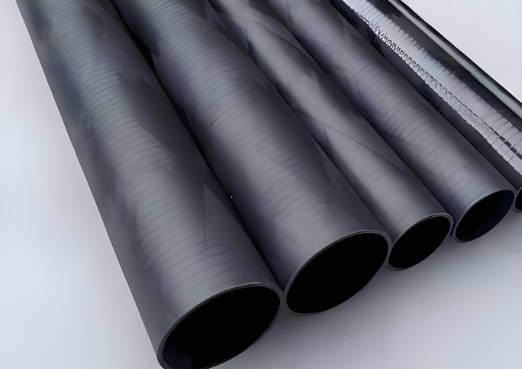
Product Samples We Regularly Subject to Composite Material Pipe Testing
Our universal testing machines, hydrostatic burst rigs, creep‑rupture stands, differential scanning calorimeters, dynamic‑mechanical analysers, chemical‑immersion tanks and UV‑weatherometers accommodate a broad variety of composite pipe constructions and joint types. The following categories represent the most frequently tested items:
- Glass‑fibre‑reinforced polyester and vinyl‑ester pipes – centrifugally cast, filament‑wound and hand‑laid GRP pipes for the water transmission, the sewerage, the industrial effluents, the seawater cooling and the fire‑water systems
- Glass‑fibre‑reinforced epoxy pipes and tubes – high‑performance, high‑temperature filament‑wound or pull‑truded epoxy pipes for the oil‑country tubular goods, the down‑hole injection strings and the chemical‑process lines
- Carbon‑fibre‑reinforced polymer pipes – lightweight, ultra‑high‑strength pipes for the aerospace fuel‑lines, the deep‑sea risers and the high‑pressure hydrogen‑transport applications
- Aramid‑fibre and hybrid‑reinforced composite pipes – pipes that combine the glass‑fibre, the carbon‑fibre and the aramid‑fibre layers to optimise the burst strength, the impact resistance and the fatigue life
- Thermoplastic composite pipes and reinforced thermoplastic pipes – pipes with a thermoplastic liner and a continuous‑fibre‑reinforced thermoplastic matrix, used in the oil‑and‑gas gathering, the mining‑slurry and the high‑pressure hydraulic applications
- Multi‑layer and multi‑material composite pipes – the pipes that incorporate an internal liner, a structural composite core and an external protective layer, including the bonded and the unbonded constructions
- Composite pipe joints, flanges and fittings – the adhesively bonded, the laminated‑overwrapped and the mechanical‑coupling joints that are an integral part of the pipeline system, tested for the short‑term and the long‑term integrity under the pressure and the bending loads
Mechanical and Physical Properties – Composite Material Pipe Testing According to ASTM D2290, ISO 8521 and ASTM D2412
- Determination of the apparent hoop tensile strength by the split‑disk and the ring‑tensile methods according to ASTM D2290 (Standard Test Method for Apparent Hoop Tensile Strength of Plastic or Reinforced Plastic Pipe) and ISO 8521 (Plastics piping systems – Glass‑reinforced thermosetting plastics pipes – Determination of the apparent initial circumferential tensile strength): a short ring of the pipe is mounted between two split‑disk fixtures or is stressed by an internal hydraulic expansion, and the maximum hoop stress at the failure is reported. This composite material pipe testing provides the fundamental short‑term burst‑strength parameter that is used to calculate the pressure rating and the safety factor of the pipeline.
- Ring stiffness and the resistance to the external pressure according to ASTM D2412 (Standard Test Method for Determination of External Loading Characteristics of Plastic Pipe by Parallel‑Plate Loading) and ISO 9969 (Thermoplastics pipes – Determination of ring stiffness): a length of the pipe is compressed between two parallel platens, and the force required to produce a 3 % or a 5 % diametric deflection is measured. The ring stiffness in newtons per square metre or in pascals is reported, providing the data that the pipeline‑designer uses to specify the correct pipe class for the buried or the vacuum‑service applications.
- Axial tensile and the flexural properties of the composite pipe wall according to ASTM D638 (Standard Test Method for Tensile Properties of Plastics) and ASTM D790 (Standard Test Methods for Flexural Properties of Unreinforced and Reinforced Plastics), adapted for the curved‑wall specimens: the longitudinal tensile strength, the axial modulus and the Poisson's ratio, as well as the flexural strength and the flexural modulus, are measured, providing the complete set of the orthotropic elastic constants that the finite‑element analyst needs to model the pipeline under the combined pressure, the thermal and the ground‑movement loads.
- Hydrostatic burst and the short‑term failure pressure according to ASTM D1599 (Standard Test Method for Resistance to Short‑Time Hydraulic Pressure of Plastic Pipe, Tubing, and Fittings) and ISO 1167 (Thermoplastics pipes, fittings and assemblies for the conveyance of fluids – Determination of the resistance to internal pressure): the pipe is sealed and filled with water, and the pressure is increased at a controlled rate until the failure. The burst pressure and the failure mode – the hoop‑fracture, the axial‑splitting or the fitting‑blow‑off – are recorded, and the data are compared with the minimum‑required values of the product standard.
- Impact resistance and the low‑temperature toughness according to ASTM D2444 (Standard Test Method for Determination of the Impact Resistance of Thermoplastic Pipe and Fittings by Means of a Tup – Falling Weight) and the internal procedures: a weighted tup is dropped onto the pipe specimen that has been conditioned at -20 °C or -30 °C, and the energy that causes the first visible damage or the fracture is reported, verifying the pipe's ability to withstand the handling, the transport and the installation in the cold‑weather conditions.
Long‑Term Hydrostatic Strength, Creep and Fatigue – Composite Material Pipe Testing According to ASTM D2992, ISO 10928 and ASTM D2143
- Determination of the long‑term hydrostatic strength and the design basis by the procedure of ASTM D2992 (Standard Practice for Obtaining Hydrostatic or Pressure Design Basis for “Fiberglass” – Glass‑Fiber‑Reinforced Thermosetting‑Resin Pipe and Fittings) and ISO 10928 (Plastics piping systems – Glass‑reinforced thermosetting plastics pipes and fittings – Methods for regression analysis and their use): sets of pipe specimens are pressurised with water at several constant internal‑pressure levels, and the time to the failure is recorded. The stress‑rupture data are analysed by the least‑squares regression, and the long‑term hydrostatic strength at the 50‑year or the 100 000‑hour design life is extrapolated and reported, together with the lower‑confidence‑limit value that is used to calculate the pressure rating of the pipe. This composite material pipe testing is the mandatory qualification procedure for every GRP pipe product that is placed on the market, and it directly supports the issuance of the ASTM or the ISO product certification.
- Cyclic‑pressure fatigue and the pulsating‑pressure endurance according to the principles of ASTM D2143 (Standard Test Method for Cyclic Pressure Strength of Reinforced, Thermosetting Plastic Pipe) and the internal protocols: the pipe is subjected to a sinusoidal or a square‑wave pressure cycle that simulates the pump‑start‑up and the shut‑down transients, and the number of the cycles to the weepage or the structural failure is reported, providing the fatigue‑life data for the critical pumping‑station and the mining‑slurry applications.
- Creep‑rupture and the stress‑relaxation of the composite pipe under the sustained axial or the bending load: a constant load is applied to the pipe or the joint for an extended period, and the time‑dependent deformation and the time to the rupture are recorded, supporting the design of the above‑ground and the bridge‑attached pipelines that are subjected to the continuous gravitational and the thermal‑expansion stresses.
Chemical Resistance and Environmental Durability – Composite Material Pipe Testing According to ASTM D3681, ISO 10952 and ASTM G154
- Evaluation of the resistance to the chemical reagents and the strain‑corrosion behaviour according to ASTM D3681 (Standard Test Method for Chemical Resistance of “Fiberglass” – Glass‑Fiber‑Reinforced Thermosetting‑Resin Pipe in a Deflected Condition) and ISO 10952 (Plastics piping systems – Glass‑reinforced thermosetting plastics pipes and fittings – Determination of the resistance to chemical attack from the inside of a section of pipe in a deflected condition): the pipe specimen is deflected to a specified strain and is exposed to the aggressive chemical medium – such as the sulfuric acid, the sodium hydroxide, the chlorinated water or the crude‑oil–brine mixture – at the elevated temperature for a defined period. The time to the first visible crack, the loss of the stiffness and the change in the appearance are reported, certifying the suitability of the composite pipe for the chemical‑plant and the oil‑field environments.
- Immersion testing and the accelerated chemical ageing according to ISO 175 (Plastics – Methods of test for the determination of the effects of immersion in liquid chemicals) and the internal procedures: coupons cut from the pipe wall are immersed in the test liquid at the maximum rated service temperature for up to 1 000 hours, and the change in the mass, the dimensions, the tensile strength and the glass‑transition temperature is measured, providing the quantitative data for the chemical‑compatibility tables that the engineer uses to select the correct resin system for the conveyed fluid.
- Resistance to the ultraviolet radiation and the accelerated weathering according to ASTM G154 (Standard Practice for Operating Fluorescent Ultraviolet Lamp Apparatus for Exposure of Non‑Metallic Materials) and ISO 4892‑2: the pipe surface is exposed to a cycle of the UV‑A or the UV‑B radiation, the heat and the condensation, and the retention of the flexural strength, the colour change and the surface‑fibre‑blooming are evaluated, predicting the outdoor‑storage and the above‑ground‑service life of the unprotected composite pipe.
- Resistance to the internal and the external corrosion by the salt‑spray and the condensing‑humidity exposure: the pipe and the joint are subjected to the neutral salt fog according to ISO 9227 and to the damp‑heat atmosphere according to IEC 60068‑2‑78, and the post‑exposure burst strength and the visual degradation are assessed, ensuring the long‑term reliability of the composite pipeline in the coastal, the offshore and the tropical‑climate installations.
Thermal Performance, Fire Resistance and Electrical Properties – Composite Material Pipe Testing According to ASTM D2992, ISO 11357 and ASTM E84
- Determination of the glass‑transition temperature and the degree of the cure by the differential scanning calorimetry according to ISO 11357‑2 (Plastics – Differential scanning calorimetry – Part 2: Determination of glass transition temperature and step height) and ASTM D3418: a small sample of the composite pipe wall is heated at a controlled rate, and the Tg and the residual exothermic‑heat‑of‑reaction are reported, verifying that the pipe has been correctly post‑cured and that it will maintain its mechanical properties up to the declared maximum service temperature. This composite material pipe testing is a routine quality‑control check for every production batch of the thermoset composite pipe.
- Heat‑deflection temperature and the Vicat softening point according to ISO 75‑2 (Plastics – Determination of temperature of deflection under load – Part 2: Plastics and ebonite) and ISO 306: the temperature at which the composite pipe material softens under the load is measured, defining the upper‑temperature limit for the pressure‑containing and the structural applications.
- Surface‑burning characteristics – the flame‑spread index and the smoke‑developed index according to ASTM E84 (Standard Test Method for Surface Burning Characteristics of Building Materials) and the equivalent ISO 9705: the composite pipe is mounted in the Steiner‑tunnel apparatus, and the flame‑spread and the smoke‑production are measured, providing the classification data that are mandatory for the acceptance of the composite piping in the building‑services and the underground‑mining installations.
- Electrical insulation resistance and the dielectric strength according to ASTM D257 (Standard Test Methods for DC Resistance or Conductance of Insulating Materials) and IEC 60243‑1: the volume and the surface resistivity, and the dielectric breakdown voltage of the composite pipe wall are measured, certifying the pipe for the use in the electrical‑conduit, the cathodic‑protection‑isolating and the high‑voltage‑insulating applications.
Non‑Destructive Examination, Joint Integrity and Dimensional Conformance – Composite Material Pipe Testing According to ISO 17456, EN 13100 and ASTM D2563
- Ultrasonic, radiographic and the visual inspection of the pipe wall and the joints for the defects according to ISO 17456 (Plastics piping systems – Multilayer pipes – Determination of the dimensions and the bond strength of the layers) and the internal procedures based on ASTM D2563 (Standard Test Method for Classifying Visual Defects in Glass‑Reinforced Plastic Laminate Parts): the pipe is scanned by the ultrasonic C‑scan or the digital radiography, and any delaminations, the voids, the inclusions and the dry‑fibre areas are detected and sized, providing the non‑destructive quality‑assurance data for the critical‑service pipes and the repaired sections.
- Shear‑bond and the peel‑adhesion testing of the bonded and the laminated joints according to ISO 4587 (Adhesives – Determination of tensile lap‑shear strength of rigid‑to‑rigid bonded assemblies) and ASTM D5868 (Standard Test Method for Lap Shear Adhesion for Fiber Reinforced Plastic Bonding): the lap‑shear specimen is cut from the bonded or the overwrapped joint and loaded to the failure, and the shear strength and the failure mode – the cohesive, the adhesive or the substrate‑failure – are reported, certifying the joint‑fabrication procedure for the field‑installation and the factory‑assembly.
- Dimensional inspection – the diameter, the wall thickness, the ovality and the length according to ISO 3126 (Plastics piping systems – Plastics components – Determination of dimensions) and the internal procedures: the pipe is measured at the multiple circumferential and the axial positions, and the conformance to the declared nominal size and the tolerance class is verified, ensuring the compatibility with the standard fittings and the gaskets.
- Gasket‑seal and the joint‑tightness testing under the hydrostatic pressure and the vacuum according to EN 13100‑1 (Non‑destructive testing of welded joints of thermoplastics semi‑finished products – Part 1: Visual examination, adapted for the composite joints) and the internal procedures: the assembled joint is pressurised with water or evacuated, and any leakage or the pressure‑decay is measured, providing the acceptance test for the installed pipeline and the repair‑patch.
Report Acceptance and Global Regulatory Compliance
All measurements performed within our composite material pipe testing programme are executed under the fully accredited scope of our ISO/IEC 17025 quality management system. Each test report that carries the ILAC mark is therefore automatically recognised by regulatory authorities, notified bodies, customs offices and supply‑chain partners in all major economies. For GRP‑pipe manufacturers, oil‑and‑gas pipeline operators, water‑utility engineers and composite‑pipe installers anywhere in the world, the report constitutes legally robust, internationally accepted evidence that the hoop tensile strength, the ring stiffness, the long‑term hydrostatic strength, the chemical resistance, the thermal properties and the joint integrity of the composite pipe have been determined in accordance with the applicable ASTM, ISO, EN, API and customer‑specified methods. The documentation can be directly used to support CE marking under the Construction Products Regulation, the issue of inspection certificates according to EN 10204 or equivalent national standards, the compilation of the technical file for the type‑examination, and the resolution of commercial and technical disputes concerning the performance and the long‑term service life of any composite pipeline system.