Composite Frame Vibration Screen Testing Service – Accredited Structural, Dynamic and Wear Evaluation for Global Markets
Our internationally accredited laboratory provides a dedicated composite frame vibration screen testing service that supplies manufacturers of mining screens, aggregate classifiers, dewatering equipment, food‑processing sieves and recycling‑plant separators worldwide with the independent, traceable data they need to verify the structural integrity, dynamic performance, wear resistance and long‑term reliability of their composite‑framed screening machines. Every test is conducted within the rigorous framework of ISO/IEC 17025, and each report bearing the ILAC mark is unconditionally accepted by regulatory authorities, notified bodies and supply‑chain partners in all major economies. The composite frame vibration screen detection programme combines static load‑capacity measurements, operational modal analysis, fatigue‑life cycling, screen‑panel tension mapping and environmental‑durability exposures, providing the complete, legally robust evidence that a screen frame will maintain its dimensional stability, its bolted‑joint integrity and its sieving accuracy under the punishing vibratory loads and abrasive conditions encountered in the quarry, the mine and the process plant.
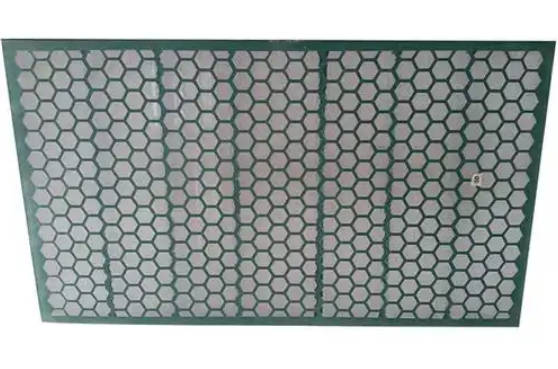
Product Samples We Regularly Subject to Composite Frame Vibration Screen Testing
Our servo‑hydraulic actuators, electrodynamic shakers, high‑speed digital‑image‑correlation systems and environmental‑test chambers accommodate complete screen panels, sub‑frames and material coupons. The following categories represent the most frequently tested items:
- Composite screen frames and side‑plates – glass‑fibre‑reinforced polymer, carbon‑fibre‑reinforced polymer, polyurethane‑reinforced and epoxy‑concrete composite frames for linear‑motion, circular‑throw and elliptical‑throw vibrating screens
- Screen panels and modular screen decks – woven‑wire, polyurethane, rubber and wedge‑wire panels that are tensioned or bolted onto the composite frame, together with the clamping‑rail and the grommet‑seal assemblies
- Vibration‑isolation springs and dampers – coil‑steel, rubber‑elastomer and composite‑leaf‑spring isolators that support the screen body and influence the transmissibility and the resonance behaviour
- Bolt, rivet and adhesive‑bonded joints – the critical connections between the composite frame members, the cross‑beams and the screen‑panel supports, evaluated for their shear and pull‑out strength before and after the fatigue cycling
- Complete vibrating‑screen assemblies – full‑scale prototype screens and production units instrumented with accelerometers and strain gauges for the in‑situ dynamic characterisation
- Wear‑protection liners and impact‑resistant coatings – polyurethane, rubber and ceramic‑epoxy liners applied to the feed‑box and the discharge lip of the composite frame
Structural Integrity and Static Load Capacity – Composite Frame Vibration Screen Testing According to ASTM D1621, ISO 604 and EN 13501
- Determination of the compressive strength and the modulus of elasticity of the composite frame material according to ASTM D1621 (Standard Test Method for Compressive Properties of Rigid Cellular Plastics, adapted for the composite structural foams) and ISO 604 (Plastics – Determination of compressive properties): specimens machined from the frame laminate or the polymer‑concrete core are compressed between two rigid platens, and the compressive yield stress, the ultimate compressive strength and the compressive modulus are reported, providing the design data for the static and the dynamic load‑bearing capacity of the screen body.
- Flexural strength and the interlaminar shear strength of the glass‑fibre‑ or carbon‑fibre‑reinforced frame members according to ASTM D790 (Standard Test Methods for Flexural Properties of Unreinforced and Reinforced Plastics) and ASTM D2344 (Standard Test Method for Short‑Beam Shear Strength of Polymer Matrix Composite Materials): a three‑point or a four‑point bending test measures the maximum bending stress and the shear resistance of the laminate, quantifying the ability of the frame to resist the bending moments induced by the eccentric material loading on the screen deck.
- Static‑tension and the pull‑out testing of the bolted and the adhesive‑bonded joints according to ASTM D5961 (Standard Test Method for Bearing Response of Polymer Matrix Composite Laminates) and ISO 4587 (Adhesives – Determination of tensile lap‑shear strength of rigid‑to‑rigid bonded assemblies): a single‑bolt or a multi‑bolt lap‑joint specimen is loaded in the tension or the shear, and the ultimate bearing strength, the joint stiffness and the failure mode – net‑tension, bearing or fastener‑rupture – are documented. This composite frame vibration screen testing verifies that the joints will not loosen or crack under the repeated vibratory excitation.
- Measurement of the static deformation of the screen frame under a uniformly distributed load: the frame is supported on its mounting springs, and a calibrated dead‑weight is applied across the screen deck while the vertical deflection and the twist are measured by digital dial‑indicators or a laser‑tracker, ensuring that the frame meets the flatness and the stiffness requirements for the proper screen‑panel tensioning.
Dynamic Performance, Modal Analysis and Vibration Fatigue – Composite Frame Vibration Screen Detection According to ISO 10819 and ASTM D4169
- Operational modal analysis and the determination of the natural frequencies, the mode shapes and the damping ratios of the composite frame: an array of miniature accelerometers is mounted on the frame, and the structure is excited by an instrumented impact hammer or by the screen’s own vibratory motors. The frequency‑response functions are recorded, and the first several bending and torsional natural frequencies, the modal damping and the operational deflection shapes are extracted. The results are compared with the finite‑element‑model predictions, and the separation margin from the excitation frequency is reported, ensuring that the frame does not operate in the resonant condition.
- Vibration‑transmissibility and the force‑isolation efficiency of the suspension springs according to the principles of ISO 10819 (Mechanical vibration and shock – Hand‑arm vibration – Measurement and evaluation of the vibration transmissibility of gloves at the palm of the hand, adapted for the machinery mounts): the acceleration on the frame side and on the foundation side of each spring is measured across a range of the operating frequencies, and the transmissibility curve is constructed, providing the data that the system designer uses to select the correct spring stiffness and to guarantee that the dynamic forces transmitted to the supporting structure are below the permissible limit.
- Accelerated vibration‑fatigue testing of the complete frame or the critical joint specimens: the screen frame or a representative sub‑assembly is mounted on a servo‑hydraulic shaker table and subjected to a sine‑dwell or a random‑vibration profile that reproduces the equivalent of several thousand hours of the field operation. The crack‑initiation life, the bolt‑tension relaxation and the change in the natural frequencies are monitored, and the post‑fatigue residual static strength is measured, providing the data that the screen manufacturer uses to set the recommended inspection and the overhaul intervals.
- High‑speed digital‑image‑correlation measurement of the dynamic strain distribution on the frame surface during the vibration: a stochastic speckle pattern is applied to the frame, and a pair of high‑speed cameras records the deformation during the vibratory cycle. The full‑field strain map and the hot‑spot locations are identified, validating the finite‑element stress analysis and guiding the structural optimisation of the rib and the gusset geometry.
- Measurement of the dynamic stiffness and the loss factor of the composite material as a function of the frequency and the temperature: beam specimens are excited in the forced‑vibration mode, and the storage modulus and the loss factor are determined by the dynamic mechanical analysis over the temperature range from -20 °C to +60 °C, providing the temperature‑dependent material properties that are used in the coupled thermo‑mechanical simulation of the screen.
Screen Panel Tension, Wear and Sieving Accuracy – Composite Frame Vibration Screen Detection According to ASTM E11, ISO 3310 and ASTM G105
- Measurement of the screen‑panel tension and the uniformity across the composite frame: a mechanical tensiometer or a non‑contact laser‑vibration method is used to measure the tension of the woven‑wire or the polyurethane panel at multiple points, and the tension map is compared with the screen‑panel manufacturer’s recommended range, ensuring that the panel is correctly installed and that the frame does not distort under the tensioning load.
- Verification of the aperture size, the wire diameter and the open area of the screen panels according to ASTM E11 (Standard Specification for Woven Wire Test Sieve Cloth and Test Sieves) and ISO 3310‑1 (Test sieves – Technical requirements and testing – Part 1: Test sieves of metal wire cloth): the mesh count, the aperture width and the wire diameter are measured by an optical microscope or a profile projector, and the compliance with the declared nominal aperture and the tolerance class is reported, providing the evidence that the screen will meet the particle‑size‑separation specification of the process.
- Wet‑sand rubber‑wheel abrasion test for the wear‑resistant liners and the screen‑panel materials according to ASTM G105 (Standard Test Method for Conducting Wet Sand/Rubber Wheel Abrasion Tests): a flat specimen of the polyurethane, the rubber or the composite‑liner material is subjected to a controlled slurry‑abrasion cycle, and the volume loss and the wear rate are measured, enabling the ranking of the liner grades for the high‑abrasion feed zones.
- Impact‑wear and the dynamic‑puncture resistance of the screen panel under the simulated rock‑drop conditions: a steel indentor or a natural rock fragment is dropped from a defined height onto the tensioned screen panel, and the depth of the permanent indentation, the tear‑propagation resistance and the retained tension are evaluated, simulating the damage caused by the oversized feed material.
- Sieving‑efficiency test using a standardised feed material and the particle‑size‑distribution analysis: the complete screen is installed in a test rig, and a known mass of a graded test material is processed while the vibratory parameters are monitored. The mass of the undersize and the oversize fractions is weighed, and the screen efficiency and the cut‑point are calculated, providing the direct performance validation of the composite frame and the panel assembly.
Environmental Resistance and Corrosion Testing – Composite Frame Vibration Screen Detection According to ISO 9227, ASTM G154 and ISO 175
- Neutral salt‑spray and the cyclic‑corrosion testing of the metallic inserts, the fasteners and the coated composite surfaces according to ISO 9227 (Corrosion tests in artificial atmospheres – Salt spray tests) and the internal protocols: the critical bolted joints and the metallic‑insert‑to‑composite interfaces are exposed to a salt‑fog environment for a defined period, and the degree of the rust formation, the coating‑blistering and the loss of the fastener torque are evaluated, ensuring the long‑term corrosion resistance of the frame in the coastal, the underground‑mining and the chemical‑plant environments.
- Resistance to the ultraviolet radiation and the accelerated weathering according to ASTM G154 (Standard Practice for Operating Fluorescent Ultraviolet Lamp Apparatus for Exposure of Non‑Metallic Materials) and ISO 4892‑2: the composite frame material and the protective top‑coat are exposed to a cycle of the UV‑A radiation and the condensation, and the retained flexural strength, the colour change and the surface micro‑cracking are measured, predicting the outdoor‑storage and the exposed‑service life of the screen.
- Chemical‑resistance immersion test for the composite matrix and the adhesive bonds according to ISO 175 (Plastics – Methods of test for the determination of the effects of immersion in liquid chemicals): the specimens are immersed in the process‑specific chemicals – such as the flotation reagents, the acidic leach‑solutions or the alkaline cleaning agents – for a defined period, and the change in the mass, the dimensions and the mechanical properties is quantified, verifying the compatibility of the composite frame with the wet‑screening and the chemical‑processing environments.
- Thermal‑cycling and the freeze‑thaw resistance of the composite frame and the bonded joints: the specimen is cycled between -30 °C and +60 °C, and the residual flexural strength, the joint‑pull‑out strength and the visual cracking are evaluated, reproducing the seasonal‑temperature stresses that the outdoor‑installed screens experience in the continental and the alpine climates.
Report Acceptance and Global Regulatory Compliance
All measurements performed within our composite frame vibration screen testing programme are executed under the fully accredited scope of our ISO/IEC 17025 quality management system. Each test report that carries the ILAC mark is therefore automatically recognised by regulatory authorities, notified bodies, customs offices and supply‑chain partners in all major economies. For screen manufacturers, mining and quarry operators, process‑plant designers and equipment‑certification bodies anywhere in the world, the report constitutes legally robust, internationally accepted evidence that the structural integrity, the dynamic behaviour, the wear resistance and the environmental durability of the composite‑frame vibrating screen have been determined in accordance with the applicable ASTM, ISO, EN and customer‑specified methods. The documentation can be directly used to support CE marking under the Machinery Directive, the issue of inspection certificates according to EN 10204 or equivalent national standards, the compilation of the technical file for the type‑examination, and the resolution of commercial and technical disputes concerning the performance and the service life of any composite‑framed screening equipment.