Comparative Experiment on Improving Exhaust Emissions – Accredited Evaluation of Emission Reduction Technologies for Global Markets
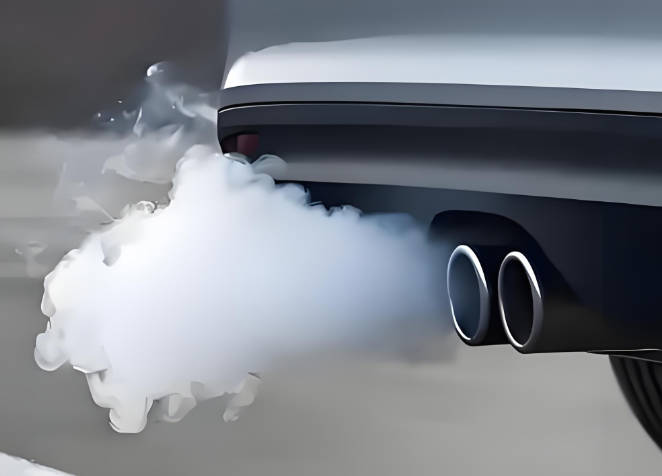
Our internationally accredited laboratory conducts a rigorous comparative experiment on improving exhaust emissions that empowers vehicle manufacturers, engine developers, catalyst suppliers, fuel formulators, after‑treatment system integrators and regulatory agencies worldwide to objectively quantify the effectiveness of different emission‑control strategies under identical, tightly controlled conditions. All investigations are performed within the strict framework of ISO/IEC 17025, and each report bearing the ILAC mark is unconditionally accepted by regulatory authorities, customs offices and notified bodies in all major economies. The comparative experiment on improving exhaust emissions directly measures the tailpipe and raw‑exhaust concentrations of regulated pollutants – carbon monoxide, total hydrocarbons, nitrogen oxides, particulate matter, particle number, ammonia, methane and non‑methane hydrocarbons – before and after the implementation of a candidate technology, and it compares the results against a defined baseline or a competing solution using statistically designed test matrices. By employing transient and steady‑state chassis dynamometer cycles, engine‑dynamometer test beds, constant‑volume sampling systems, Fourier‑transform infrared analysers, chemiluminescence detectors, flame‑ionisation detectors and particle‑counting instruments, our platform provides the legally robust, defensible data that underpin technology selection, regulatory compliance, warranty validation and the marketing of low‑emission vehicles and engines on every continent.
Product Samples and Technologies We Regularly Evaluate in Comparative Experiments on Improving Exhaust Emissions
The test cells, chassis dynamometers and emissions‑analysis benches in our facility accommodate complete vehicles, engines, after‑treatment devices and fuel systems. The following categories represent the most frequently tested items and the comparative scenarios investigated:
- Light‑duty and heavy‑duty vehicles – passenger cars, sport‑utility vehicles, light‑commercial vans, city‑buses, long‑haul trucks and off‑highway construction machinery
- Internal‑combustion engines – spark‑ignited gasoline and natural‑gas engines, compression‑ignition diesel engines, dual‑fuel and hydrogen‑internal‑combustion prototypes
- Exhaust after‑treatment systems – three‑way catalytic converters, diesel oxidation catalysts, particulate filters (cordierite, silicon‑carbide and metal‑fibre), selective‑catalytic‑reduction systems with urea or ammonia injection, lean‑NOx traps and ammonia‑slip catalysts
- Alternative fuels and fuel‑borne catalysts – ethanol‑blended gasoline, biodiesel and renewable diesel, compressed natural gas, liquefied petroleum gas, hydrogen‑enriched fuels and fuel‑additive packages claiming to reduce pollutant formation
- Engine‑control and air‑management modifications – exhaust‑gas‑recirculation strategies, variable‑valve‑timing maps, turbocharger‑boost curves, fuel‑injection timing and pressure maps, and cylinder‑deactivation systems
- Retrofit and field‑installed emission‑reduction devices – after‑market particulate filters, selective‑catalytic‑reduction retrofit kits, and closed‑crankcase ventilation systems
- Baseline and reference technologies – the original‑equipment‑manufacturer configuration, the market‑dominant competitor technology, or a reference‑fuel baseline against which the candidate improvement is compared
Comparative Experiment on Improving Exhaust Emissions – Test Cycles, Fuels and Environmental Protocols
- Transient and steady‑state driving‑cycle execution for a fair technology comparison: each candidate technology is subjected to the identical legislative and real‑world driving cycles, including the WLTP (Worldwide harmonized Light‑duty Test Procedure), the FTP‑75 (Federal Test Procedure) and the US‑06 and SC‑03 supplemental cycles, the WHTC and WHSC (World Harmonized Transient and Stationary Cycles) for heavy‑duty engines, the NRTC and NRSC (Non‑Road Transient and Stationary Cycles), and custom real‑driving‑emission routes recorded by portable emissions‑measurement systems. The comparative experiment on improving exhaust emissions ensures that each technology is evaluated over exactly the same speed‑time profile, gear‑shift schedule and soak condition, isolating the true effect of the emission‑reduction measure.
- Controlled fuel and lubricant matrix to eliminate batch‑to‑batch variability: a single, certified batch of the reference fuel – Euro 6 E10 gasoline, B7 diesel, or the applicable regional certification fuel – is used for all tests. The effect of the fuel composition is investigated by running a second set of comparative tests with a high‑bio‑blend, a high‑aromatic, or a low‑sulfur variant, and the results are reported as the incremental emission improvement attributable to the fuel in combination with the after‑treatment or the engine technology.
- Repeatability and randomised test order for statistical confidence: the test matrix is designed with a minimum of three repetitions per configuration, and the running order is randomised to average out any temporal drift in the instrumentation or the engine condition. The mean emission results, the standard deviation and the 95 % confidence intervals are reported, and a Student’s t‑test or an analysis of variance is performed to determine whether the observed improvement is statistically significant at the 95 % confidence level.
- Cold‑start, hot‑start and extended‑idle comparative experiments: the emission‑reduction performance of the candidate technology is separately evaluated during the cold‑start transient, the fully warmed‑up operation and prolonged idle periods, because certain technologies – such as electrically heated catalysts or advanced thermal‑management strategies – are specifically designed to address the cold‑start emission peak, while others may lose efficiency at low load.
- Real‑driving‑emission portable‑measurement‑system testing: the vehicle is driven on a public road following the Real‑Driving Emissions regulation boundary conditions, and the emissions are measured by a portable analyser. This comparative experiment on improving exhaust emissions reveals whether the technology maintains its laboratory‑demonstrated benefit under the highly variable ambient temperatures, traffic densities and altitude changes encountered in real‑world operation.
Exhaust Emission Measurement and Analysis Methods – Multi‑Component and Multi‑Stage Evaluation
- Determination of the regulated gaseous emissions according to the applicable parts of UN‑ECE Regulations No. 83 and No. 49, and the corresponding US Code of Federal Regulations Title 40 Parts 86 and 1065: the dilute exhaust sample from the constant‑volume sampler is collected in Tedlar bags, and the bag concentrations of carbon monoxide, total hydrocarbons, methane, non‑methane hydrocarbons and nitrogen oxides are measured by non‑dispersive infrared, flame‑ionisation and chemiluminescence analysers. The modal and bag‑weighted mass emissions in grams per kilometre, grams per kilowatt‑hour or grams per test are reported for each configuration.
- Measurement of particulate matter and particle number according to the Particle Measurement Programme of the UN‑ECE GRPE and the procedures of ISO 17123 and ASTM D8048: the gravimetric particulate‑matter mass is determined by collecting the sample on a pre‑weighed filter and conditioning it in a microbalance chamber. The solid‑particle number concentration above 23 nm and 10 nm is measured by a condensation‑particle counter or a particle‑number system, and the result is reported in particles per kilometre or particles per kilowatt‑hour. This comparative experiment on improving exhaust emissions quantifies the ability of a gasoline‑particulate filter or a diesel‑particulate filter to reduce the solid‑particle number, which is a key parameter for the latest Euro 6 and China 6 regulations.
- Ammonia, nitrous oxide and unregulated‑emission measurement by FTIR and mass spectrometry: the dilute or raw exhaust is continuously analysed by a Fourier‑transform infrared spectrometer and a proton‑transfer‑reaction mass spectrometer, and the concentrations of ammonia, nitrous oxide, formaldehyde, acetaldehyde, benzene, 1,3‑butadiene and polycyclic aromatic hydrocarbons are reported. The comparative experiment identifies any unintended increase in a secondary pollutant that might be caused by the emission‑reduction technology, such as the ammonia slip from a selective‑catalytic‑reduction system or the nitrous‑oxide formation by an aged catalyst.
- Exhaust‑gas opacity and smoke‑number measurement according to ISO 11614 and the free‑acceleration test methods: for diesel engines and vehicles, the smoke opacity is measured by a full‑flow opacimeter during the transient and the steady‑state cycles, and the light‑absorption coefficient and the smoke number are reported. The data are used to assess the visible‑smoke reduction achieved by a particulate filter, an oxidation catalyst or an engine‑calibration change.
- Analysis of the fuel‑economy and carbon‑dioxide co‑benefit or penalty: the carbon‑dioxide emissions are measured simultaneously with the regulated pollutants, and the fuel consumption is calculated by the carbon‑balance method. This comparative experiment on improving exhaust emissions reports the percentage change in the fuel economy or the CO₂ emission that accompanies the pollutant reduction, enabling a total‑cost‑of‑ownership and environmental‑impact assessment of the candidate technology.
Report Acceptance and Global Regulatory Compliance
All measurements performed within our comparative experiment on improving exhaust emissions are executed under the fully accredited scope of our ISO/IEC 17025 quality management system. Each test report that carries the ILAC mark is therefore automatically recognised by regulatory authorities, notified bodies, customs offices and supply‑chain partners in all major economies. For vehicle manufacturers, engine developers, catalyst and filter suppliers, fuel producers and emission‑control system integrators anywhere in the world, the report constitutes legally robust, internationally accepted evidence that the comparative emission‑reduction performance of the technology has been determined in accordance with the applicable UN‑ECE, ISO, ASTM, EPA and customer‑specified methods. The documentation can be directly used to support vehicle‑type approval, the certification of retrofit systems, the issue of inspection certificates according to EN 10204 or equivalent national standards, the compilation of technical files for the CE marking of engines and exhaust components, and the resolution of commercial and technical disputes concerning the effectiveness of emission‑control strategies.