Carbon Fiber Product Testing Service for Global Advanced Material Compliance
As an ISO/IEC 17025 accredited laboratory, we deliver a comprehensive carbon fiber product testing service that verifies the mechanical performance, thermal stability, chemical composition, and long-term durability of carbon fiber composites and components. Our carbon fiber product testing service supports manufacturers and exporters targeting the European Union, North America, East Asia, and the Middle East, ensuring your products meet ASTM, ISO, EN, and SACMA standards with reports accepted by notified bodies and major OEMs worldwide.

Product Samples We Regularly Test in Our Carbon Fiber Product Testing Service
- Carbon fiber reinforced polymer laminates and plates — for aerospace structures, automotive body panels, and sporting goods
- Carbon fiber tubes, rods, and profiles — for robotic arms, drone frames, and lightweight mechanical components
- Prepreg and compression molded carbon fiber parts — for high-performance structural applications
- Woven and unidirectional carbon fiber fabrics — for composite layup and resin infusion processes
- Chopped and milled carbon fiber reinforcements — for injection molding and 3D printing filaments
- Recycled and reclaimed carbon fiber products — for sustainability verification and secondary use
Mechanical and Structural Performance Testing for Carbon Fiber Products
- Tensile strength and modulus per ASTM D3039 and ISO 527-4 — measuring the ultimate tensile strength, modulus of elasticity, and failure strain in both fiber and transverse directions to verify the composite's load-bearing capacity.
- Compressive strength and modulus per ASTM D6641 and ISO 14126 — using a combined loading fixture to determine the compressive properties of carbon fiber laminates, critical for structures subjected to buckling or crushing loads.
- Flexural strength and flexural modulus per ASTM D790 and ISO 14125 — three-point or four-point bending tests assess the bending resistance and stiffness of carbon fiber sheets and profiles.
- In-plane shear strength and modulus per ASTM D3518 and ISO 14129 — testing ±45° laminates to measure shear stress-strain response and determine the in-plane shear modulus.
- Interlaminar shear strength per ASTM D2344 and ISO 14130 — short-beam shear tests evaluate the bond quality between carbon fiber layers, ensuring resistance to delamination.
- Impact resistance by Charpy and drop-weight methods per ISO 179-1 and ASTM D7136 — measuring the energy absorbed during impact and the residual compressive strength after impact, critical for damage tolerance assessment.
- Fatigue life and cyclic loading per ASTM D3479 and ISO 13003 — subjecting carbon fiber specimens to repeated tensile or bending cycles to generate S-N curves and predict service life under dynamic loads.
- Bearing strength and open-hole tensile/compressive strength per ASTM D5961, ASTM D5766, and ASTM D6484 — evaluating the performance of mechanically fastened joints and the effect of stress concentrations from holes or cutouts.
Thermal and Environmental Durability Testing for Carbon Fiber Products
- Coefficient of thermal expansion per ASTM E831 and ISO 11359-2 — measuring the dimensional change with temperature to verify compatibility with adjacent metal or ceramic components and to predict thermal stress.
- Thermal conductivity and specific heat per ASTM E1461 and ISO 22007-4 — using laser flash analysis to determine heat transfer properties for thermal management applications in electronics and aerospace.
- Glass transition temperature and cure degree per ASTM E1356 and ISO 11357-2 — differential scanning calorimetry identifies the glass transition and residual cure exotherm, verifying the resin system's processing state and maximum service temperature.
- Heat deflection temperature and Vicat softening point per ASTM D648 and ISO 306 — measuring the temperature at which a loaded specimen deflects or softens, indicating the upper use temperature for structural parts.
- Hot-wet conditioning and moisture absorption per ASTM D5229 and ISO 62 — exposing laminates to elevated temperature and humidity to quantify moisture uptake and its effect on glass transition and mechanical properties.
- Accelerated weathering and UV resistance per ASTM G155 and ISO 4892-2 — simulating outdoor sunlight and rain to evaluate color fading, surface cracking, and retention of mechanical strength.
- Fire performance and reaction-to-fire per EN 13501-1 and ASTM E84 — testing ignitability, flame spread, and heat release to classify carbon fiber products for building, rail, and aerospace fire safety requirements.
Chemical and Compositional Analysis for Carbon Fiber Products
- Fiber volume fraction and resin content per ASTM D3171 and ISO 14127 — acid digestion or burn-off methods determine the fiber-to-resin ratio and void content, essential for quality control and laminate property prediction.
- Density and specific gravity per ASTM D792 and ISO 1183 — measuring mass per unit volume to verify material consistency and to support lightweight design calculations.
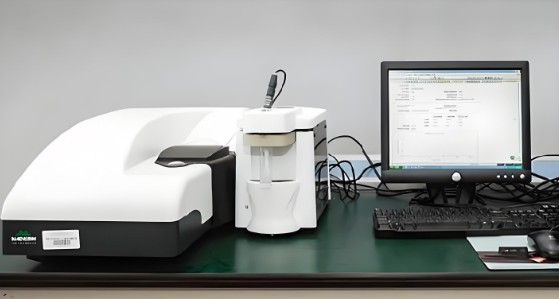
- Fourier transform infrared spectroscopy per ASTM E1252 — identifying the resin matrix chemistry and detecting any contamination, blend, or degradation products in the carbon fiber composite.
- Differential scanning calorimetry and thermogravimetric analysis per ASTM D3418 and ASTM E1131 — characterizing thermal transitions, decomposition onset, and filler content to verify material formulation and thermal stability.
- X-ray photoelectron spectroscopy and Raman spectroscopy per internal validated protocols — analyzing surface chemistry and carbon fiber structure to assess fiber-matrix adhesion potential and detect surface treatment quality.
- Scanning electron microscopy with energy dispersive X-ray spectroscopy per ASTM E1508 — high-resolution imaging of fracture surfaces and fiber distribution to diagnose manufacturing defects, poor wet-out, or foreign inclusions.
Non-Destructive Testing and Quality Inspection for Carbon Fiber Products
- Ultrasonic C-scan and phased array testing per ASTM E2580 and ISO 13588 — scanning entire panels and complex geometries to detect delaminations, voids, and porosity that would compromise structural integrity.
- X-ray computed tomography per ASTM E1441 — 3D imaging of internal fiber architecture, void content, and foreign object detection without destroying the part.
- Eddy current and thermographic inspection per internal protocols — detecting surface cracks, dry fiber regions, and impact damage in conductive carbon fiber laminates.
- Visual and dimensional inspection per ISO 2768 and customer drawings — verifying dimensions, hole positions, edge quality, and surface finish against engineering specifications and master samples.
- Hardness and microhardness per ASTM D2583 and ISO 6507-1 — measuring Barcol or Vickers hardness to verify cure state and surface resistance to indentation.
Report Recognition and ISO/IEC 17025 Compliance
All methods described in our carbon fiber product testing service are covered by our ISO/IEC 17025 scope of accreditation. Our test reports are accepted by European notified bodies, by North American aerospace and automotive OEMs, and by customs and regulatory authorities across the Middle East, Australia, and Asia. Whether you require complete qualification of a new carbon fiber part, batch release inspection for export, or root cause failure analysis, our laboratory delivers the measurement accuracy and advanced composite expertise that global supply chains demand.