Carbon Fiber Prepreg Testing Service for Global Composite Material Compliance
As an ISO/IEC 17025 accredited laboratory, we deliver a specialized carbon fiber prepreg testing service that verifies the physical, chemical, mechanical, and thermal properties of pre-impregnated carbon fiber materials used in aerospace, automotive, wind energy, and high-performance sporting goods. Our carbon fiber prepreg testing service supports manufacturers and exporters of unidirectional and woven prepregs who must demonstrate conformity to ASTM, EN, ISO, and SACMA standards across the European Union, North America, East Asia, and the Middle East. Every test is performed under our CNAS-accredited quality system, producing reports accepted by notified bodies, composite OEMs, and procurement teams worldwide.

Product Samples We Regularly Test in Our Carbon Fiber Prepreg Testing Service
- Unidirectional carbon fiber prepreg tapes and sheets — with epoxy, bismaleimide, cyanate ester, or phenolic resin systems
- Woven carbon fiber prepreg fabrics — plain, twill, and satin weaves for structural laminates and cosmetic surfaces
- Multi-axial and non-crimp fabric prepregs — for wind turbine blades, marine hulls, and high-performance automotive parts
- Out-of-autoclave and low-temperature cure prepregs — for large-part manufacturing and rapid prototyping
- High-modulus and intermediate-modulus carbon fiber prepregs — with standard, intermediate, and ultra-high modulus fibers
- Film adhesive and surfacing film co-bonded prepreg systems — for sandwich panels and lightning strike protection
- Recycled and reclaimed carbon fiber prepreg materials — for sustainability verification and non-structural applications
Core Carbon Fiber Prepreg Testing Service for Physical and Chemical Characterization
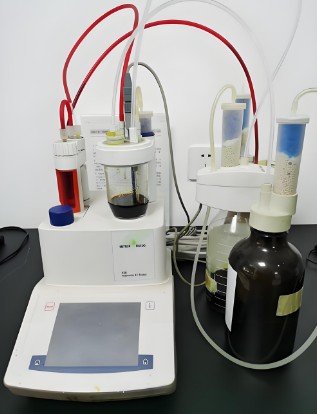
- Fiber areal weight and resin content per ASTM D3529, ISO 14127, and EN 2559 — the prepreg is dissolved or burned off to separate the fiber from the resin, and the mass fractions are determined gravimetrically to verify the specified fiber areal weight, resin content, and fiber volume fraction, the fundamental quality parameters for consistent laminate thickness and mechanical properties.
- Volatile content and resin flow per ASTM D3530 and ISO 15024 — the prepreg is heated under controlled conditions to measure the mass loss from volatiles and the percentage of resin that flows during cure, predicting the laminate quality and the risk of porosity formation during autoclave or oven processing.
- Resin degree of cure and advancement by differential scanning calorimetry per ASTM D3418 and ISO 11357-2 — the residual heat of reaction and the glass transition temperature of the prepreg resin are measured to verify the B-staged cure state and to detect any premature advancement during storage or transport.
- Resin gel time and minimum viscosity per ASTM D3532 and ISO 15033 — the prepreg resin is tested in a rheometer or hot stage to determine the gel time, the temperature of minimum viscosity, and the viscosity profile, providing the cure cycle data required for autoclave and press molding.
- Fiber density and filament diameter per ISO 10119 and ASTM D3800 — the carbon fiber density and the average filament diameter are measured to confirm the fiber grade and to support the calculation of fiber volume fraction and composite density.
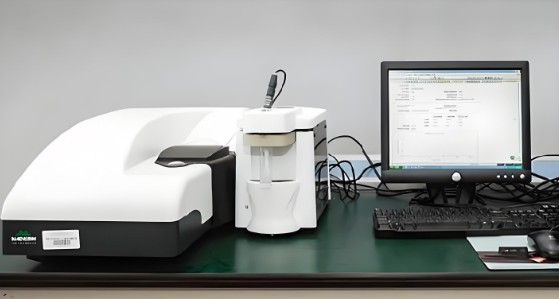
- Infrared spectroscopy for resin system identification per ASTM E1252 — the resin matrix is analyzed by FTIR to confirm the epoxy, BMI, or phenolic chemistry and to detect any contamination or mixing of different resin batches.
Carbon Fiber Prepreg Testing Service for Mechanical Performance of Cured Laminates
- Tensile strength and modulus of cured unidirectional laminates per ASTM D3039 and ISO 527-5 — laminates are fabricated from the carbon fiber prepreg fabric and tested in the 0° and 90° directions to measure the ultimate tensile strength, modulus of elasticity, and Poisson's ratio, verifying the mechanical properties required for structural design.
- Compressive strength and modulus per ASTM D6641 and ISO 14126 — the cured laminate is tested in compression using a combined loading fixture to determine the compressive strength and modulus, critical for aircraft, wind blade, and automotive structural applications.
- Interlaminar shear strength and flexural properties per ASTM D2344, ASTM D790, and ISO 14130 — short-beam shear and three-point bending tests measure the interlaminar shear strength, flexural strength, and flexural modulus, ensuring the prepreg fabric achieves the required resin-fiber interface and lamination quality.
- In-plane shear strength and modulus per ASTM D3518 and ISO 14129 — a ±45° laminate is tested in tension to determine the shear stress-strain response and the in-plane shear modulus, a key design parameter for torsion and shear loading of composite structures.
- Open-hole tensile and compressive strength per ASTM D5766 and ASTM D6484 — notched laminate specimens are tested to evaluate the damage tolerance and the stress concentration sensitivity of the carbon fiber prepreg laminate, essential for bolted joint design.
- Bearing strength and bearing-bypass interaction per ASTM D5961 — the prepreg laminate is tested with a fastener under bearing load to provide the design values for mechanically fastened composite joints.
- Fracture toughness in Mode I and Mode II per ASTM D5528 and ASTM D7905 — the interlaminar fracture toughness of the carbon fiber prepreg laminate is measured to quantify its resistance to delamination growth, a critical safety parameter for aerospace structures.
Carbon Fiber Prepreg Testing Service for Thermal and Cure Behavior
- Cure kinetics and degree of conversion per ASTM E2160 and ISO 11357-5 — the prepreg resin is heated in a differential scanning calorimeter to measure the heat of reaction and to model the cure kinetics, allowing the prediction of the optimal cure cycle and the detection of incomplete cure in finished parts.
- Glass transition temperature after cure per ASTM E1356 and EN 6032 — the Tg of the fully cured laminate is measured by DSC or DMA to verify the maximum continuous service temperature and to detect any under-cure or resin degradation.
- Dynamic mechanical analysis for modulus and damping per ASTM D7028 and ISO 6721 — the storage modulus, loss modulus, and tan delta are measured across a temperature sweep to characterize the viscoelastic behavior of the carbon fiber prepreg laminate and to identify the operating temperature limits.
- Coefficient of thermal expansion per ASTM E831 and ISO 11359-2 — the thermal expansion of the cured laminate is measured in the fiber and transverse directions to verify compatibility with adjacent metal components and to predict thermal stress.
- Thermal conductivity and specific heat per ASTM E1461 — the thermal diffusivity and specific heat of the carbon fiber prepreg laminate are measured to support thermal management design in satellite, aircraft, and automotive applications.
- Heat aging and thermal stability per ASTM D3045 — the cured laminate is aged at elevated temperatures and the retained mechanical properties are measured to predict the long-term thermal endurance of the prepreg system.
Defect Detection and Non-Destructive Inspection in Our Carbon Fiber Prepreg Testing Service
- Visual and dimensional inspection of the prepreg roll per ASTM D3530 — the roll is inspected for wrinkles, dry spots, resin starvation, fiber misalignment, and foreign inclusions, and the width, length, and thickness are verified against the order specification.
- Ultrasonic C-scan inspection of cured laminates per ASTM E2580 — the laminate is scanned in an immersion tank to detect delaminations, voids, and porosity that would compromise the structural integrity of the finished composite part.
- Phased array ultrasonic testing for complex geometries per ISO 13588 — the carbon fiber prepreg laminate is inspected with a phased array probe to detect internal defects and to map the remaining wall thickness in curved or tapered sections.
- X-ray computed tomography for internal fiber architecture and void content per ASTM E1441 — the cured laminate is imaged in 3D to quantify the void content, fiber volume fraction, and the alignment of the carbon fibers, providing a non-destructive assessment of the internal quality.
- Eddy current and thermographic inspection for surface and near-surface defects — the prepreg or cured laminate is scanned with eddy current or flash thermography to detect dry fiber regions, resin-rich pockets, and foreign object damage.
Environmental and Aging Resistance Testing for Carbon Fiber Prepreg Fabrics
- Hot-wet conditioning and moisture absorption per ASTM D5229 and ISO 62 — the cured laminate is immersed in water or exposed to high humidity at elevated temperature, and the moisture uptake and the resulting loss of glass transition temperature and mechanical properties are measured to verify the hot-wet performance required for aerospace and marine applications.
- Neutral salt spray and cyclic corrosion testing per ISO 9227 and ASTM B117 — for carbon fiber prepreg laminates with metallic fasteners or surface coatings, the assembly is exposed to salt fog to evaluate galvanic corrosion and the degradation of any protective finishes.
- UV and xenon-arc accelerated weathering of exposed surfaces per ASTM G155 and ISO 4892-2 — the prepreg laminate or any coated surface is subjected to simulated sunlight to evaluate color change, surface chalking, and loss of mechanical properties after outdoor exposure.
- Thermal cycling and thermal shock per IEC 60068-2-14 — the carbon fiber prepreg laminate is cycled between the minimum and maximum rated temperatures to verify the laminate withstands thermal expansion stresses without micro-cracking or delamination.
- Hygrothermal aging and retention of mechanical properties per ASTM D7332 — the laminate is exposed to combined temperature and humidity cycles and the retained compressive and interlaminar shear strengths are measured to predict the long-term durability of the prepreg system.
Chemical Safety and Restricted Substance Compliance for Carbon Fiber Prepreg Fabrics
- RoHS compliance per IEC 62321 and EU Directive 2011/65/EU — quantitative screening for lead, mercury, cadmium, hexavalent chromium, PBBs, and PBDEs in the resin, fiber sizing, and any surface treatments to ensure the carbon fiber prepreg fabric meets global substance restrictions.
- REACH Annex XVII and SVHC screening — targeted analysis of Substances of Very High Concern including specific phthalate plasticizers, brominated flame retardants, and restricted amine hardeners that may be present in the resin system.
- Volatile organic compound emission during cure per ISO 16000-3 and customer protocols — chamber emission testing verifies that the carbon fiber prepreg fabric does not release harmful VOCs or formaldehyde into the workplace during layup, curing, or post-cure operations.
- Heavy metals in packaging per EU Directive 94/62/EC — verification that the sum concentration of lead, cadmium, mercury, and hexavalent chromium in the protective film, cardboard cores, and labels is below the 100 ppm regulatory limit.
Report Recognition and ISO/IEC 17025 Compliance
Every method described in this carbon fiber prepreg testing service is covered by our ISO/IEC 17025 scope of accreditation. Our technical reports and certificates of analysis are accepted by European notified bodies for aerospace and composite materials, by North American aircraft and wind energy OEMs referencing ASTM and SACMA standards, and by customs and procurement authorities across Japan, Korea, and the Gulf region. Whether you require a complete qualification dossier for a new carbon fiber prepreg fabric, a batch release inspection for an incoming shipment, or a root cause failure analysis of a lamination defect, our laboratory provides the measurement accuracy and composite materials expertise that the global advanced manufacturing industry demands.