CO₂ Incubator Cleanliness Testing Service – Accredited Environmental Monitoring and Sterility Assurance for Global Markets
Our internationally accredited laboratory provides a specialist CO₂ incubator cleanliness testing service that supports cell‑culture laboratories, biopharmaceutical manufacturers, in‑vitro fertilisation clinics, contract research organisations and medical‑device producers worldwide in verifying the microbial, particulate and chemical cleanliness of their carbon‑dioxide incubators. Every test is conducted under the rigorous framework of ISO/IEC 17025, and each report bearing the ILAC mark is unconditionally accepted by regulatory authorities, notified bodies and supply‑chain partners in all major economies. The CO₂ incubator cleanliness test quantifies the viable and non‑viable airborne particle concentrations, the surface bioburden on the shelves, the chamber walls and the water pan, the efficiency of the high‑efficiency particulate air (HEPA) filtration, and the residual contamination by the cleaning and the disinfection agents. By combining active‑air microbial sampling, settle‑plate exposure, contact‑plate and swab recovery, and real‑time particle counting, our platform provides the legally robust, defensible environmental data that underpin the sterility assurance of the cell‑therapy product, the consistency of the assisted‑reproduction outcomes, and the compliance with the ISO 14644, the EU GMP Annex 1 and the relevant pharmacopoeial requirements.

Sampling Locations and Test Items We Evaluate Inside a CO₂ Incubator
The monitoring equipment – the optical particle counters, the active‑air samplers, the contact‑plate applicators, the swab‑recovery kits and the adenosine‑triphosphate bioluminescence meters – is deployed at the critical locations within the chamber. The following categories represent the most frequently evaluated items and sampling points:
- Chamber atmosphere and the CO₂‑enriched air – the active‑air sampling for the total aerobic bacterial count, the total yeast and mould count, and the detection of the specific pathogens such as Mycoplasma species, and the real‑time optical‑particle counting for the 0.5 µm and the 5.0 µm non‑viable particulates
- Internal surfaces – the shelves, the shelf‑supports, the inner door and the chamber walls – the contact‑plate and the swab sampling for the aerobic mesophilic bacteria, the moulds, the spores and the endotoxin residues, and the adenosine‑triphosphate bioluminescence assay for the rapid total‑organic‑soil screening
- Water pan and the humidification system – the water sample drawn from the pan for the heterotrophic plate count, the Pseudomonas aeruginosa and the Legionella detection, and the assessment of the biofilm formation by the crystal‑violet staining and the scanning‑electron microscopy
- HEPA filter and the air‑circulation duct – the integrity testing of the HEPA filter by the dispersed‑oil‑particulate challenge or the dioctyl‑phthalate aerosol photometry, and the surface‑swab of the filter face and the fan‑blade for the accumulation of the dust and the microbial debris
- CO₂ sensor, the temperature probe and the door‑gasket seal – the surface‑bioburden sampling of the sensor housing, the probe stem and the elastomeric gasket, and the visual inspection for the mould growth, the corrosion and the wear that can harbour the contaminants
- Cleaning and disinfection solutions, and the rinse‑water samples – the chemical analysis of the disinfectant concentration by the titration or the test‑strip methods, and the evaluation of the residual biocide in the rinse water that could cause the cytotoxicity in the cultured cells
Airborne Particle and Microbial Monitoring – CO₂ Incubator Cleanliness Test According to ISO 14644‑1 and ISO 14698‑1
- Determination of the airborne non‑viable particle count by the optical‑particle‑counter method according to ISO 14644‑1 (Cleanrooms and associated controlled environments – Part 1: Classification of air cleanliness by particle concentration): a calibrated laser‑based particle counter with a 1.0 L/min or a 28.3 L/min flow rate is placed inside the incubator, and the number of the particles per cubic metre at the 0.5 µm and the 5.0 µm size thresholds is recorded over a sampling period that captures the steady‑state and the door‑opening recovery conditions. The clean‑air classification of the incubator interior is reported according to the ISO 14644‑1 classes, typically corresponding to ISO Class 5 or ISO Class 6 in the resting state, and the data are compared with the acceptance criteria of the user’s contamination‑control strategy.
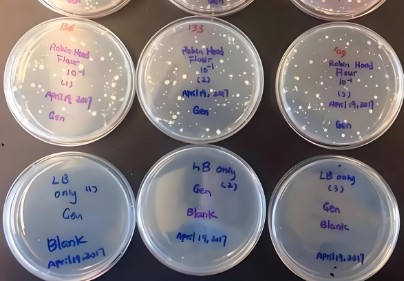
- Active‑air microbial sampling by the impaction or the centrifugal‑sampler method according to ISO 14698‑1 (Cleanrooms and associated controlled environments – Biocontamination control – Part 1: General principles and methods): a known volume of the incubator air – typically 500 L to 1 000 L – is drawn over a standard‑plate‑count‑agar or a tryptic‑soy‑agar plate, and the colony‑forming units per cubic metre are enumerated after the incubation at the appropriate temperatures for the bacteria and the fungi. The total aerobic bacterial count, the total yeast and mould count, and the presence of the specified objectionable organisms – such as the Mycoplasma and the Aspergillus species – are reported, and the results are evaluated against the alert and the action limits that are defined by the cell‑therapy or the assisted‑reproduction facility.
- Settle‑plate passive‑air monitoring for the extended operation simulation: the open agar plates are placed on the incubator shelves for a defined period – typically 4 hours – and the number of the viable particles that settle onto the plates per unit area per unit time is calculated, providing the direct measure of the gravitational‑settling contamination that can fall into the open culture vessels during the medium change or the cell manipulation.
- Real‑time particle‑count recovery after the door opening: the incubator door is opened for a standardised duration to simulate the routine cell‑culture access, and the time required for the particle concentration to return to the resting‑state level is measured, quantifying the self‑cleaning capability of the incubator’s air‑circulation and the HEPA‑filtration system, which is the critical performance parameter for the multi‑user, high‑traffic laboratories.
Surface Cleanliness and Viable Contamination Assessment – CO₂ Incubator Cleanliness Test According to ISO 14698‑1 and USP ⟨1116⟩
- Contact‑plate (RODAC‑plate) sampling for the viable surface bioburden according to the principles of USP ⟨1116⟩ (Microbiological Control and Monitoring of Aseptic Processing Environments) and the internal validated procedures: a sterile, agar‑filled contact plate is pressed onto the defined surface – the shelf, the inner‑wall, the door‑inner‑panel – with a standardised pressure and time, and the recovered colonies are enumerated after the incubation. The surface bioburden is reported as the colony‑forming units per plate or per square centimetre, and the absence of the specified pathogens is confirmed. This CO₂ incubator cleanliness test provides the routine monitoring data that the quality‑assurance unit uses to trend the cleaning effectiveness and to detect the incipient biofilm formation.
- Swab‑recovery and the membrane‑filtration quantification of the surface microbial load according to ISO 14698‑1 Annex B: a sterile cotton, rayon or flocked swab is moistened with a neutralising buffer, wiped across a defined surface area, and the captured organisms are eluted, filtered through a membrane filter, and the filter is incubated on an agar medium. The method achieves a lower limit of detection than the contact plate and is particularly suited to the irregular, the recessed and the difficult‑to‑reach surfaces such as the CO₂‑sensor housing, the fan‑blade and the water‑pan edge.
- Adenosine‑triphosphate bioluminescence assay for the rapid, post‑cleaning cleanliness verification: a swab is used to sample the surface, and the adenosine‑triphosphate that is present in the viable cells, the organic debris and the food‑soils is extracted and reacted with the luciferin‑luciferase reagent, producing the light that is measured by a luminometer. The result in the relative‑light‑units is compared with the pass‑fail threshold that has been established for the incubator surfaces, providing the immediate, on‑site feedback on the cleaning adequacy before the incubator is returned to the service.
- Endotoxin and the beta‑glucan residue testing of the surfaces and the water‑pan liquid: the Limulus‑amebocyte‑lysate assay and the recombinant‑factor‑C assay are used to quantify the bacterial‑endotoxin concentration in the endotoxin units per millilitre or per square centimetre, ensuring that the depyrogenation and the cleaning procedures have reduced the pyrogenic burden below the limit that could stimulate the unwanted immune activation in the cultured primary cells and the stem‑cell lines.
Disinfectant Efficacy and Decontamination Validation – CO₂ Incubator Cleanliness Test for the Sterilisation Process Confirmation
- Efficacy testing of the disinfectant solutions against the standardised microbial biofilms on the incubator‑representative surfaces according to the internal protocol based on the principles of the AOAC Official Methods and the EN 13697 (Chemical disinfectants and antiseptics – Quantitative non‑porous surface test): the stainless‑steel or the polymer coupons that represent the incubator shelf and wall materials are inoculated with the standardised bacterial and the fungal strains – including the Staphylococcus aureus, the Pseudomonas aeruginosa, the Aspergillus brasiliensis and the Candida albicans – and are dried to form a tenacious biofilm. The test disinfectant is applied at the recommended concentration and the contact time, and the log₁₀ reduction in the viable count is reported, providing the performance‑qualification data that the facility manager uses to select the appropriate disinfectant and to justify the contact‑time that is specified in the standard operating procedure. This CO₂ incubator cleanliness test also evaluates the compatibility of the disinfectant with the incubator materials by the repeated‑exposure gravimetric and the surface‑cracking analysis.
- Validation of the hydrogen‑peroxide vapour or the dry‑heat decontamination cycle: the biological indicators – the stainless‑steel discs or the spore strips carrying a known population of the Geobacillus stearothermophilus spores – are placed at the worst‑case locations inside the incubator, and the full decontamination cycle is executed. The post‑cycle recovery of the spores is compared with the un‑exposed controls, and a minimum 6‑log₁₀ reduction is required to certify the decontamination process, providing the sterility‑assurance‑level evidence that is accepted by the regulatory auditors.
- Residual‑disinfectant cytotoxicity and the cell‑culture‑compatibility testing: the incubator surfaces that have been disinfected are rinsed with the culture medium, and the rinse medium is applied to a monolayer of the sensitive indicator cells – such as the Vero, the CHO or the human‑embryonic‑stem cells – and the cell viability, the morphology and the proliferation rate are assessed by the MTT or the neutral‑red uptake assay, ensuring that the residual disinfectant does not cause the cytotoxicity that could compromise the cell‑culture experiment.
- HEPA‑filter integrity and the air‑velocity‑profile measurement: the HEPA filter is challenged with a polydisperse aerosol of the di‑octyl‑phthalate or the poly‑alpha‑olefin, and the penetration is measured by an aerosol‑photometer upstream and downstream of the filter, verifying that the filtration efficiency exceeds 99.97 % at the most‑penetrating particle size. The air‑velocity profile at the multiple points inside the incubator is measured by a hot‑wire anemometer, and the uniformity and the recovery of the designed airflow are reported, ensuring that no stagnant, poorly swept zones exist where the airborne contaminants could accumulate.
Report Acceptance and Global Regulatory Compliance
All measurements performed within our CO₂ incubator cleanliness testing service are executed under the fully accredited scope of our ISO/IEC 17025 quality management system. Each test report that carries the ILAC mark is therefore automatically recognised by regulatory authorities, notified bodies, customs offices and supply‑chain partners in all major economies. For cell‑culture laboratories, biopharmaceutical manufacturers, in‑vitro‑fertilisation clinics and medical‑device producers anywhere in the world, the report constitutes legally robust, internationally accepted evidence that the airborne particle and the microbial concentrations, the surface bioburden, the disinfectant efficacy, the HEPA‑filter integrity and the residual‑cytotoxicity of the CO₂ incubator have been determined in accordance with the applicable ISO, USP, AOAC, EN and customer‑specified methods. The documentation can be directly used to support the GMP compliance, the sterility‑assurance programme, the regulatory‑inspection clearance, the issue of inspection certificates according to EN 10204 or equivalent national standards, and the resolution of commercial and technical disputes concerning the cleanliness and the contamination control of any carbon‑dioxide incubator.