Capacitor Film Inspection Service for Global Electronics and Energy Storage Markets
As an ISO/IEC 17025 accredited laboratory, we deliver a specialized capacitor film inspection service that verifies electrical strength, dielectric performance, mechanical integrity, and chemical purity of polymer films used in capacitors. Our capacitor film inspection service supports manufacturers and exporters of BOPP, PET, PEN, and polycarbonate capacitor films who must demonstrate compliance with IEC, ASTM, EN, and regional electronics standards across the European Union, North America, East Asia, and the Middle East. Every test is performed under our CNAS-accredited quality system, producing reports accepted by capacitor OEMs, notified bodies, and global procurement authorities.

Product Samples We Regularly Test in Our Capacitor Film Inspection Service
- Biaxially oriented polypropylene capacitor film — plain, metallized, and hazy film for AC and DC power capacitors
- Polyethylene terephthalate capacitor film — for SMD capacitors, snubber circuits, and high-temperature applications
- Polyethylene naphthalate film — high-thermal class dielectric for automotive and industrial capacitors
- Polycarbonate capacitor films — for precision timing and filtering circuits
- Zinc-aluminum metallized capacitor films — with segmented or edge-reinforced metallization patterns
- Double-sided metallized and composite films — for high-current pulse and discharge capacitors
- Safety capacitor films with self-healing enhancement — for X2 and Y2 class interference suppression capacitors
Core Capacitor Film Inspection Service for Electrical and Dielectric Performance
- Dielectric strength and breakdown voltage per IEC 60243-1 and ASTM D149 — the film is subjected to an increasing AC or DC voltage until electrical failure occurs, measuring the breakdown field strength in V/µm to verify the film meets the high-reliability requirements of capacitor dielectrics.
- Dielectric constant and dissipation factor per IEC 60250 and ASTM D150 — capacitance and loss tangent are measured at specified frequencies from 100 Hz to 1 MHz using precision LCR meters, providing the relative permittivity and dielectric loss data essential for capacitor design and energy storage density calculation.
- Volume and surface resistivity per IEC 60093 and ASTM D257 — the electrical resistance through and across the film is measured at 500 V DC to ensure the film provides adequate insulation between capacitor electrodes and prevents leakage current under voltage stress.
- Partial discharge inception and extinction voltage per IEC 60270 — the film is tested in a discharge-free electrode system to detect internal voids, delamination, or impurities that cause partial discharges, ensuring long-term reliability under high electric fields.
- Self-healing performance and healing efficiency per IEC 60384-1 and customer protocols — a controlled puncture is made in the metallized film under voltage, and the clearing time and energy loss are recorded to quantify the film's ability to self-heal short circuits without catastrophic capacitor failure.
- Insulation resistance and time constant per IEC 60384-1 — the self-discharge time constant is determined by measuring the decay of terminal voltage in a wound film capacitor sample, verifying that the dielectric film holds charge for the required duration.
Mechanical and Physical Property Testing in Our Capacitor Film Inspection Service
- Tensile strength and elongation at break per ISO 527-3 and ASTM D882 — the film is stretched in machine and transverse directions to measure yield strength, ultimate tensile strength, and elongation, ensuring the film can withstand the winding and handling stresses of capacitor manufacturing.
- Thickness measurement and gauge uniformity per ISO 4593 and ASTM D6988 — laser and capacitance-based scanning measures the film thickness across the full web width to detect thickness variations that would cause uneven capacitance values and local voltage stress concentrations.
- Coefficient of friction per ISO 8295 and ASTM D1894 — the static and dynamic friction of the film surface are measured to predict winding behaviour and ensure smooth, wrinkle-free capacitor element winding without slippage or blocking.
- Surface roughness and peak count per ISO 4287 and internal methods — stylus profilometry measures the film surface micro-roughness that is intentionally imparted to promote uniform oil impregnation and to prevent blocking between adjacent film layers in wound capacitors.
- Shrinkage and dimensional stability under heat per ASTM D1204 and IEC 60674 — the film is exposed to elevated temperatures and the percentage shrinkage in machine and transverse directions is measured to verify that the capacitor winding does not distort or lose capacitance during soldering, encapsulation, or high-temperature operation.
- Tear resistance per ISO 6383-2 and ASTM D1922 — the force required to propagate a tear from a slit is measured to evaluate the film's resistance to splitting during slitting, metallizing, and winding operations.
Thermal Performance and Dimensional Stability Testing for Capacitor Film
- Differential scanning calorimetry for melting point, crystallinity, and glass transition per ISO 11357-2 and ASTM D3418 — the thermal transitions of the capacitor film are measured to verify the polymer resin quality and to define the maximum permissible operating temperature and soldering profile limits.
- Thermogravimetric analysis for thermal stability and filler content per ASTM E1131 — the weight loss profile is recorded up to 600 °C to detect volatile fractions, residual solvents, and inorganic residues that could outgas during capacitor sealing and cause electrode corrosion.
- Heat deflection temperature and Vicat softening point per ISO 75-2 and ISO 306 — these thermal resistance parameters are measured to confirm the film maintains dimensional integrity during automated soldering and reflow processes.
- Long-term heat ageing and thermal endurance per IEC 60216 and ASTM D3045 — the film is aged at multiple elevated temperatures and the dielectric strength or breakdown voltage is tracked over time to predict the service life of the capacitor insulation system at the rated temperature class.
- Low-temperature flexibility and brittleness per ASTM D1790 and internal methods — the film is conditioned at sub-zero temperatures and tested for cracking under bending to verify performance in cold climate and automotive under-hood capacitor applications.
Metallization Quality and Electrode Integrity Inspection for Metallized Capacitor Films
- Surface resistance and sheet resistivity of the metallized layer per IEC 60384-1 and ASTM D257 — a four-point probe measures the electrical resistance of the vacuum-deposited zinc or aluminum electrode, verifying the metal thickness and uniformity that determine the capacitor's equivalent series resistance and self-healing ability.
- Metal adhesion to the polymer film per ASTM D3359 and internal peel protocols — tape test and peel force measurement evaluate the adhesion of the metallization to the film substrate, ensuring the metal layer does not detach during winding, thermal cycling, or voltage stress.
- Metallization pattern and segmentation accuracy — optical microscopy and laser scanning verify the edge alignment, margin widths, and segmentation patterns that control the capacitor's internal series connection and safety function.
- Corrosion resistance of the metallized layer per IEC 60068-2-60 and ASTM B117 — the metallized film is exposed to a mixed flowing gas or salt fog environment to assess the rate of electrode corrosion that could increase dissipation factor and lead to capacitance loss in harsh atmospheres.
- Surface energy and wetting tension per ASTM D2578 and ISO 8296 — the surface energy of the film is measured before metallization to verify that the corona, plasma, or chemical treatment is adequate for uniform metal adhesion and void-free deposition.
Chemical Composition, Purity, and Contamination Analysis for Capacitor Film
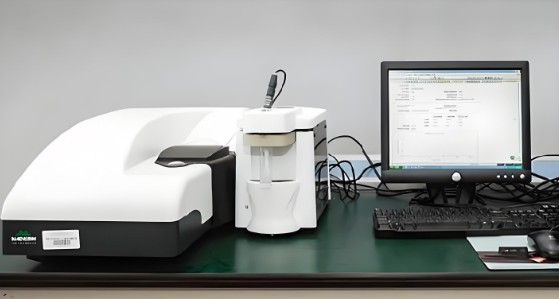
- Fourier transform infrared spectroscopy for polymer identification per ASTM E1252 — the infrared absorption spectrum is compared against reference libraries to confirm the polymer type, detect any blends or copolymers, and identify organic contaminants that could impair dielectric properties.
- Elemental analysis and trace metal screening by ICP-OES per ASTM E3061 — microwave digestion of the film followed by inductively coupled plasma spectrometry quantifies residual catalyst, metal ion contaminants, and heavy metals that can contribute to dielectric loss and leakage current.
- Gel content and insoluble contamination detection — the film is dissolved and filtered to capture any gel particles, carbon specks, or cross-linked polymer contamination that would cause localized breakdown sites in the capacitor.
- Chloride and ionic extractables by ion chromatography per IEC 60384-1 and ASTM D4327 — the film is extracted with water and the leachate is analyzed for chloride, sulfate, and other corrosive ions that would accelerate electrode corrosion in the finished capacitor.
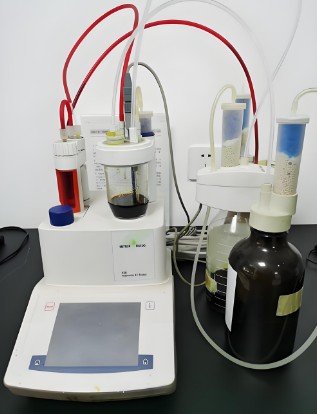
- Moisture content by Karl Fischer titration per ASTM D6869 and ISO 15512 — the water content of the film is measured at the ppm level to confirm that residual moisture will not cause hydrolysis of the polymer or oxidation of the metallization during capacitor life.
Chemical Safety and Restricted Substance Compliance Testing
- RoHS compliance per IEC 62321 and EU Directive 2011/65/EU — quantitative screening for lead, mercury, cadmium, hexavalent chromium, polybrominated biphenyls, and polybrominated diphenyl ethers in the polymer film and the metallization layer.
- REACH Annex XVII and SVHC screening — targeted analysis of Substances of Very High Concern including specific phthalate plasticizers, organotin stabilizers, and restricted flame retardants that may be present in the capacitor film formulation.
- Halogen content by combustion ion chromatography per EN 14582 — total fluorine, chlorine, bromine, and iodine content is measured to support halogen-free capacitor film declarations for environmentally conscious electronics manufacturing.
- Volatile organic compound emission from film during processing per ISO 16000-3 and VDA 277 — headspace GC-MS analysis identifies and quantifies residual solvents, monomers, and additives that could evaporate during capacitor winding and sealing.
Report Recognition and ISO/IEC 17025 Compliance
All test methods described in this capacitor film inspection service fall within our ISO/IEC 17025 scope of accreditation. Our reports are accepted by capacitor manufacturers and OEMs worldwide, by European notified bodies for electronics component certification, and by regulatory and procurement authorities across North America, Japan, Korea, and the Gulf region. Whether you require a full qualification dossier for a new capacitor film grade, a batch release inspection for an incoming film shipment, or a root cause failure analysis of a capacitor performance defect, our laboratory provides the measurement precision and electrical engineering expertise that the global capacitor industry demands.