Camouflage Net Detection Service for Global Military and Hunting Compliance
As an ISO/IEC 17025 accredited laboratory, we deliver a specialized camouflage net detection service that verifies spectral reflectance, visual concealment, infrared suppression, radar attenuation, mechanical durability, and environmental resilience of camouflage netting used in military, hunting, and security applications. Our camouflage net detection service supports manufacturers and exporters of multispectral camouflage systems, hunting blinds, and tactical concealment materials who must demonstrate conformity to MIL-PRF-53126, ISO 4892, ASTM D5034, and regional defense and outdoor standards across the European Union, North America, the Middle East, and Asia. Every test is performed under our CNAS-accredited quality system, producing reports accepted by notified bodies, defense agencies, and procurement teams worldwide.

Product Samples We Regularly Test in Our Camouflage Net Detection Service
- Military multispectral camouflage nets — with visible, near-infrared, thermal infrared, and radar suppression properties
- Hunting blinds and concealment systems — with natural foliage patterns for wildlife concealment
- Tactical concealment tarps and vehicle covers — for equipment and vehicle signature reduction
- Radar-scattering and radar-absorbing camouflage nets — incorporating conductive threads and metalized films
- Thermal suppression nets — with insulating layers to reduce heat signature from personnel and equipment
- UV and NIR treated camouflage fabrics — for enhanced concealment across the electro-optical spectrum
- Custom-pattern and site-specific camouflage netting — for arctic, desert, woodland, and urban environments
Optical and Spectral Concealment Testing for Camouflage Nets
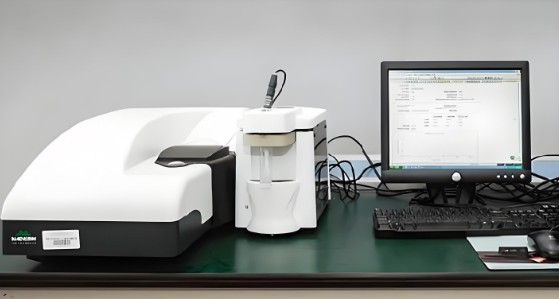
- Spectral reflectance measurement in visible and near-infrared bands per MIL-PRF-53126 and ASTM E903 — a spectrophotometer with integrating sphere measures the directional-hemispherical reflectance of the camouflage net from 380 nm to 2500 nm, verifying that the pattern matches the background spectral signature and provides effective concealment against image intensifiers and night vision devices.
- Color coordinate and chromaticity verification per CIE 15 and ASTM E308 — the chromaticity coordinates and luminance factor of the camouflage pattern are measured under standard illuminants to verify compliance with the specified military or hunting color standards.
- Gloss and specular reflection control per ISO 2813 and ASTM D523 — the specular gloss of the net surface is measured to ensure no reflective glints betray the concealed position.
- Contrast ratio and target-background matching per internal validated protocol — the camouflage net is photographed against representative backgrounds and the digital image contrast is analyzed to quantify the concealment effectiveness.
- Short-wave infrared reflectance per MIL-DTL-44436 — the reflectance in the SWIR band is characterized to ensure the net provides concealment against hyperspectral sensors and satellite imaging systems.
- Pattern registration and print quality inspection — the printed camouflage pattern is inspected for color consistency, registration accuracy, and freedom from streaks or misprints.
Thermal and Infrared Suppression Testing for Camouflage Nets
- Apparent temperature difference measurement using infrared thermography per internal and customer protocols — the camouflage net is deployed over a heated target simulating body heat or engine heat, and the apparent temperature difference between the net surface and the background is measured with a thermal imager to quantify the thermal suppression performance.
- Thermal emissivity measurement per ASTM E408 and ASTM C1371 — the emissivity of the net surface is measured to verify it emits infrared radiation at a rate that blends with the surrounding environment.
- Long-wave and mid-wave infrared transmission and scattering — the transmittance and reflectance of the camouflage net in the 3 µm to 14 µm thermal bands are measured to evaluate its ability to block or mask the heat signature of the underlying target.
- Thermal insulation and heat retention testing per ASTM C518 — the thermal resistance of the net material is measured to verify it provides sufficient insulation to reduce the surface temperature differential.
- Thermal signature after solar loading and environmental exposure — the net is exposed to simulated sunlight and its surface temperature is monitored to ensure it does not create a detectable thermal contrast against the background.
Radar and Radio Frequency Suppression Testing for Camouflage Nets
- Radar cross-section measurement per IEEE 149 and internal protocols — the camouflage net is placed in an anechoic chamber and illuminated with controlled radar signals across X-band and Ku-band frequencies, and the scattered energy is measured to determine the reduction in radar cross-section provided by the radar-scattering structure.
- Transmission loss and insertion loss at microwave frequencies per ASTM D4935 and IEEE 299 — the attenuation of the camouflage net from 1 GHz to 18 GHz is measured using a vector network analyzer, quantifying the shielding effectiveness against ground surveillance radar and airborne detection systems.
- Dielectric constant and loss tangent measurement per ASTM D2520 — the permittivity and dielectric loss of the net materials are characterized to verify consistent radar-scattering performance.
- Conductive element continuity and resistivity per ASTM D257 — the electrical continuity of conductive threads and metalized films in the camouflage net is measured to ensure reliable radar attenuation performance.
Mechanical and Structural Durability Testing for Camouflage Nets
- Tensile strength and elongation at break per ISO 13934-1 and ASTM D5034 — the camouflage net fabric is stretched to failure in warp and weft directions to measure the breaking force and stretch, ensuring the net withstands tensioning, wind loads, and field deployment without tearing.
- Tear strength by tongue and trapezoid methods per ISO 13937-2 and ASTM D5587 — the force required to propagate a tear is measured to verify the net resists damage from branches, equipment edges, and rough handling.
- Bursting strength per ISO 13938-2 and ASTM D3786 — the multi-directional resistance to rupture is measured to ensure the camouflage net withstands concentrated pressure and impact.
- Seam strength and joint integrity per ISO 13935-2 — the stitched, welded, or glued seams and attachment points are tested to ensure the assembled net remains intact under gusty wind and repeated deployment cycles.
- Abrasion resistance per ASTM D4966 and ISO 12947-2 — the net surface is rubbed against a standard abrasive to evaluate wear resistance when dragged over rough terrain.
- Impact and puncture resistance per ASTM D2582 — the force required to push a probe through the net is measured to verify resistance to sharp objects and debris.
Weathering and Environmental Durability Testing for Camouflage Nets
- Accelerated weathering by xenon-arc exposure per ISO 4892-2 and ASTM G155 — the camouflage net is subjected to simulated sunlight, heat, and moisture cycles, and the color change, spectral reflectance shift, and retained mechanical properties are evaluated to predict outdoor service life.
- UV resistance by fluorescent lamp exposure per ASTM G154 — isolating the ultraviolet degradation mechanism to evaluate the net's resistance to fading, embrittlement, and loss of concealment performance.
- Water absorption and rain shower resistance per ISO 4920 — the net is exposed to controlled water spray and the mass gain and drying time are recorded to verify it does not become waterlogged, which would increase weight and alter the thermal signature.
- Resistance to mold, mildew, and biological degradation per ASTM G21 and ISO 846 — the camouflage net is inoculated with fungal spores and incubated to confirm it does not support biological growth in humid field environments.
- Resistance to fuels, oils, and insect repellents per ASTM D543 and ISO 175 — the net material is exposed to diesel, gasoline, DEET, and permethrin to verify no staining, delamination, or loss of spectral properties occurs.
- Low-temperature flexibility and cold crack resistance per ASTM D2136 — the net is conditioned at sub-zero temperatures and flexed to confirm it remains pliable and does not crack in arctic conditions.
Fire Safety and Restricted Substance Compliance for Camouflage Nets
- Vertical flame test and limited flame spread per ASTM D6413 and EN ISO 15025 — the camouflage net is exposed to a defined flame and the afterflame time, afterglow, and char length are measured to verify compliance with military and outdoor fire safety requirements.
- RoHS compliance per IEC 62321 and EU Directive 2011/65/EU — quantitative screening for lead, mercury, cadmium, hexavalent chromium, PBBs, and PBDEs in the fabric, coatings, and any metallic components.
- REACH Annex XVII and SVHC screening — targeted analysis of Substances of Very High Concern including specific phthalate plasticizers and organotin stabilizers.
- Heavy metals and extractable elements per EN 71-3 and ASTM F963 — for camouflage nets used in training environments with prolonged skin contact, the migration of regulated metals is tested.
- Heavy metals in packaging per EU Directive 94/62/EC — verification that the sum concentration of lead, cadmium, mercury, and hexavalent chromium in the packaging and labels is below the 100 ppm regulatory limit.
Report Recognition and ISO/IEC 17025 Compliance
Every test method described in this camouflage net detection service is covered by our ISO/IEC 17025 scope of accreditation. Our technical reports are accepted by European notified bodies under defense procurement frameworks, by North American military specification authorities referencing MIL-PRF standards, and by customs and procurement agencies across the Middle East, Australia, and Asia. Whether you require a complete qualification dossier for a new camouflage system, a batch release inspection for an export shipment, or a root cause failure analysis of a field performance issue, our laboratory provides the measurement accuracy and defense material expertise that the global military and outdoor concealment industries demand.