Building Reflective Insulation Coating Testing Service for Global Energy Efficiency
As an ISO/IEC 17025 accredited laboratory, we deliver a specialized Building Reflective Insulation Coating Testing Service that verifies solar reflectance, thermal emittance, long-term weathering durability, and chemical compliance. Our Building Reflective Insulation Coating Testing Service supports manufacturers and exporters of cool roof coatings, exterior wall thermal paints, and energy-saving building membranes who must demonstrate conformity to ASTM, EN, ISO, and regional green building standards across the European Union, North America, the Middle East, and Asia Pacific. Every test is conducted under our CNAS-accredited quality system, producing reports that are accepted by notified bodies, green building certification programs, and major procurement authorities worldwide.

Product Samples We Regularly Test in Our Building Reflective Insulation Coating Testing Service
- Acrylic and elastomeric cool roof coatings — water-based reflective paints for flat and sloped roofing
- Ceramic-filled and hollow-bead thermal insulation coatings — for exterior walls, facades, and concrete surfaces
- Silicone and polyurethane reflective roof coatings — high-durability systems for metal and membrane roofs
- Phase change material and nano-insulation coatings — advanced functional coatings for building envelope energy management
- Reflective base coats and topcoats for built-up roofing — used in cool roof assemblies and restoration
- Textured and multi-layer reflective coating systems — for stucco, EIFS, and decorative architectural finishes
- Heat-reflective window and glazing films — solar control films applied to building glass
- Reflective insulation paint for metal and industrial buildings — for warehouses, storage tanks, and prefabricated structures
Solar Reflectance and Thermal Emittance Testing for Building Reflective Insulation Coatings
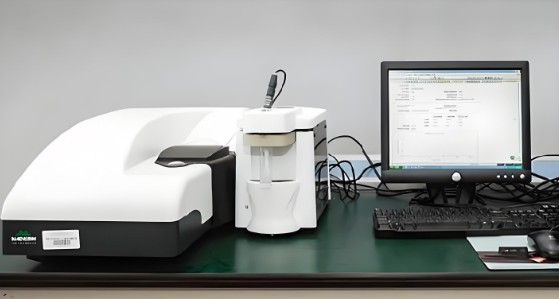
- Solar reflectance measurement using spectrophotometer with integrating sphere per ASTM E903 and ASTM C1549 — the coating is applied to a standard substrate and the spectral reflectance across the ultraviolet, visible, and near-infrared wavelength ranges is measured to calculate the total solar reflectance, the primary performance indicator for a reflective insulation coating.
- Solar reflectance index calculation per ASTM E1980 — combining the measured solar reflectance and thermal emittance to compute the SRI value, which ranks the coating's ability to reject solar heat and maintain a lower surface temperature under full sun exposure, a key metric for LEED and BREEAM green building credits.
- Thermal emittance determination per ASTM C1371 and ASTM E408 — using a portable emissometer or a guarded hot plate method to measure the coating's ability to radiate absorbed heat back to the sky, critical for nocturnal cooling and overall thermal performance of the building envelope.
- Near-normal hemispherical transmittance and reflectance per EN 14500 and ISO 9050 — for coatings applied to glazing, the solar direct transmittance and reflectance are determined to verify conformance with European standards for solar protection devices.
- Aged solar reflectance after weathering per ASTM C1549 and ASTM G155 — the coating is subjected to accelerated weathering and its solar reflectance is remeasured to confirm that the reflective insulation coating retains its performance over the required service life, a mandatory requirement for cool roof product certification.
Physical and Mechanical Property Testing of Building Reflective Insulation Coatings
- Dry film thickness and coverage rate per ASTM D7091 and ISO 2808 — non-destructive magnetic and eddy-current measurement of the applied coating thickness to verify that the specified dry film thickness and the corresponding coverage rate per liter are achieved on the building substrate.
- Adhesion by pull-off and cross-cut methods per ASTM D4541 and ISO 2409 — quantifying the bond strength between the reflective insulation coating and concrete, metal, or asphalt substrates using a portable pull-off adhesion tester, and assessing the resistance to detachment by a cross-hatch tape test.
- Tensile strength and elongation at break per ASTM D2370 and ISO 527-3 — measurement of the free-film mechanical properties to confirm the coating can bridge substrate cracks and withstand thermal expansion and contraction without cracking or peeling.
- Water absorption and liquid water transmission per ASTM D870 and ASTM E96 — the coating's resistance to water penetration and its breathability are assessed to ensure the building envelope remains protected from rain while allowing interior moisture to escape.
- Abrasion resistance per ASTM D4060 and ISO 7784 — Taber abrader testing evaluates the coating's ability to withstand foot traffic, wind-blown debris, and maintenance cleaning without loss of reflectivity.
Durability, Weathering, and Environmental Resistance Testing of Reflective Insulation Coatings
- Accelerated weathering by xenon-arc exposure per ASTM G155 and ISO 16474-2 — the coating is subjected to controlled cycles of simulated sunlight, heat, and water spray for up to 2000 hours or more, followed by solar reflectance and adhesion retests to validate the long-term performance and color stability of the reflective insulation coating.
- Fluorescent UV and condensation exposure per ASTM D4587 and ASTM G154 — using UVA-340 lamps and condensation cycles to isolate the effects of UV radiation and moisture on the coating's polymer binder, detecting chalking, cracking, and loss of reflectivity.
- Thermal cycling and heat resistance per ASTM D2485 and internal protocols — cycling the coated panels between elevated service temperature and sub-zero conditions to evaluate the resistance to thermal shock and the coating's ability to maintain adhesion and reflectivity under extreme temperature fluctuations.
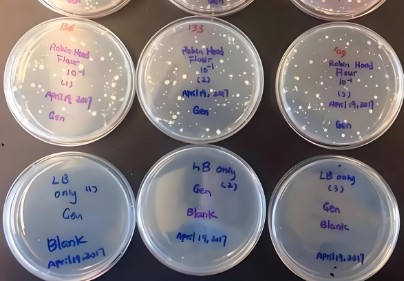
- Resistance to mold, mildew, and biological growth per ASTM D3273 and ASTM G21 — the coating is exposed to high humidity and fungal spores to verify that the reflective surface does not support biological colonization that would darken the surface and reduce solar reflectance.
- Salt spray and corrosive atmosphere resistance per ASTM B117 and ISO 9227 — for coatings applied in coastal and industrial environments, the resistance to salt fog and corrosive gases is evaluated to ensure long-term protection of the building substrate and maintenance of reflective properties.
- Dirt pick-up and cleanability per ASTM D3719 and custom protocols — a controlled soiling agent is applied to the cured coating surface and the loss of reflectance is measured, then the coating is cleaned and the recovery of reflectance is determined to simulate the effect of atmospheric pollution and maintenance washing.
Fire Safety and Reaction-to-Fire Testing of Building Reflective Insulation Coatings
- Euroclass reaction-to-fire classification per EN 13501-1 — the coating applied to a representative substrate is tested for ignitability (EN ISO 11925-2) and contribution to fire growth (EN 13823 single burning item test), generating the classification required for CE marking of construction products.
- Surface burning characteristics per ASTM E84 — the flame spread index and smoke developed index are determined for the reflective insulation coating on the intended building substrate, verifying Class A performance for North American building code compliance.
- Limited combustibility and heat of combustion per EN ISO 1716 and ISO 1182 — for coatings claiming non-combustible or limited combustible status, the calorific potential and furnace behavior are measured to support the highest fire safety classifications.
- Ignition resistance and small flame exposure per ASTM D3806 — a two-foot tunnel method evaluates the coating's resistance to ignition from a small flame source, a requirement for roof coatings in wildfire-prone regions.
Chemical Safety and VOC Emission Testing of Reflective Insulation Coatings
- Volatile organic compound content per ASTM D6886 and ISO 11890-2 — the VOC concentration in the liquid coating is quantified by gas chromatography to ensure compliance with LEED v4.1, CARB, and EU Solvent Emissions Directive limits for architectural coatings.
- Formaldehyde and aldehyde emission from cured coating per ISO 16000-3 and EN 16516 — chamber testing measures the release of formaldehyde and other carbonyl compounds from the dried reflective coating to verify indoor air quality compliance for occupied building spaces.
- Heavy metals and restricted substances per EU RoHS and REACH — ICP-OES and GC-MS analysis for lead, cadmium, mercury, hexavalent chromium, phthalates, and restricted flame retardants ensures the reflective insulation coating meets global environmental and consumer safety regulations.
- Polycyclic aromatic hydrocarbons per AfPS GS 2019:01 PAK — where carbon black or coal tar derivatives are present, the 15 restricted PAHs are quantified to confirm the coating is safe for application by workers and for use on buildings.
Report Recognition and ISO/IEC 17025 Compliance
All test methods described in this Building Reflective Insulation Coating Testing Service are included within our ISO/IEC 17025 scope of accreditation. Our reports are accepted by European notified bodies for CE marking of construction products, by the Cool Roof Rating Council and ENERGY STAR for reflective roof product certification, and by green building certification bodies and customs authorities across the Middle East, Australia, and Asia. Whether you need a full qualification test for a new reflective insulation coating, a batch release verification for an export shipment, or an independent performance comparison study, our laboratory provides the measurement accuracy and technical depth that the global sustainable building materials industry demands.