Atomic Fluorescence Spectroscopy (AFS) Testing Services – Accredited Ultra‑Trace Elemental Analysis for Global Markets
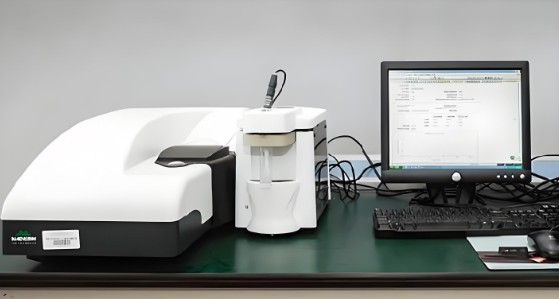
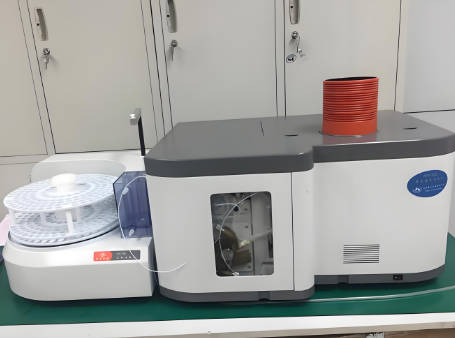
Our internationally accredited laboratory delivers specialist Atomic Fluorescence Spectroscopy (AFS) testing services that provide environmental agencies, food and beverage manufacturers, pharmaceutical producers, mining companies, clinical researchers and industrial clients worldwide with exceptionally sensitive, interference‑free data for the determination of hydride‑forming elements and mercury. All analyses are performed within the rigorous framework of ISO/IEC 17025, and each report bearing the ILAC mark is unconditionally accepted by regulatory authorities, customs offices and notified bodies in all major economies. AFS testing services combine the selectivity of hydride generation or cold‑vapour generation with the extraordinary detection limits of fluorescence spectrometry, routinely achieving quantification at parts‑per‑trillion levels for mercury, arsenic, selenium, antimony, bismuth and tellurium. For a seafood exporter needing to demonstrate compliance with the strictest methyl‑mercury limits, a drinking‑water utility monitoring arsenic and selenium, or a pharmaceutical manufacturer quantifying elemental impurities according to ICH Q3D, our AFS platform delivers the legally robust, globally accepted data that underpin market access, product registration and public‑health protection on every continent.
Product Samples We Regularly Analyze Using Atomic Fluorescence Spectroscopy
Our sample preparation laboratories are equipped to digest, extract or derivatise a vast variety of matrices, ensuring that the analyte is presented to the AFS instrument in the optimal chemical form. The following categories represent the samples most frequently submitted for our Atomic Fluorescence Spectroscopy testing services:
- Environmental waters and wastewaters – drinking water, surface water, groundwater, seawater, industrial effluents, leachates and mine‑drainage waters
- Soils, sediments and solid wastes – contaminated land samples, dredged sediments, sewage sludge, fly ash, incinerator bottom ash and mining tailings
- Biological tissues and clinical specimens – fish muscle, shellfish, hair, nails, urine, blood and biopsy samples for population‑exposure studies
- Food, beverages and agricultural products – rice, cereals, fruit juices, wine, infant formula, edible oils, seaweed and dietary supplements
- Pharmaceuticals and nutraceuticals – active pharmaceutical ingredients, excipients, herbal medicines and vitamin‑mineral premixes
- Petroleum products and fuels – crude oil, condensates, naphtha and natural gas where mercury must be measured at ultra‑trace levels
- Chemicals and industrial raw materials – caustic soda, sulfuric acid, limestone, catalysts and polymer‑grade monomers
Mercury Determination by Cold Vapour Atomic Fluorescence Spectrometry – EPA 1631, ISO 17852 and Global Drinking‑Water Directives
- Ultra‑trace mercury analysis according to EPA Method 1631, ISO 17852 and ASTM D7622: the sample is digested with bromine monochloride or an equivalent oxidising reagent to convert all mercury species to ionic mercury(II). Stannous chloride is then used to reduce the mercury to elemental vapour, which is swept by an argon carrier gas through a fluorescence cell. A mercury vapour lamp excites the atoms, and the resulting fluorescence signal at 253.7 nm is measured. This Atomic Fluorescence Spectroscopy testing service achieves a method detection limit as low as 0.05 ng/L for water samples, enabling compliance testing against the mercury limit of the EU Drinking Water Directive, the US EPA Mercury and Air Toxics Standards, and the WHO guideline value.
- Direct mercury analysis in solid and semi‑solid samples by thermal decomposition–amalgamation–AFS according to EPA Method 7473 and ASTM D6722: the sample is placed in a nickel or quartz boat and thermally decomposed in a controlled oxygen stream. The mercury vapour is collected on a gold‑amalgam trap, then rapidly released by heating and carried into the AFS detector. The method eliminates the need for wet digestion and is the reference procedure for the determination of total mercury in fish, seafood, hair and soil, supporting the global implementation of the Minamata Convention on Mercury.
- Speciation of mercury – methylmercury and inorganic mercury in biota and sediments: the sample is extracted and the species are separated by gas chromatography or by selective ethylation and purge‑and‑trap, then detected by AFS. The methylmercury concentration, typically reported as a percentage of total mercury, provides the toxicologically relevant data required by the European Food Safety Authority and the Codex Alimentarius for the risk assessment of seafood consumption.
- Mercury in hydrocarbons and natural gas according to ISO 6978‑2 and ASTM D6350: the gaseous or liquid sample is combusted, and the mercury is trapped by amalgamation before AFS detection. The method achieves a detection limit of 0.01 µg/Nm³ in natural gas, protecting cryogenic heat exchangers and aluminium equipment in the global oil‑and‑gas industry from liquid‑metal embrittlement.
Hydride Generation Atomic Fluorescence Spectrometry – Arsenic, Selenium, Antimony and Bismuth According to ISO 17378 and EPA 1632
- Determination of arsenic, selenium, antimony and bismuth by hydride generation AFS according to ISO 17378‑2 and EPA Method 1632: the sample is acidified and reacted with sodium tetrahydroborate to generate the volatile hydrides, which are stripped from the liquid phase and atomised in a hydrogen‑argon diffusion flame or a heated quartz cell. The characteristic fluorescence of each element is measured by a non‑dispersive or monochromator‑based detector, achieving detection limits in the low nanogram per litre range. This Atomic Fluorescence Spectroscopy testing service provides the definitive data for drinking‑water producers who must meet the 10 µg/L arsenic limit of the WHO and the EU, and for rice millers who must demonstrate compliance with the inorganic‑arsenic maximum levels of Commission Regulation (EU) 2015/1006.
- Simultaneous multi‑element hydride generation for selenium, tellurium and antimony: using a multichannel AFS instrument, these elements are determined in a single analytical run, significantly increasing the throughput for large environmental‑monitoring programmes and geological‑exploration campaigns.
- Arsenic speciation – inorganic arsenic(III), arsenic(V) and the organic species monomethylarsonic acid and dimethylarsinic acid: the species are separated by high‑performance liquid chromatography and detected online by hydride‑generation AFS. The method provides the toxicologically significant inorganic‑arsenic fraction without interference from the relatively non‑toxic arsenobetaine found in seafood, meeting the requirements of the European Food Safety Authority for the risk assessment of rice‑based infant foods and fruit juices.
- Selenium speciation – selenite, selenate and selenomethionine in dietary supplements and agricultural products: the species are separated by ion‑exchange chromatography and detected by AFS, enabling the determination of the bioavailable selenium forms that are of nutritional interest and supporting the health claims permitted by the European Food Safety Authority and the US Food and Drug Administration.
Chemical Vapour Generation AFS for Cadmium, Lead, Zinc and Other Transition Elements
- Determination of cadmium and lead by chemical vapour generation AFS: using an appropriate reaction medium and a gas‑liquid separator, cadmium and lead are converted to volatile species and detected by AFS with detection limits of 0.01 µg/L or better. The method provides an alternative to graphite‑furnace AAS for the determination of these toxic metals in drinking water and in food simulants, and it is increasingly used in the quality control of food‑contact materials and toys intended for the global market.
- Analysis of zinc, germanium and tin by vapour‑generation AFS: these elements, which have nutritional or industrial significance, are determined in mineral supplements, polymer stabilisers and electronic materials, complementing the multi‑element capability of our laboratory's spectroscopic suite.
Quality Assurance, Calibration and Validation – The Foundation of Our AFS Testing Services
- Calibration with certified reference materials traceable to NIST, IRMM or other national metrology institutes: every analytical batch includes a multi‑point calibration curve, a method blank, a laboratory control standard, a matrix‑spike recovery and, where available, a certified reference material of a similar composition. The measured value for the certified reference material must fall within the certified uncertainty range before any client result is released.
- Method validation and estimation of measurement uncertainty according to the EURACHEM/CITAC guide and ISO 21748: for each analyte‑matrix combination, the method is fully validated for selectivity, linearity, precision, recovery and limit of quantification. The expanded measurement uncertainty is stated on the test report, providing the client with the transparent information needed for risk assessment and decision‑making.
- Regular participation in international proficiency‑testing schemes: our laboratory participates in proficiency‑testing programmes for mercury in water, methylmercury in fish, arsenic in rice and selenium in food, and our performance is monitored by accreditation bodies and global regulatory authorities. This commitment to external quality control is an integral part of our Atomic Fluorescence Spectroscopy testing services.
Report Acceptance and Global Regulatory Compliance
All analyses performed within our AFS testing services are conducted under the fully accredited scope of our ISO/IEC 17025 quality management system. Each test report that carries the ILAC mark is therefore automatically recognised by regulatory authorities, notified bodies, customs offices and supply‑chain partners in every major economy. For water utilities, seafood exporters, food‑safety laboratories, pharmaceutical manufacturers and mining corporations anywhere in the world, the report constitutes legally robust, internationally accepted evidence that the ultra‑trace elemental composition of the sample has been determined in accordance with the applicable EPA, ISO, EN, ASTM and pharmacopoeial methods. The documentation can be directly used for drinking‑water compliance certification, food‑safety clearance, pharmaceutical impurity assessments under ICH Q3D, the issue of inspection certificates according to EN 10204 or equivalent national standards, and the resolution of commercial and technical disputes concerning the presence of mercury, arsenic, selenium and related elements in any material.