
Atomic Absorption Spectroscopy (AAS) Testing Services – Accredited Elemental Analysis for Global Markets
Our internationally accredited laboratory delivers comprehensive Atomic Absorption Spectroscopy (AAS) testing services that enable manufacturers, environmental consultants, mining companies, food processors, pharmaceutical producers and materials engineers around the world to quantify the elemental composition of their products, raw materials and waste streams with the highest degree of accuracy and traceability. All analyses are performed within the strict framework of ISO/IEC 17025, and each report bearing the ILAC mark is unconditionally accepted by regulatory authorities, customs offices and notified bodies in all major economies. AAS testing services remain the gold standard for the determination of major, minor and trace metals across an extraordinarily wide range of sample matrices, from drinking water and soils to complex alloys and biological tissues. By employing flame, graphite furnace, hydride‑generation and cold‑vapour techniques, we provide our global clients with the legally robust, defensible data they need to demonstrate compliance with environmental regulations, to verify product specifications, to monitor food safety and to support research and development programmes on every continent.
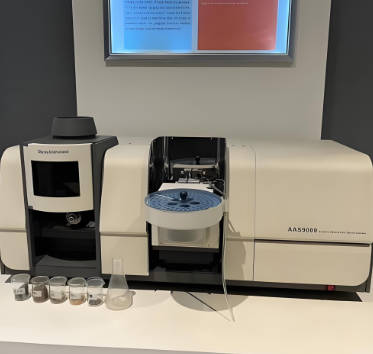
Product Samples We Regularly Analyze Using Atomic Absorption Spectroscopy
Our sample preparation laboratories are equipped to digest, extract or dissolve virtually any solid, liquid or gaseous material. The following categories represent the types of samples most frequently submitted for our Atomic Absorption Spectroscopy testing services:
- Environmental waters and wastewaters – drinking water, surface water, groundwater, industrial effluents, leachates and seawater
- Soils, sediments and solid wastes – contaminated land samples, dredged sediments, sewage sludge, fly ash and mine tailings
- Metals, alloys and ores – steel, aluminium, copper and nickel alloys, precious‑metal bullion, mineral concentrates and geological exploration samples
- Food, beverages and agricultural products – grains, fruits, vegetables, meat, dairy products, fruit juices, wines and edible oils
- Pharmaceuticals and nutraceuticals – active pharmaceutical ingredients, excipients, herbal supplements and vitamin‑mineral premixes
- Petroleum products and fuels – crude oil, gasoline, diesel, lubricating oils, biodiesel and waste oil
- Cosmetics and personal‑care products – creams, lotions, lipsticks, hair dyes and sunscreens
- Biological tissues and clinical specimens – blood, urine, hair, nails, liver and kidney samples for occupational‑health monitoring
Flame Atomic Absorption Spectroscopy – Major and Minor Element Determination According to EPA Method 7000B and ISO 11047
- Determination of alkali, alkaline‑earth and transition metals by flame AAS according to EPA Method 7000B, ISO 11047 and ASTM E1613: the sample solution is aspirated into an air‑acetylene or nitrous oxide‑acetylene flame, where the analyte atoms absorb characteristic radiation from a hollow‑cathode or electrodeless discharge lamp. The absorbance is measured at the resonance wavelength, and the concentration is calculated from a calibration curve prepared with certified reference standards. This Atomic Absorption Spectroscopy testing service is routinely applied to the determination of calcium, magnesium, sodium, potassium, iron, copper, zinc, manganese, lead, nickel, chromium and cadmium in waters, extracts and acid digests. For soil and sediment samples, the report includes the results in milligrams per kilogram dry weight, enabling direct comparison with national environmental quality standards.
- Sequential multi‑element analysis with an autosampler: a single prepared digest can be analysed for up to ten elements in an unattended run, with the instrument automatically optimising the flame conditions and the lamp current for each analyte. The throughput and the low cost per determination make flame AAS the preferred method for the routine monitoring of cement, fertiliser and animal‑feed compositions required by international trade specifications.
- Determination of precious metals in ores and recycled materials: gold, silver, platinum and palladium are extracted by fire assay or aqua regia digestion and determined by flame AAS. The method detection limits in the low milligram per kilogram range meet the requirements of the London Bullion Market Association and the mining‑industry reporting codes.
- Analysis of wear metals and additives in lubricating oils and fuels: the oil sample is diluted with kerosene or a similar organic solvent, and elements such as iron, aluminium, copper, lead, silicon, calcium, zinc and phosphorus are determined directly. The data are used to monitor the condition of engines, gearboxes and hydraulic systems in marine, power‑generation and heavy‑equipment fleets worldwide.
Graphite Furnace Atomic Absorption Spectroscopy – Ultra‑Trace Element Determination at Sub‑ppb Levels
- Determination of trace and ultra‑trace elements by graphite furnace AAS according to EPA Method 7010, ISO 15586 and ASTM E1834: a microlitre aliquot of the sample is injected into a graphite tube, which is heated through a programmed temperature cycle to dry, pyrolyse and atomise the sample. The transient absorption signal is recorded, and the peak area or peak height is compared with a calibration curve. This Atomic Absorption Spectroscopy testing service achieves detection limits in the low nanogram per litre range for elements such as arsenic, selenium, antimony, thallium, beryllium, vanadium and cadmium in drinking water, enabling compliance testing against the stringent limits of the WHO Guidelines for Drinking‑water Quality and the EU Drinking Water Directive.
- Use of chemical modifiers and platform atomisation for difficult matrices: palladium‑magnesium nitrate, ammonium dihydrogen phosphate and other matrix modifiers are added to the sample to stabilise volatile analytes and to allow a higher pyrolysis temperature, eliminating background interference from chlorides and organic matter. The Zeeman‑effect background correction system compensates for non‑specific absorption, ensuring accurate results even for seawater, blood and highly saline industrial effluents.
- Direct solid sampling graphite furnace AAS for inhomogeneous materials: a small mass of powdered solid – such as a cosmetic, a polymer, a food sample or a geological material – is weighed directly onto a platform and introduced into the furnace without any chemical digestion. The method avoids the dilution and contamination risks inherent in wet digestion and is particularly valuable for the determination of volatile elements such as mercury and cadmium in a global food‑safety context.
- Determination of aluminium, silicon and phosphorus at trace levels in high‑purity chemicals and semiconductor‑grade materials: a dedicated furnace, operated in a cleanroom environment, achieves detection limits in the low nanogram per gram range, supporting the quality‑control requirements of the electronics and pharmaceutical industries.
Hydride Generation and Cold Vapour AAS – Specialised Techniques for Mercury, Arsenic, Selenium and Antimony
- Determination of mercury by cold vapour AAS according to EPA Method 7470A (liquid) and EPA Method 7471B (solid): the sample is digested with a mixture of nitric acid, sulfuric acid and potassium permanganate, and the ionic mercury is reduced to elemental mercury vapour by stannous chloride. The vapour is swept through a quartz absorption cell, and the absorbance at 253.7 nm is measured. This Atomic Absorption Spectroscopy testing service achieves a detection limit of 0.02 µg/L for water and 0.5 ng/g for solid samples, meeting the strictest international requirements for the monitoring of mercury in seafood, sediments and industrial effluents.
- Hydride‑generation AAS for arsenic, selenium and antimony according to EPA Method 7061A (arsenic) and ISO 11969 (arsenic): the acidified sample is reacted with sodium borohydride to generate the volatile hydrides, which are swept into a heated quartz cell for atomisation. The detection limits are typically 0.01 µg/L for arsenic and 0.02 µg/L for selenium, enabling the routine analysis of drinking water, rice, fruit juices and biological tissues for these carcinogenic elements.
- Speciation of arsenic and selenium by coupling hydride generation with selective trapping: inorganic arsenic(III) and arsenic(V), and the organic species monomethylarsonic acid and dimethylarsinic acid, are separated by controlling the pH and the reducing conditions, providing the toxicologically relevant speciation data required by the European Food Safety Authority and the Codex Alimentarius.
- Total mercury in hydrocarbons and natural gas: the sample is combusted or thermally decomposed, and the mercury is collected on a gold‑amalgam trap, then released by heating into the cold‑vapour AAS cell. The method is used by oil‑and‑gas companies globally to monitor mercury in natural gas, condensates and refinery streams, protecting downstream catalysts and aluminium heat exchangers from liquid‑metal embrittlement.
Quality Assurance, Calibration and Reporting – The Foundation of Our AAS Testing Services
- Calibration with certified reference materials traceable to NIST, BAM or other national metrology institutes: every analytical run includes a multi‑point calibration curve, a blank, a laboratory control standard and, where available, a certified reference material of a similar matrix. The measured values for the certified reference material must fall within the certified range before any client result is reported.
- Method validation and measurement uncertainty estimation according to EURACHEM/CITAC and ISO 21748: for each analyte‑matrix combination, the method is validated for selectivity, linearity, precision, recovery and limit of quantification. The expanded measurement uncertainty, typically between 5 % and 15 % of the reported value, is stated on the test report, giving the client full transparency and confidence in the data.
- Participation in international proficiency‑testing schemes: our laboratory regularly participates in programmes such as LGC, ERA and the Global Water Research Coalition, and the proficiency‑test results are publicly available or can be provided to the client upon request. This commitment to external quality control is an integral part of our Atomic Absorption Spectroscopy testing services and is frequently audited by global regulatory agencies.
Report Acceptance and Global Regulatory Compliance
All analyses performed within our AAS testing services are conducted under the fully accredited scope of our ISO/IEC 17025 quality management system. Each test report that carries the ILAC mark is therefore automatically recognised by regulatory authorities, notified bodies, customs offices and supply‑chain partners in every major economy. For environmental laboratories, mining and mineral‑processing companies, food and pharmaceutical manufacturers, petroleum refiners and occupational‑health services anywhere in the world, the report constitutes legally robust, internationally accepted evidence that the elemental composition of the sample has been determined in accordance with the applicable EPA, ISO, ASTM, EN and pharmacopoeial methods. The documentation can be directly used for environmental permitting, product registration, import‑export clearance, the issue of inspection certificates according to EN 10204 or equivalent national standards, and the resolution of commercial and technical disputes concerning the presence or concentration of metals in any material.




