Anti Stone Impact Experiment – Accredited Gravel Impact and Stone Chip Resistance Evaluation for Global Markets
Our internationally accredited laboratory provides a specialist anti stone impact experiment service that enables automotive manufacturers, coatings suppliers, plastic component producers, aerospace engineers and consumer‑goods developers worldwide to independently verify the resistance of their materials and finished parts to the high‑velocity impact of gravel, road debris and wind‑borne stones. Every test is conducted within the rigorous framework of ISO/IEC 17025, and each report bearing the ILAC mark is unconditionally accepted by regulatory authorities, notified bodies and supply‑chain partners in all major economies. The anti stone impact experiment precisely controls the size, shape, velocity, angle and temperature of the impacting projectiles, reproducing the real‑world chipping that occurs on vehicle body panels, headlamp lenses, windshields, aircraft leading edges and protective coatings. By quantifying the extent of the coating delamination, the substrate deformation, the crack formation and the corrosion initiation after the impact, we provide the legally robust, defensible data that underpin material selection, process validation and compliance with the relevant ISO, ASTM, SAE and customer‑specified standards.
Product Samples We Regularly Subject to the Anti Stone Impact Experiment
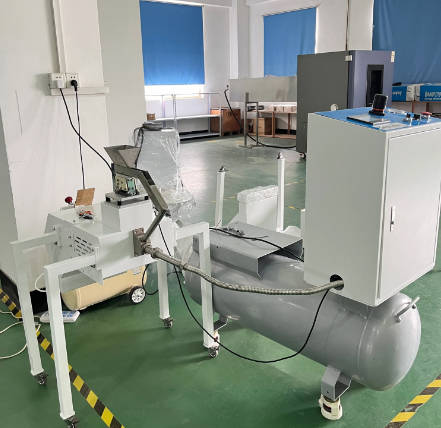
The gravel‑impact test rigs, environmental chambers, high‑speed cameras and optical microscopes in our facility accommodate flat panels, three‑dimensional components and complete assemblies. The following categories represent the items most frequently evaluated through our anti stone impact experiment programme:
- Automotive body panels and exterior trim – steel and aluminium hoods, door skins, fenders, bumpers, mirror housings and side‑sill covers coated with the full paint system
- Automotive glazing and lighting – laminated windscreens, tempered side windows, polycarbonate headlamp lenses, rear‑lamp covers and sunroof panels
- Protective coatings and films – anti‑chip primers, stone‑guard coatings, polyurethane and polyurea spray‑on bed‑liners, paint‑protection films and powder coatings
- Plastic and composite components – injection‑moulded grilles, spoilers, wheel‑arch liners, under‑body shields and carbon‑fibre‑reinforced panels for the automotive and the aerospace sectors
- Aerospace and wind‑energy structures – wing leading‑edge skins, helicopter rotor blades, engine‑nacelle inlets, propeller blades and wind‑turbine blade surfaces
- Consumer and industrial products – smartphone and tablet housings, power‑tool casings, outdoor‑furniture finishes and military‑equipment coatings
Gravel Impact and Stone Chip Resistance According to ISO 20567‑1, ASTM D3170 and SAE J400
- Determination of the resistance of organic coatings to stone chipping by the multi‑impact method according to ISO 20567‑1 (Paints and varnishes – Determination of stone‑chip resistance of coatings – Part 1: Multi‑impact testing) and ASTM D3170: a standardised batch of chilled‑iron grit or natural gravel of a defined size and angularity is accelerated by compressed air through a nozzle onto the coated test panel at a precisely controlled pressure, stand‑off distance and impact angle. The panel is inspected for the number, the size and the depth of the chips, and the area of the delaminated coating is quantified by image analysis or by the adhesive‑tape removal of the loosened fragments. The result is expressed as the chip‑density rating or the percentage of the exposed substrate, and the performance class is assigned according to the scale of the standard. This anti stone impact experiment is the primary qualification test for automotive paint systems and is directly referenced in the material specifications of the world’s leading vehicle manufacturers.
- Single‑impact stone‑chip test according to SAE J400 (Test for Chip Resistance of Surface Coatings) and the principles of DIN 55996‑1: individual projectiles of a known mass and shape are fired at the coated surface, and the energy required to produce the first chip, the chip morphology and the adhesion loss around the impact crater are recorded. The experiment isolates the intrinsic adhesion and the cohesive strength of each layer of the paint system – the primer, the basecoat and the clearcoat – and the data are used to compare the chipping resistance of different coating formulations and the bake conditions.
- Low‑temperature stone impact testing at -20 °C, -30 °C and -40 °C: the test panel and the projectiles are conditioned in a cold chamber, and the gravel impact is conducted at the sub‑zero temperature. The increase in the chipping severity and the embrittlement‑induced failure mode are reported, providing the data that the material engineer uses to guarantee the winter‑driving stone‑chip resistance of the vehicle’s front‑end and under‑body components.
- Stone‑impact resistance of plastic substrates and flexible coatings: the impact test is adapted for the thermoplastic and the elastomeric substrates by adjusting the projectile energy and by evaluating the indentation depth, the coating‑cracking and the delamination at the impact site. This anti stone impact experiment verifies the ability of a painted bumper or a flexible wing to absorb the gravel impact without exposing the substrate to the corrosive environment.
- Corrosion‑initiation after stone chipping – combined gravel impact and cyclic‑corrosion testing: the impacted panel is subjected to a salt‑spray or a cyclic‑corrosion test according to ISO 11997‑1, and the under‑film corrosion creep from the stone‑chip sites is measured. The experiment predicts the long‑term cosmetic and structural corrosion performance of the coating system after the in‑service gravel damage, directly supporting the anti‑perforation warranty of the vehicle body.
Advanced Anti Stone Impact Experiments for Glazing, Films and High‑Velocity Applications
- Stone‑impact testing of laminated and tempered automotive glazing according to the principles of ECE R43 Annex 17 and the OEM chip‑resistance specifications: a steel or a ceramic projectile is fired at the windscreen or the side‑window glass, and the size of the resulting star‑crack, the adhesion of the PVB interlayer and the optical distortion in the driver’s primary viewing area are evaluated. The test verifies that the glazing will retain the adequate visibility and the structural integrity after a motorway stone impact.
- High‑velocity ice‑ and gravel‑impact testing of aircraft and wind‑turbine blade leading edges: the test is conducted in a climate‑controlled wind tunnel or a ballistic range at velocities up to 150 m/s, simulating the impact of hail, runway debris and wind‑borne gravel on the take‑off and the landing. The erosion rate, the delamination area and the residual fatigue strength of the composite structure are reported, providing the certification data for the airworthiness authorities and the wind‑farm operators.
- Evaluation of the stone‑chip resistance of paint‑protection films and self‑healing coatings: the film is applied to a painted panel and impacted by the gravel, and the self‑healing behaviour – the closure of the scratches and the recovery of the gloss – is monitored as a function of the time and the temperature. This anti stone impact experiment quantifies the protective capability and the durability of the film, and the data are used to market the film to the automotive aftermarket and the luxury‑vehicle manufacturers.
- Multi‑impact fatigue and the cumulative damage assessment of the stone‑guard coatings: the same area of the panel is subjected to a programmed sequence of hundreds of gravel impacts, and the progressive loss of the coating thickness, the evolution of the chipping pattern and the eventual breakthrough to the substrate are monitored. The S‑N‑type curve for the stone‑impact fatigue is constructed, and the expected service life of the coating on a given vehicle location is predicted.
Evaluation, Analysis and Reporting for the Anti Stone Impact Experiment
- Quantitative image analysis and the automated chip‑counting according to ISO 21227‑1 and the internal validated software: the impacted panel is scanned by a high‑resolution flatbed scanner or a digital microscope, and the image is processed to identify, count and size every chip, crack and delamination feature. The chip‑density, the mean chip‑diameter and the percentage of the total delaminated area are calculated and reported, removing the operator‑subjectivity from the assessment.
- Cross‑sectional microscopy and the interfacial‑adhesion evaluation of the impact craters: a micro‑section through a representative impact crater is prepared and examined by the optical or the scanning electron microscope. The crack‑propagation path through the clearcoat, the basecoat and the primer, and the adhesion‑loss at the coating‑substrate interface are documented, providing the root‑cause analysis of the chipping failure.
- Stone‑impact‑resistance classification and the comparison with the reference standard: the result of the anti stone impact experiment is compared with the acceptance criteria of the relevant international standard or the customer’s internal scale, and a pass‑fail verdict is issued. The performance of the test material relative to the reference system is reported, enabling the rapid go‑no‑go decision for the product‑development and the quality‑control gate.
- Statistical process‑control and the batch‑to‑batch consistency monitoring: a defined number of panels from each production batch are tested, and the chip‑density and the standard deviation are plotted on a control chart. Any drift beyond the upper control limit triggers the investigation and the corrective action, ensuring the consistent stone‑chip resistance of the serial‑production coating or the component.
Report Acceptance and Global Regulatory Compliance
All measurements performed within our anti stone impact experiment service are executed under the fully accredited scope of our ISO/IEC 17025 quality management system. Each test report that carries the ILAC mark is therefore automatically recognised by regulatory authorities, notified bodies, customs offices and supply‑chain partners in all major economies. For automotive paint manufacturers, plastic‑component suppliers, aircraft‑structure designers and protective‑film producers anywhere in the world, the report constitutes legally robust, internationally accepted evidence that the stone‑impact resistance and the chipping behaviour of the material have been determined in accordance with the applicable ISO, ASTM, SAE, DIN and customer‑specified methods. The documentation can be directly used to support the material approval for the vehicle programme, the CE marking of the construction product, the airworthiness‑certification submission and the resolution of commercial and technical disputes concerning the impact durability of any coated surface.