
Anti Steam Treatment Performance Testing Service – Accredited Evaluation of Resistance to Steam Sterilization, Moist Heat and Condensation for the Czech Market
Our internationally accredited laboratory delivers a specialist anti steam treatment performance testing service that enables Czech manufacturers of medical devices, pharmaceutical packaging, automotive components, electronic enclosures and industrial coatings to verify that their products will withstand repeated exposure to steam, humid heat and condensation without unacceptable degradation. All tests are performed within the strict framework of ISO/IEC 17025, and every report bearing the ILAC mark is unconditionally accepted by the Czech Trade Inspection Authority, the State Institute for Drug Control, customs offices and all notified bodies across the European Union. This anti steam treatment performance testing service simulates the conditions inside a sterilizer autoclave, a steam-cleaning cabinet, a condensing humid environment or a weather chamber, and it quantifies the resulting changes in appearance, adhesion, mechanical strength, electrical insulation, sealing integrity and dimensional stability. For a Czech producer of reusable surgical instruments, an importer of waterproof coatings for sanitary rooms, or a supplier of electronic housings for railway applications, this service provides the legally robust evidence that the product will remain safe and functional throughout its service life under the influence of steam and hot water vapour.
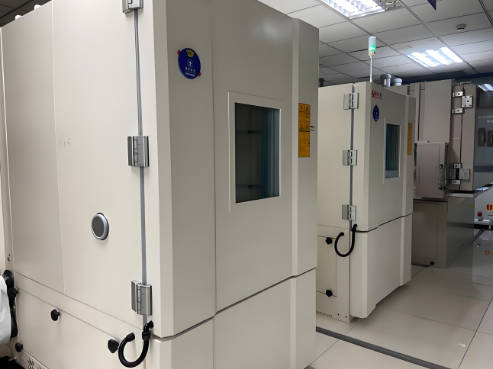
Product Samples We Regularly Subject to Anti Steam Treatment Performance Testing
The steam autoclaves, condensation chambers and superheated steam generators in our facility accommodate items from small electronic sensors to large enclosures. The following categories represent the most frequently tested samples:
- Medical devices and surgical instruments – reusable scalpels, forceps, endoscope components, dental handpieces and implantable device trays
- Pharmaceutical and laboratory packaging – glass vials, rubber stoppers, aluminium seals, plastic bottles, blister packs and pre‑fillable syringes
- Coatings, paints and surface treatments – epoxy and polyurethane floor coatings, wall paints, powder coatings on metal cabinets and anti‑corrosion primers
- Electronic enclosures and outdoor cabinets – sealed junction boxes, telecommunication cabinets, IP‑rated instrument housings and cable glands
- Automotive and railway components – engine bay connectors, sensor housings, headlamp assemblies exposed to steam cleaning, and under‑bonnet labels
- Textiles, laminates and nonwovens – steam‑sterilizable barrier fabrics, surgical drapes, filtration media and protective clothing
- Adhesives, sealants and potting compounds – silicone, polyurethane and epoxy bonds that must survive repeated sterilization or condensing humidity
Medical Device and Laboratory Ware – Anti Steam Treatment Performance Testing According to EN 285, ISO 17665 and EN ISO 11138
- Steam sterilization resistance according to ČSN EN 285 and ISO 17665: the device or packaging is subjected to a defined number of saturated‑steam sterilization cycles at 121 °C for 20 minutes or at 134 °C for 3 to 5 minutes, with a vacuum‑pulsing phase if specified by the manufacturer. After each cycle, the item is examined for changes in visual appearance, colour, cracking, embrittlement and water absorption. Functional tests, such as the force to open a clamp or the sharpness of a blade, are repeated, and any loss of function is documented. This anti steam treatment performance testing service is mandatory for the validation of reusable medical devices and the CE marking of sterile barrier systems under the Medical Device Regulation.
- Resistance to repeated sterilization and cleaning cycles: up to 500 steam sterilization cycles combined with a simulated alkaline cleaning step are applied to the test specimens. The cumulative effect on the material's tensile strength, the clarity of transparent parts and the torque retention of threaded connections is reported. Czech manufacturers of surgical instruments use these data to define the maximum number of reprocessing cycles permitted in the instructions for use.
- Steam permeability and integrity of sterile barrier systems according to ČSN EN ISO 11607: the packaging material is sealed and subjected to the steam sterilization cycle, and the integrity of the seal and the ability to prevent re‑contamination are verified by dye‑penetration and microbial‑challenge tests. The report confirms that the packaging maintains sterility after the steam process.
- Corrosion resistance of metallic instruments after steam exposure: the instruments are inspected under a microscope for pitting, rust spots and discoloration after a defined number of cycles. The test is performed with water of a known chloride content, and if corrosion is detected, the cause is identified by scanning electron microscopy and energy‑dispersive X‑ray analysis.
Coatings, Paints and Surface Treatments – Anti Steam Treatment Performance Testing According to ISO 6270‑2 and EN 438
- Resistance to condensing humidity according to ČSN EN ISO 6270‑2 (condensation‑water test): coated test panels are mounted as the lid of a climate chamber containing heated, saturated air, so that condensation continuously forms on the coating surface. After 100, 500 or 1 000 hours at 40 °C or 60 °C, the panels are inspected for blistering, loss of gloss, colour change and softening. The cross‑cut adhesion test according to ČSN EN ISO 2409 is performed immediately after the steam exposure and after a recovery period, and any reduction in adhesion is reported. This anti steam treatment performance testing service is used by Czech paint manufacturers to certify their products for use in kitchens, bathrooms and food‑processing plants.
- Steam‑jet resistance of high‑pressure laminate surfaces according to ČSN EN 438‑2: a nozzle directs a jet of steam at the surface of the laminate for a specified duration, after which the surface is inspected for delamination, blistering and discoloration. The test verifies that the decorative laminate can be cleaned with steam appliances without damage, which is a common requirement of Czech furniture and interior‑design specifications.
- Cyclic steam and dry‑heat exposure for industrial coatings: a cycle consisting of a steam phase at 90 °C and a dry‑heat phase at 120 °C is repeated up to 100 times. The change in the coating's glass‑transition temperature, the development of micro‑cracks and the loss of barrier protection are evaluated, providing the data needed to specify coatings for industrial equipment that is regularly washed down with steam.
- Adhesion and under‑film corrosion after steam condensation with salt contamination: a saline solution is applied to the scribed coating, and the panel is exposed to condensing humidity. The width of the corrosion creep from the scribe is measured, and the coating is classified according to the requirements of ČSN EN ISO 12944 for protective paint systems in high‑humidity environments.
Electronic Enclosures and Outdoor Installations – Anti Steam Treatment Performance Testing Against Humid Heat and Condensation
- Damp heat steady‑state test according to ČSN EN 60068‑2‑78 (IEC 60068‑2‑78): the enclosure or electronic assembly is exposed to a constant atmosphere of +40 °C and 93 % relative humidity for 10, 21 or 56 days. The insulation resistance, the dielectric strength and the visual condition of the internal surfaces are measured before, during and after the test. This anti steam treatment performance testing service simulates the prolonged exposure of a sealed cabinet to a condensing atmosphere and is mandatory for products that must carry the CE marking under the Low Voltage Directive.
- Cyclic condensation and steam‑ingress test for IP‑rated enclosures: the enclosure is subjected to alternating cycles of steam‑jet cleaning and cold‑water immersion to create a pressure differential that draws moisture past the seals. After the cycling, the internal humidity and any water accumulation are measured, and the enclosure must still meet its declared IP rating according to ČSN EN 60529.
- Anti steam treatment of cable glands and sealed connectors: complete cable‑gland assemblies are mounted on an enclosure and exposed to saturated steam at 100 °C for 24 hours, followed by a thermal shock into cold water. The sealing effectiveness is then tested by a pressure‑decay method, and any leakage is recorded. Czech manufacturers of railway signalling equipment and outdoor LED displays use this test to guarantee that their connectors will not fail due to steam cleaning or summer condensation.
- Steam‑resistance of labels, nameplates and marking films: adhesive labels and printed films applied to enclosures are subjected to multiple cycles of steam exposure and mechanical wiping. The legibility, the adhesion and the colour fastness are evaluated, ensuring that the safety and identification markings remain readable after the equipment has been steam‑cleaned.
Automotive, Railway and Industrial Components – Anti Steam Treatment Performance Testing for Real‑World Cleaning and Operation
- Steam‑jet cleaning simulation for under‑bonnet connectors and sensors according to OEM specifications: a steam cleaner nozzle delivering saturated steam at a pressure of 8 bar and a temperature of 150 °C is directed at the component for a defined time and from a specified distance. After drying, the component is checked for water ingress, contact corrosion and cracking of the plastic housing. This anti steam treatment performance testing service is specified by Czech automotive tier‑1 suppliers for all connectors and sensors located in the engine compartment.
- Resistance of textile and flexible components to steam sterilization and industrial laundry: fabrics, straps and flexible ducts that must be cleaned by steam or washed at high temperature are cycled through a laboratory‑scale laundry simulation combined with steam drying. The change in tensile strength, the residual shrinkage and the colour fastness are reported, providing the evidence required by Czech manufacturers of passenger‑vehicle interiors and protective equipment.
- Steam‑compatibility testing of lubricants and anti‑seize compounds: the lubricant is applied to a test bearing or a threaded connection, and the assembly is exposed to steam cycles. The residual lubricating performance, the re‑application torque and any wash‑out are measured, helping Czech maintenance engineers select greases that will not be removed by steam cleaning.
- Condensation resistance of optical components and camera modules: the camera or optical sensor is operated inside a steam‑filled chamber, and the formation of condensation on the lens and the time to clear after the steam is removed are recorded. The test is performed at several temperature differentials to ensure that the device will not fog during use in a Czech industrial laundry or a food‑processing area.
Report Acceptance and Regulatory Compliance for the Czech Republic
All measurements performed within our anti steam treatment performance testing service are executed under the fully accredited scope of our ISO/IEC 17025 quality management system. Each test report that carries the ILAC mark is therefore automatically recognised by the Czech Trade Inspection Authority, the State Institute for Drug Control, customs offices and all notified bodies in the European Union. For Czech medical‑device manufacturers, coating producers, electronics‑enclosure suppliers and automotive component makers, the report constitutes legally robust evidence that the product meets the steam‑resistance requirements of the applicable harmonised standards and the essential health and safety requirements of the relevant EU directives. The documentation can be directly used to support CE marking, to issue inspection certificates according to ČSN EN 10204, to compile the technical file for type‑examination, and to resolve commercial and technical disputes concerning the performance of materials and products exposed to steam and condensing humidity.




