Anti-rutting Masterbatch Testing Service for Global Road Engineering
As an ISO/IEC 17025 accredited laboratory, we deliver a dedicated Anti-rutting Masterbatch Testing Service that verifies the physical, chemical, and performance properties of polymer-based additives used to improve the high-temperature deformation resistance of asphalt pavements. Our Anti-rutting Masterbatch Testing Service supports manufacturers and exporters of anti-rutting masterbatch, asphalt modifiers, and polymer pellets who must demonstrate compliance with EN 14023, ASTM D8597, AASHTO T324, and regional highway engineering specifications across the European Union, North America, the Middle East, and Asia. Every test is performed under our CNAS-accredited quality system, producing reports accepted by notified bodies, highway authorities, and procurement teams worldwide.

Product Samples We Regularly Test
- Polyolefin-based anti-rutting masterbatch — for stone mastic asphalt and high-modulus asphalt concrete
- Elastomer and plastomer modified asphalt masterbatch — including SBS, EVA, and PE-based formulations for heavy-duty pavements
- Composite anti-rutting masterbatch with fibers and mineral fillers — for enhanced rutting resistance and crack bridging
- High-viscosity asphalt modifier pellets — for porous asphalt and ultra-thin wearing courses
- Colored and specialty anti-rutting masterbatch — for bus lanes, intersections, and toll plazas
- Recycled and bio-based anti-rutting masterbatch — for sustainable pavement engineering
Core Testing Capabilities of Our Anti-rutting Masterbatch Testing Service
Rutting Resistance and Permanent Deformation Testing
- Wheel tracking test per EN 12697-22 and AASHTO T324 — compacted asphalt slabs containing the anti-rutting masterbatch are subjected to repeated wheel passes at controlled temperature, typically 60 °C, and the rut depth is measured over time to determine the wheel tracking slope and the proportional rut depth, verifying the additive's ability to suppress permanent deformation under heavy traffic.
- Hamburg wheel tracking test per AASHTO T324 — the asphalt mixture is tested under submerged conditions at elevated temperature, and the number of passes to reach a defined rut depth and the stripping inflection point are recorded to evaluate both rutting resistance and moisture susceptibility of the masterbatch-modified mixture.
- Asphalt pavement analyzer test per ASTM D8292 — the rut depth of cylindrical specimens is measured after a specified number of loading cycles under controlled pressure and temperature, providing a rapid comparative ranking of anti-rutting masterbatch formulations.
- Dynamic creep and repeated load axial test per EN 12697-25 — the permanent axial strain is measured under cyclic loading to determine the creep modulus and the resistance to plastic flow, quantifying the improvement in load-bearing capacity provided by the masterbatch.
Rheological and Binder Modification Testing
- Dynamic shear rheometer testing per EN 14770 and ASTM D7175 — the complex shear modulus and phase angle of the base bitumen and masterbatch-modified binder are measured at multiple temperatures and frequencies, calculating the rutting parameter G*/sinδ to verify the high-temperature performance grade improvement achieved by the anti-rutting masterbatch.
- Multiple stress creep recovery test per ASTM D7405 — the binder is subjected to repeated creep and recovery cycles at high stress levels, and the percent recovery and non-recoverable creep compliance are determined to assess the elastic response and the resistance to permanent deformation under heavy and slow-moving traffic.
- Softening point and penetration per EN 1427 and EN 1426 — the softening point and penetration values of the modified binder are measured to confirm the masterbatch raises the softening point and reduces the temperature susceptibility of the base asphalt.
- Viscosity and mixing temperature optimization per EN 13302 and ASTM D4402 — the rotational viscosity of the masterbatch-modified binder is measured to define the mixing and compaction temperature window for asphalt plant production.
- Elastic recovery and force ductility per EN 13398 and ASTM D6084 — the elastic recovery and the tensile properties of the modified binder are tested to verify the polymer network formed by the anti-rutting masterbatch provides the required flexibility and cohesion.
Physical and Chemical Characterization of Anti-rutting Masterbatch
- Melt flow index and thermal stability per ISO 1133 and ASTM D1238 — the melt flow rate of the masterbatch pellets is measured to ensure consistent feeding and dispersion during asphalt mixing, and the thermal stability is evaluated to prevent degradation at plant temperatures.
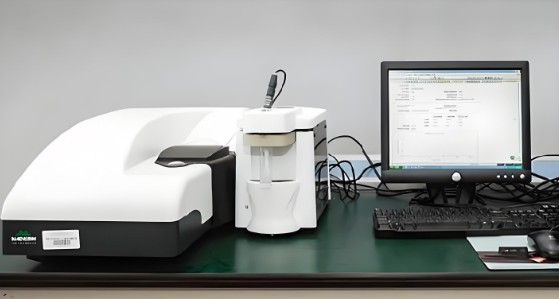
- Density, ash content, and filler type identification per ISO 1183 and ASTM D5630 — the density and inorganic residue of the masterbatch are determined, and the mineral filler composition is identified by FTIR or XRF to verify the formulation matches the specification.
- Polymer content and dispersibility test per EN 14023 and internal protocols — the masterbatch is dissolved or pyrolyzed to quantify the active polymer fraction, and the dispersion of the polymer in the base bitumen is assessed by fluorescence microscopy to ensure uniform modification without agglomeration.
- Storage stability and separation tendency per EN 13399 — the masterbatch-modified binder is stored at elevated temperature in a vertical tube, and the difference in softening point between the top and bottom sections is measured to verify the anti-rutting masterbatch remains stable and does not phase-separate during hot storage.
- Particle size distribution and pellet uniformity per ASTM D1921 — the size and shape of the masterbatch pellets are analyzed to guarantee consistent metering and rapid melting in the asphalt mixing process.
Environmental and Chemical Safety Compliance
- RoHS and REACH restricted substance screening per IEC 62321 and EU Directive 2011/65/EU — quantitative analysis for lead, mercury, cadmium, hexavalent chromium, PBBs, and PBDEs in the anti-rutting masterbatch to ensure compliance with global chemical safety regulations.
- Heavy metals and toxic element content per EN 14023 and EPA Method 1311 — the masterbatch and its leachate are tested for heavy metals that could contaminate groundwater or soil when the asphalt pavement is recycled or landfilled.
- VOC and fume emission during asphalt mixing per ISO 16000-3 and NIOSH methods — the masterbatch is evaluated for the release of volatile organic compounds and hazardous fumes at typical asphalt mixing temperatures to protect plant workers and the environment.
- Biodegradability and ecotoxicity for bio-based masterbatch per OECD 301 and OECD 202 — for sustainable formulations, the aerobic biodegradability and aquatic toxicity are tested to support environmental product declarations and green procurement requirements.
Report Recognition and ISO/IEC 17025 Compliance
Every method described in this Anti-rutting Masterbatch Testing Service falls within our ISO/IEC 17025 scope of accreditation. Our test reports are accepted by European notified bodies for construction products, by North American highway authorities and pavement engineering consultants, and by customs and regulatory agencies across the Middle East, Australia, and Asia. Whether you require a full qualification dossier for a new anti-rutting masterbatch, a batch release inspection for an export shipment, or a root cause failure analysis of a rutting performance issue, our laboratory provides the measurement accuracy and pavement engineering expertise that the global road construction industry demands.