Anti-Wear Hydraulic Oil Testing Service for Global Industrial Compliance
As an ISO/IEC 17025 accredited laboratory, we deliver a comprehensive anti-wear hydraulic oil testing service that verifies the physical properties, chemical composition, wear protection performance, thermal stability, oxidation resistance, and long-term service reliability of hydraulic fluids. Our anti-wear hydraulic oil testing service supports manufacturers and exporters of mineral-based, synthetic, and fire-resistant hydraulic oils who must demonstrate conformity to ISO 11158, DIN 51524-2, ASTM D6158, and regional industrial lubricant standards across the European Union, North America, the Middle East, and Asia. Every test is performed under our CNAS-accredited quality system, producing reports accepted by notified bodies, equipment OEMs, and procurement teams worldwide.

Product Samples We Regularly Test in Our Anti-Wear Hydraulic Oil Testing Service
- Mineral-based anti-wear hydraulic oils — ISO VG 32, 46, 68, and 100 grades for industrial machinery, mobile equipment, and hydraulic presses
- Synthetic and semi-synthetic hydraulic fluids — PAO, ester, and polyalkylene glycol based anti-wear oils for high-temperature and extended service applications
- Fire-resistant hydraulic fluids — water-glycol, phosphate ester, and polyol ester types for steel mills, foundries, and aircraft ground support
- Biodegradable and environmentally acceptable hydraulic oils — for forestry, marine, and environmentally sensitive applications
- Heavy-duty and high-pressure anti-wear hydraulic oils — with enhanced zinc-free or low-zinc additive packages for modern high-pressure systems
- Used and in-service anti-wear hydraulic oil samples — for condition monitoring, remaining useful life assessment, and contamination diagnosis
- Hydraulic oil additives and anti-wear packages — ZDDP, sulfur-phosphorus, and ashless anti-wear additive concentrates
Physical and Rheological Property Testing of Anti-Wear Hydraulic Oil
- Kinematic viscosity at 40 °C and 100 °C per ASTM D445 and ISO 3104 — the flow resistance of the anti-wear hydraulic oil is measured using calibrated capillary viscometers to verify the viscosity grade and to calculate the viscosity index, which indicates the oil's resistance to viscosity change with temperature.
- Viscosity index calculation per ASTM D2270 and ISO 2909 — the viscosity-temperature relationship is quantified to ensure the hydraulic oil maintains adequate film thickness and pump protection across the full operating temperature range of the hydraulic system.
- Density and specific gravity per ASTM D4052 and ISO 12185 — the mass per unit volume is measured using a digital density meter to verify the oil's identity and to support system design calculations.
- Pour point and low-temperature fluidity per ASTM D97 and ISO 3016 — the lowest temperature at which the anti-wear hydraulic oil flows is determined to ensure cold-start protection and reliable operation in cold climates and refrigerated environments.
- Flash point and fire point by Cleveland open cup per ASTM D92 and ISO 2592 — the temperature at which the hydraulic oil vapors ignite is measured to verify safe handling, storage, and high-temperature operation limits.
- Foaming tendency and stability per ASTM D892 and ISO 6247 — the anti-wear hydraulic oil is aerated and the foam volume and collapse time are measured to ensure the oil resists foam formation that would cause pump cavitation, erratic operation, and reduced lubrication.
- Air release and gas separation properties per ASTM D3427 and ISO 9120 — the time for entrained air bubbles to separate from the hydraulic oil is measured, verifying the oil's ability to prevent spongy system response and pump damage.
- Water separability and demulsibility per ASTM D1401 and ISO 6614 — the anti-wear hydraulic oil's ability to separate from water is tested to ensure the oil can be dehydrated and to prevent the formation of stable emulsions that would degrade lubrication performance.
Anti-Wear and Extreme Pressure Performance Testing for Hydraulic Oils
- Four-ball wear test per ASTM D4172 and DIN 51350-3 — the anti-wear hydraulic oil is tested in a four-ball tribometer where a rotating ball is pressed against three stationary balls, and the wear scar diameter is measured to quantify the oil's ability to protect metal surfaces under boundary lubrication conditions.
- Four-ball extreme pressure test per ASTM D2783 and DIN 51350-2 — the load-carrying capacity and the weld point of the hydraulic oil are determined to verify the anti-wear additive package provides adequate protection against scuffing and seizure under high-load conditions.
- FZG gear scuffing test per ASTM D5182 and ISO 14635-1 — the anti-wear hydraulic oil is tested in a gear test rig and the failure load stage is determined, providing the most representative assessment of the oil's anti-wear performance in hydraulic pumps and motors with heavily loaded gear contacts.
- Vickers vane pump wear test per ASTM D2882 and ISO 20763 — the hydraulic oil is circulated through a standard vane pump under controlled pressure and temperature for a defined duration, and the wear of the vanes and ring is measured to verify the oil provides adequate protection in real hydraulic pump service.
- Fretting wear and oscillating friction test per ASTM D7594 — the anti-wear hydraulic oil's resistance to fretting wear under small-amplitude oscillating motion is evaluated, ensuring protection of hydraulic cylinder rods, bearings, and tight-clearance components.
- Copper strip corrosion test per ASTM D130 and ISO 2160 — the anti-wear hydraulic oil is tested for its corrosivity to copper and copper alloys, verifying the additive package does not attack yellow metals in pumps, valves, and heat exchangers.
Oxidation Stability and Thermal Degradation Testing for Anti-Wear Hydraulic Oil
- Rotating pressure vessel oxidation test per ASTM D2272 and ISO 6886 — the anti-wear hydraulic oil is aged under oxygen pressure at elevated temperature, and the time to a defined pressure drop is measured to determine the oxidation stability and the remaining useful life of the oil.
- Thermal stability and coking tendency per ASTM D2070 and internal protocols — the hydraulic oil is exposed to high temperatures on a hot surface and the formation of deposits, sludge, and varnish is measured to predict the oil's resistance to thermal degradation in high-temperature hydraulic systems.
- Total acid number and acid number increase after aging per ASTM D664 and ISO 6618 — the acidity of the fresh and aged anti-wear hydraulic oil is measured by potentiometric titration, and the increase in acid number indicates the degree of oxidation and the depletion of the anti-wear additive package.
- Long-term thermal oxidation test per ASTM D943 and ISO 4263-1 — the hydraulic oil is aged in the presence of water, oxygen, and metal catalysts at elevated temperature, and the time to reach a defined acid number is measured to predict the oil's service life under continuous operation.
- Sludge and varnish potential evaluation per ASTM D4310 and internal methods — the formation of insoluble oxidation products and varnish precursors in the aged oil is quantified to predict filter plugging and valve sticking in the hydraulic system.
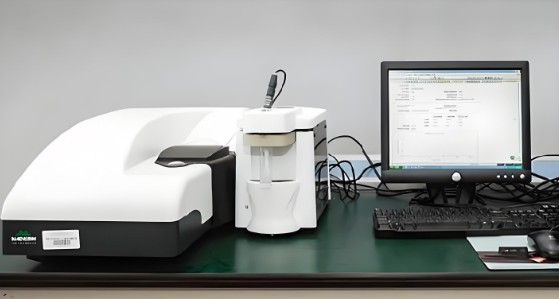
- Fourier transform infrared spectroscopy for oxidation and additive depletion monitoring per ASTM E2412 — the chemical changes in the anti-wear hydraulic oil are tracked by FTIR to detect oxidation by-products, additive depletion, and contamination from water, glycol, or other fluids.
Contamination Control and Cleanliness Testing for Anti-Wear Hydraulic Oil
- Particle count and ISO cleanliness code per ISO 4406 and ASTM D7647 — the number of particles per milliliter in defined size ranges is measured using automatic particle counters, and the oil is assigned an ISO cleanliness code to verify it meets the cleanliness requirements of the hydraulic system components.
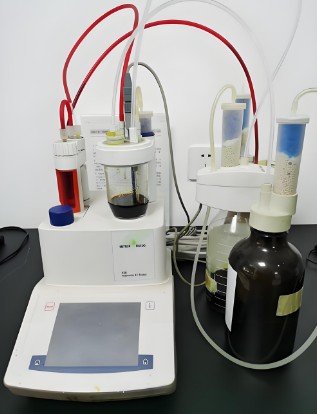
- Water content by Karl Fischer titration per ASTM D6304 and ISO 12937 — the precise water concentration in the anti-wear hydraulic oil is measured at parts-per-million sensitivity, ensuring the oil meets the dryness specification for the hydraulic system and preventing corrosion, cavitation, and additive depletion.
- Elemental analysis by ICP-OES per ASTM D5185 — the concentration of wear metals such as iron, copper, aluminum, and chromium, as well as additive elements like zinc, phosphorus, and calcium, is quantified to monitor component wear and to verify the additive package is intact.
- Membrane patch colorimetry for varnish potential per ASTM D7843 — the color of insoluble contaminants deposited on a membrane patch is measured to assess the varnish formation potential and to recommend appropriate filtration or oil change intervals.
- Insolubles and pentane/toluene insolubles per ASTM D893 — the mass of solid contaminants and oxidation products in the used anti-wear hydraulic oil is measured to diagnose the degree of oil degradation and the source of contamination.
- Ferrous debris and wear particle analysis by analytical ferrography — wear particles are separated from the oil and examined under a microscope to identify the wear mechanism, the affected component, and the severity of the wear condition.
Chemical Safety and Regulatory Compliance for Anti-Wear Hydraulic Oils
- RoHS compliance per IEC 62321 and EU Directive 2011/65/EU — quantitative screening for lead, mercury, cadmium, hexavalent chromium, PBBs, and PBDEs in the hydraulic oil and its additives to ensure the product meets global substance restrictions for the destination market.
- REACH Annex XVII and SVHC screening — targeted analysis of Substances of Very High Concern including specific chlorinated paraffins, organotin stabilizers, and restricted base oil components.
- Heavy metals and toxic element content per ASTM E3061 — ICP-OES analysis quantifies regulated metals in the anti-wear hydraulic oil to verify compliance with environmental and occupational safety regulations.
- Biodegradability and aquatic toxicity testing for environmentally acceptable hydraulic oils per OECD 301 and OECD 202 — the aerobic biodegradability and acute aquatic toxicity of biodegradable hydraulic oils are measured to support environmental certification and eco-label claims.
- Halogen content by combustion ion chromatography per EN 14582 — the total fluorine, chlorine, bromine, and iodine content is measured to support halogen-free declarations and to verify compatibility with recycling and disposal regulations.
- Heavy metals in packaging per EU Directive 94/62/EC — verification that the sum concentration of lead, cadmium, mercury, and hexavalent chromium in the drums, labels, and packaging materials is below the 100 ppm regulatory limit.
Report Recognition and ISO/IEC 17025 Compliance
Every test method described in this anti-wear hydraulic oil testing service is covered by our ISO/IEC 17025 scope of accreditation. Our technical reports and certificates of analysis are accepted by European notified bodies for industrial lubricants, by North American hydraulic system OEMs and plant operators referencing ASTM and DIN standards, and by customs and procurement authorities across the Middle East, Australia, and Asia. Whether you require a complete qualification dossier for a new anti-wear hydraulic oil formulation, a batch release inspection for an export shipment, or a root cause failure analysis of a hydraulic system performance issue, our laboratory provides the measurement accuracy and tribology expertise that the global industrial lubricants industry demands.