Anion Exchange Membrane Testing Service for Global Electrochemical and Water Treatment Industries
As an ISO/IEC 17025 accredited laboratory, we deliver a specialized anion exchange membrane testing service that verifies ion exchange capacity, permselectivity, mechanical strength, chemical stability, and long-term performance of anion exchange membranes used in electrodialysis, fuel cells, water electrolysis, and industrial separation processes. Our anion exchange membrane testing service supports manufacturers and exporters of AEM materials who must demonstrate conformity to ASTM, ISO, EN, and regional electrochemical and water treatment standards across the European Union, North America, East Asia, and the Middle East. Every test is performed under our CNAS-accredited quality system, producing reports accepted by notified bodies, membrane OEMs, and procurement teams worldwide.

Product Samples We Regularly Test in Our Anion Exchange Membrane Testing Service
- Homogeneous anion exchange membranes — with quaternary ammonium, imidazolium, or phosphonium functional groups for electrodialysis and reverse electrodialysis
- Heterogeneous anion exchange membranes — with ion exchange resin particles embedded in a polymer matrix for industrial desalination and wastewater treatment
- Alkaline fuel cell anion exchange membranes — for hydroxide ion conduction in alkaline fuel cells and electrolyzers
- Bipolar membrane anion exchange layers — for acid and base production from salt splitting
- Reinforced and composite anion exchange membranes — with polymer fiber or inorganic filler reinforcement for improved mechanical stability
- Monovalent-selective anion exchange membranes — for selective chloride or nitrate removal from mixed salt solutions
- High-temperature and chemical-resistant anion exchange membranes — for aggressive industrial process streams
Ion Exchange and Electrochemical Performance Testing
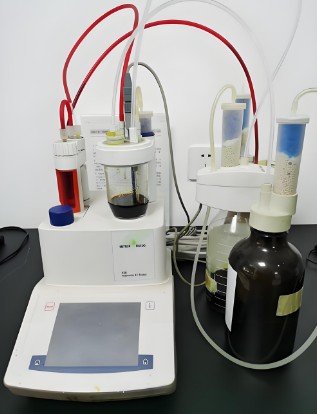
- Ion exchange capacity and water uptake per ASTM D2187 and ISO 11274 — the milliequivalents of exchangeable anions per gram of dry membrane are determined by titration, and the water uptake is measured gravimetrically, providing the fundamental parameters that govern ionic conductivity and dimensional stability of the anion exchange membrane.
- Permselectivity and transport number measurement per internal validated protocol and customer specifications — the membrane is placed between two electrolyte solutions of different concentrations, and the membrane potential is measured to calculate the transport number and permselectivity, verifying the membrane's ability to selectively transport anions while rejecting cations.
- Area resistance and conductivity per ASTM D257 and internal electrochemical impedance spectroscopy methods — the ionic resistance of the anion exchange membrane is measured in a defined electrolyte solution, and the conductivity is calculated to quantify the membrane's ability to conduct ions under operating current densities.
- Current-voltage curve and limiting current density determination — the membrane is tested in an electrodialysis cell and the current-voltage characteristic is recorded to identify the limiting current density and the onset of concentration polarization, providing the data required for stack design and operation.
- Salt permeability and co-ion leakage per internal protocols — the diffusion rate of salt through the membrane and the leakage of co-ions are measured to assess the membrane's selectivity and to predict the current efficiency of the electrodialysis process.
- Water splitting and pH change behavior — the membrane is tested at high current densities to evaluate the tendency for water dissociation and the resulting pH changes at the membrane surface, which can lead to scaling and membrane degradation.
Mechanical and Physical Property Testing of Anion Exchange Membranes
- Tensile strength, elongation at break, and modulus per ISO 527-3 and ASTM D882 — specimens are cut from the anion exchange membrane and pulled to failure to measure the ultimate tensile strength and stretch, ensuring the membrane withstands handling, assembly, and the hydraulic pressures of the electrodialysis stack.
- Tear resistance and puncture strength per ISO 6383-2 and ASTM D2582 — the force required to propagate a tear or to push a probe through the membrane is measured, verifying the membrane resists damage from sharp spacer screens, gaskets, and debris in the process stream.
- Burst strength and pressure resistance per ASTM D3786 and internal protocols — the membrane is subjected to a controlled hydraulic pressure to measure the maximum pressure it can withstand without rupture, ensuring structural integrity under the differential pressures of an operating electrodialysis or fuel cell stack.
- Thickness, basis weight, and dimensional stability per ISO 4593 and ISO 2286-3 — the membrane thickness and mass per unit area are measured, and the dimensional change after immersion in water and electrolyte is recorded to verify the membrane remains dimensionally stable in service.
- Swelling ratio and water content per ISO 62 — the membrane is immersed in water and the percentage increase in dimensions and mass is measured to predict the membrane's behavior in aqueous environments and to ensure compatibility with the electrode spacing in the stack.
- Hardness and flexibility per ISO 48-4 and ASTM D2240 — the surface hardness and flexibility of the anion exchange membrane are measured to confirm the material can be handled, cut, and installed without damage.
Chemical Stability and Durability Testing for Anion Exchange Membranes
- Resistance to alkaline degradation per ASTM D543 and internal accelerated aging protocols — the anion exchange membrane is immersed in hot sodium hydroxide or potassium hydroxide solutions for extended periods, and the change in ion exchange capacity, conductivity, and tensile strength is measured to predict the membrane's service life in alkaline fuel cells and electrolyzers.
- Resistance to acids and oxidative agents per ASTM D543 — the membrane is exposed to sulfuric acid, hydrochloric acid, and oxidizing solutions such as hydrogen peroxide or chlorine to verify chemical compatibility with industrial process streams.
- Hydrolytic stability in hot water per ASTM D570 — the membrane is aged in hot water at elevated temperatures and the retention of ion exchange capacity and mechanical properties is measured to ensure long-term performance in hot water and steam environments.
- Resistance to organic solvents and cleaning agents per ISO 175 — the anion exchange membrane is immersed in common solvents and cleaning chemicals to verify no swelling, dissolution, or degradation occurs during routine cleaning and maintenance.
- Accelerated aging by combined heat and humidity per IEC 60068-2-78 — the membrane is exposed to high temperature and high humidity cycles, and the change in conductivity, selectivity, and mechanical integrity is recorded to predict the membrane's performance under tropical and harsh industrial conditions.
- Long-term stability under continuous current flow per internal protocols — the membrane is mounted in a test cell and subjected to continuous direct current for thousands of hours, and the voltage, resistance, and selectivity are monitored to assess the long-term electrochemical stability of the anion exchange membrane.
Environmental and Regulatory Compliance Testing for Anion Exchange Membranes
- RoHS compliance per IEC 62321 and EU Directive 2011/65/EU — quantitative screening for lead, mercury, cadmium, hexavalent chromium, PBBs, and PBDEs in the polymer matrix, functional groups, and any reinforcement materials to ensure the anion exchange membrane meets global substance restrictions.
- REACH Annex XVII and SVHC screening — targeted analysis of Substances of Very High Concern including specific phthalate plasticizers, organotin stabilizers, and residual monomers that may be present in the membrane formulation.
- Extractables and leachables for potable water and pharmaceutical applications per NSF/ANSI 61 and USP <381> — the membrane is extracted with water and the total organic carbon, specific ions, and identified organic compounds are quantified to verify the anion exchange membrane is safe for drinking water treatment and pharmaceutical purification.
- Heavy metals in packaging per EU Directive 94/62/EC — verification that the sum concentration of lead, cadmium, mercury, and hexavalent chromium in the protective packaging, labels, and core tubes is below the 100 ppm regulatory limit.
- Biocompatibility and cytotoxicity testing for medical and food contact applications per ISO 10993-5 — for anion exchange membranes used in medical devices or food processing, cell culture assays are performed to verify the materials are non-toxic and safe for their intended use.
- Volatile organic compound emission per ISO 16000-3 — chamber testing verifies that the anion exchange membrane does not release harmful VOCs or formaldehyde into the indoor air during storage or use in occupied spaces.
Report Recognition and ISO/IEC 17025 Compliance
Every test method described in this anion exchange membrane testing service is covered by our ISO/IEC 17025 scope of accreditation. Our technical reports are accepted by European notified bodies, by North American electrochemical and water treatment OEMs referencing ASTM and ISO standards, and by customs and procurement authorities across Japan, Korea, and the Gulf region. Whether you require a complete qualification dossier for a new anion exchange membrane product, a batch release inspection for an export shipment, or a root cause failure analysis of a membrane performance issue, our laboratory provides the measurement accuracy and membrane science expertise that the global electrochemical and water treatment industries demand.