Aluminum Phosphide Tablet Testing Service – Accredited Fumigant Quality and Performance Evaluation for Global Markets
Our internationally accredited laboratory provides a specialist aluminum phosphide tablet testing service that supplies pesticide manufacturers, fumigation service companies, grain storage operators, food processing facilities and logistics providers worldwide with the independent, traceable data they need to verify the chemical purity, phosphine release kinetics, physical integrity and safe handling characteristics of their metal‑phosphide fumigant formulations. Every analysis is performed under the rigorous framework of ISO/IEC 17025, and each report carrying the ILAC mark is unconditionally accepted by regulatory authorities, notified bodies and supply‑chain partners in all major economies. The aluminum phosphide tablet testing programme quantifies the active ingredient content, the rate and the completeness of the phosphine gas evolution, the tablet hardness and the resistance to the premature decomposition, ensuring that the fumigant will deliver the lethal concentration of the gas to the target pests while remaining safe to handle, transport and apply according to the FAO/WHO specifications and the national pesticide regulations of the importing countries.
Product Samples We Regularly Subject to Aluminum Phosphide Tablet Testing
Our gas‑chromatography systems, phosphine‑generation apparatus, tablet‑hardness testers and stability‑storage chambers accommodate a wide variety of solid metal‑phosphide fumigant formulations. The following categories represent the most frequently tested items:
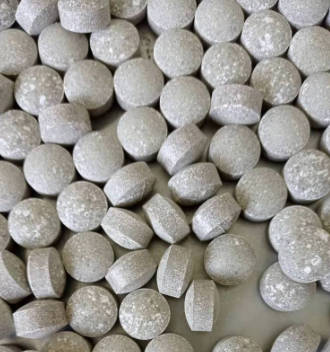
- Aluminum phosphide tablets and pellets – the round, flat‑faced tablets and the spherical pellets that contain aluminum phosphide as the active ingredient, along with the ammonium carbamate or the urea as the reaction moderator and the inert fillers, used for the fumigation of the stored grains, the tobacco, the dried fruits and the empty cargo containers
- Aluminum phosphide sachets and bag‑formulations – the permeable sachets or the bags that enclose a measured quantity of the tablets or the granules, designed for the easy retrieval of the spent residues after the fumigation
- Aluminum phosphide‑magnesium phosphide mixed formulations – the combination products that contain a blend of the aluminum and the magnesium phosphides to accelerate the initial phosphine‑gas release, evaluated for the synergistic rate and the total gas yield
- Aluminum phosphide granules and dust concentrates – the free‑flowing granular or the powdered formulations for the application through the automatic dosing equipment or for the admixture into the grain stream
- Aged and stability‑study samples – the tablets that have been stored at the elevated temperature and the humidity for a defined period, submitted for the verification of the active‑content retention, the hardness and the gas‑evolution rate as part of the shelf‑life determination
- Raw‑material phosphide and the reaction‑moderator chemicals – the technical‑grade aluminum phosphide powder and the ammonium carbamate that are used to formulate the finished tablets, tested for the purity and the particle‑size distribution
Active Ingredient Content, Purity and Chemical Composition – Aluminum Phosphide Tablet Testing According to FAO/WHO Specifications and CIPAC Methods
- Determination of the aluminum phosphide content by the acid‑decomposition and the gas‑chromatographic method according to the CIPAC Handbook Method 291/1 (Aluminum phosphide) and the FAO Specification 46/3: a weighed sample of the ground tablets is reacted with the dilute sulfuric acid in a sealed vessel, and the evolved phosphine gas is collected in a calibrated gas‑collection tube or is absorbed into a suitable scrubbing solution. The quantity of the phosphine is determined by the gas chromatography with a flame‑photometric detector or by the titrimetric method, and the aluminum phosphide content in grams per kilogram or as a percentage of the declared nominal value is reported. This aluminum phosphide tablet testing verifies the potency of the fumigant and is the primary quality‑control parameter for the batch release and the international trade.
- Measurement of the ammonium carbamate or the urea moderator content by the titrimetric or the spectrophotometric method: the reaction‑moderator that controls the rate of the phosphine generation is extracted and quantified, providing the data that the formulator uses to adjust the ratio of the active ingredient to the moderator for the optimum gas‑release profile and the compliance with the regulatory specification.
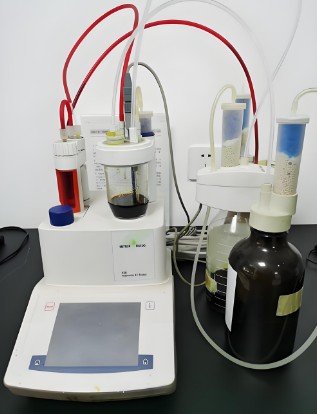
- Determination of the moisture content by the Karl‑Fischer titration or the loss‑on‑drying method: the water content of the tablets is measured, because the moisture accelerates the premature decomposition of the aluminum phosphide during the storage, leading to the loss of the potency and the generation of the flammable and toxic phosphine gas inside the packaging.
- Impurity profiling – the arsenic, the heavy metals and the non‑phosphine‑producing residues: the acid‑digested tablet solution is analysed by the inductively coupled plasma mass spectrometry for the arsenic, the lead, the cadmium and the other toxic metals that are restricted by the FAO/WHO and the European Pesticide Regulation, and the total non‑volatile residue after the complete phosphine evolution is determined gravimetrically, providing the data for the environmental‑risk assessment and the disposal of the spent dust.
Phosphine Gas Evolution Rate, Yield and Completeness – Aluminum Phosphide Tablet Testing According to the FAO/WHO and the Internal Kinetic Methods
- Determination of the phosphine‑gas evolution rate and the total gas yield by the standardised humid‑air exposure method according to the FAO/WHO Manual on the Development and Use of FAO Specifications for Pesticides, Annex D (Method for the determination of the rate of evolution of phosphine) and the internal procedures: a single tablet or a specified mass of the tablets is placed in a reaction flask through which a stream of the humidified air at a controlled temperature – typically 25 °C or 30 °C – and a relative humidity of 75 % to 85 % is passed. The phosphine concentration in the exit gas is measured at the regular intervals by the gas chromatography or the detector‑tube method, and the cumulative mass of the phosphine that has been released as a percentage of the theoretical maximum is plotted against the time, yielding the gas‑release profile. This aluminum phosphide tablet testing provides the essential performance data that the fumigation‑service provider uses to calculate the required dosage, the exposure time and the aeration period for the target commodity and the ambient conditions.
- Measurement of the residual phosphine‑generating capacity of the spent dust after the fumigation: the residue that remains after the tablet has completely reacted is collected and analysed for the un‑decomposed aluminum phosphide, providing the data that the waste‑management operator uses to classify the spent dust as the hazardous or the non‑hazardous waste and to select the appropriate disposal method.
- Influence of the temperature and the relative humidity on the gas‑release kinetics: the phosphine‑evolution test is repeated at the several combinations of the temperature – from 10 °C to 35 °C – and the humidity – from 30 % to 90 % – that are representative of the fumigation conditions in the different climatic zones and the different commodity‑storage environments, and the gas‑release half‑life and the time to the 90 % completion are reported, providing the guidance to the applicator on the correct choice of the formulation for the cold‑weather and the dry‑commodity fumigations.
- Compatibility of the phosphine generation with the packaging and the adjacent materials: the tablet is placed in the contact with the typical fumigation‑tarpaulin, the grain‑kernel and the metal‑storage‑bin materials, and any adverse effect on the gas‑release rate, the corrosion of the metal or the absorption of the phosphine by the commodity is evaluated, ensuring the safe and the effective application of the fumigant.
Tablet Hardness, Friability and Physical Integrity – Aluminum Phosphide Tablet Testing According to the International Pharmacopoeia (adapted) and the Internal Procedures
- Determination of the tablet hardness and the crushing strength by the diametral‑compression method according to the internal procedures based on the European Pharmacopoeia (Ph. Eur. 2.9.8) Resistance to Crushing of Tablets: a single tablet is compressed between two flat, parallel platens, and the force required to fracture the tablet is recorded in newtons or kiloponds. This aluminum phosphide tablet testing verifies that the tablets are sufficiently robust to withstand the mechanical shocks during the transport, the handling and the application without the breakage or the premature exposure of the reactive core to the atmospheric moisture.
- Friability and the resistance to the abrasion according to the internal tumbler‑rotation method based on the Ph. Eur. 2.9.7 (Friability of Uncoated Tablets): a batch of the tablets is rotated in a standardised drum, and the mass loss due to the chipping, the dusting and the fragmentation is measured, providing the data that the manufacturer uses to optimise the compression force and the binder content for the minimum dust‑generation during the packaging and the application.
- Disintegration and the water‑uptake behaviour under the controlled humidity exposure: the tablet is placed in a humidity‑controlled chamber, and the mass gain and the visual cracking or the swelling are monitored, predicting the tendency of the tablet to absorb the moisture from the atmosphere and to initiate the phosphine evolution prematurely.
- Measurement of the tablet dimensions, the mass variation and the content uniformity: the diameter, the thickness and the mass of the individual tablets are measured, and the mean, the standard deviation and the acceptance value for the content uniformity are reported, ensuring the consistency of the dosage form and the accurate metering of the fumigant during the application.
Stability, Packaging Integrity and Safety Testing – Aluminum Phosphide Tablet Testing According to the FAO/WHO and the UN Recommendations on the Transport of Dangerous Goods
- Accelerated storage‑stability and the shelf‑life testing according to the FAO/WHO Guidelines for the Registration of Pesticides and the internal procedures: the sealed commercial‑packaging units are stored at the elevated temperature – typically 35 °C or 45 °C – and a relative humidity of 75 % for a period of 14 days, 30 days and 90 days, and the active‑ingredient content, the tablet hardness, the gas‑release rate and the packaging‑integrity are evaluated at each time point, providing the data for the determination of the guaranteed shelf‑life and the recommended storage conditions.
- Packaging‑integrity and the water‑vapour‑transmission‑rate testing of the sealed containers according to ASTM F1249 (Standard Test Method for Water Vapor Transmission Rate Through Plastic Film and Sheeting Using a Modulated Infrared Sensor) and the internal procedures: the moisture‑barrier performance of the aluminium‑foil‑laminated pouch, the screw‑cap HDPE bottle or the metal canister that houses the tablets is measured, ensuring that the packaging prevents the ingress of the atmospheric moisture that would degrade the fumigant and generate the hazardous phosphine gas inside the container.
- Self‑heating and the thermal‑stability testing by the differential scanning calorimetry and the isothermal micro‑calorimetry: the tablet and its decomposition products are analysed for the onset temperature of the exothermic decomposition and the heat‑flow under the isothermal conditions, providing the safety‑data for the classification of the fumigant as a self‑reactive substance and for the specification of the maximum‑safe transport and storage temperature.
- Phosphine‑gas‑tightness and the fumigator‑safety testing of the application equipment: the complete fumigation‑system – the tablet‑dispenser, the gas‑tight sheet and the monitoring‑port – is assembled and tested for the phosphine‑gas leakage, ensuring the operator safety and the environmental compliance during the field fumigation.
Report Acceptance and Global Regulatory Compliance
All measurements performed within our aluminum phosphide tablet testing programme are executed under the fully accredited scope of our ISO/IEC 17025 quality management system. Each test report that carries the ILAC mark is therefore automatically recognised by regulatory authorities, notified bodies, customs offices and supply‑chain partners in all major economies. For aluminum‑phosphide fumigant manufacturers, grain‑storage operators, food‑processing companies and fumigation‑service providers anywhere in the world, the report constitutes legally robust, internationally accepted evidence that the active‑ingredient content, the phosphine‑gas release profile, the tablet hardness and the physical integrity, the packaging‑suitability and the storage stability of the aluminum phosphide tablet have been determined in accordance with the applicable FAO/WHO, CIPAC, ASTM and customer‑specified methods. The documentation can be directly used to support the pesticide registration, the import‑permit application, the issue of inspection certificates according to EN 10204 or equivalent national standards, and the resolution of commercial and technical disputes concerning the quality, the efficacy and the safety of any aluminum‑phosphide fumigant formulation.