Aluminum Nitride Gasket Inspection for Global Electronics and Thermal Management
As an ISO/IEC 17025 accredited laboratory, we deliver a specialized aluminum nitride gasket inspection service covering thermal conductivity verification, mechanical strength, dielectric integrity, dimensional precision, and chemical purity. Our aluminum nitride gasket inspection program supports manufacturers and exporters supplying power module substrates, laser diode submounts, semiconductor packaging, and high-voltage insulation components to the European Union, North America, East Asia, and the Middle East. Every test is performed under our CNAS-accredited quality system.

Product Samples We Regularly Test Under Our Aluminum Nitride Gasket Inspection Program
- AlN substrates and carrier plates — for IGBT modules, MOSFET bases, and power semiconductor packaging
- Laser diode and LED submounts — precision AlN ceramic plates for optoelectronic thermal management
- AlN gaskets for high-voltage vacuum equipment — insulating spacers in electron beam and ion implantation systems
- RF and microwave AlN window frames — low-loss dielectric windows for communication and radar systems
- AlN heat spreader plates and shims — thermal interface components between chips and heat sinks
- Metallized AlN gaskets — with screen-printed or sputtered Ag, Cu, or Au pads for solder attach
- AlN substrates for thick-film and thin-film circuits — for high-power resistors and hybrid microelectronics
Thermal Performance Verification in Aluminum Nitride Gasket Inspection
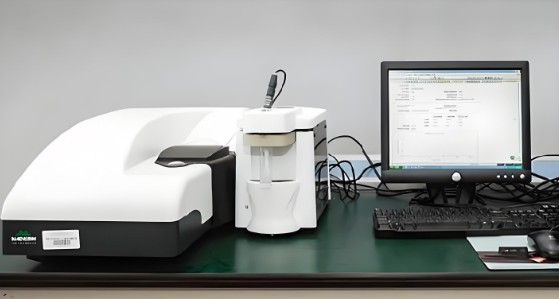
- Thermal conductivity measurement by laser flash method — per ASTM E1461 and ISO 22007-4, thermal diffusivity is measured at 25 °C to 300 °C and combined with density and specific heat to calculate thermal conductivity, verifying the specified 170-200 W/m·K range.
- Specific heat capacity determination — differential scanning calorimetry per ASTM E1269 provides Cp data required for thermal modeling of the AlN gasket under transient loads.
- Coefficient of thermal expansion — thermomechanical analysis per ISO 11359-2 and ASTM E831 from -50 °C to 500 °C, ensuring CTE matching with adjacent silicon and copper components.
- Thermal cycling and thermal shock resistance — cycling between -55 °C and +150 °C per IEC 60068-2-14 and MIL-STD-883, followed by visual and mechanical inspection for microcracks.
Mechanical Strength and Structural Integrity in Aluminum Nitride Gasket Inspection
- Flexural strength by three-point and four-point bending — per ASTM C1161 and ISO 14704, measuring the modulus of rupture on machined AlN bars to confirm the material meets the minimum strength requirement for clamping and thermal stress.
- Vickers hardness and fracture toughness — indentation per ASTM C1327 and ISO 6507-1 provides hardness data and the indentation crack length method estimates fracture toughness.
- Tensile and shear strength of metallized layers — pull-off and peel tests per ASTM D4541 and IPC-TM-650 quantify the adhesion of Ag, Cu, or Au metallization on the AlN gasket surface.
- Compressive strength and creep resistance — uniaxial compression per ASTM C1424 to verify the gasket withstands bolt preload and long-term clamping force.
Dimensional Accuracy and Surface Quality Inspection
- Thickness, length, width, and parallelism measurement — laser micrometer, coordinate measuring machine, and dial indicator per ISO 13385, with typical tolerances within ±0.02 mm.
- Flatness and surface profile by interferometry — per ISO 12781-1, the AlN substrate is scanned to measure bow, warp, and total thickness variation.
- Surface roughness per ISO 4287 — stylus profilometer measurement of Ra and Rz on lapped and polished faces, verifying suitability for direct die attach.
- Edge chipping and visual defect inspection — microscopic examination under D65 lighting for cracks, pits, stains, and metallization defects.
Electrical Insulation and Dielectric Properties in Aluminum Nitride Gasket Inspection
- Dielectric strength and breakdown voltage — per ASTM D149 and IEC 60243-1, applying AC or DC voltage until failure to verify kV/mm ratings.
- Volume and surface resistivity — per ASTM D257 and IEC 60093 at 500 V DC, confirming insulation resistance meets semiconductor requirements.
- Dielectric constant and loss tangent at high frequency — split-post dielectric resonator per IEC 61189-2-721 at 1 MHz to 10 GHz.
- Partial discharge inception voltage — per IEC 60270 to confirm freedom from internal voids under high electric field.
Chemical Composition and Purity Analysis
- Aluminum nitride content and oxygen impurity by inert gas fusion — per ASTM E1409, total oxygen is measured as an indicator of alumina content that degrades thermal conductivity.
- Trace metal impurities by ICP-OES and ICP-MS — after acid digestion per ASTM E3061, quantifying Fe, Si, Ca, Mg, and Y.
- X-ray diffraction phase analysis — per ASTM D3720, identifying secondary phases such as yttrium aluminate grain boundary phases.
- Scanning electron microscopy with EDS — imaging grain size, porosity, and grain boundary phase distribution.
Reliability and Environmental Endurance Testing for Aluminum Nitride Gaskets
- Damp heat and humidity aging — 85 °C/85% RH for 1000 hours per IEC 60068-2-78, monitoring insulation resistance and metallization adhesion.
- Highly accelerated stress test — 130 °C and 85% RH with bias voltage to assess electrochemical migration.
- Thermal shock in liquid media — MIL-STD-883 method 1011, transferring between hot and cold fluids to detect latent cracks.
- Corrosion resistance of metallization — salt spray per ISO 9227 and mixed flowing gas per IEC 60068-2-60 on Ag and Cu-metallized gaskets.
Chemical Safety and Regulatory Compliance
- Heavy metals and restricted substances per EU RoHS and REACH — ICP-OES screening for lead, cadmium, mercury, and hexavalent chromium.
- Outgassing and volatile condensable materials — per ASTM E595 for space and vacuum applications.
- Halogen and sulfur content — combustion ion chromatography per EN 14582 for halogen-free verification.
Report Recognition and ISO/IEC 17025 Compliance
All methods in this aluminum nitride gasket inspection program fall within our ISO/IEC 17025 scope. Reports are accepted by notified bodies in Europe, automotive and aerospace OEMs, and semiconductor equipment manufacturers worldwide.