Aluminum Busbar Testing Service for Global Electrical Distribution Compliance
As an ISO/IEC 17025 accredited laboratory, we deliver a specialized aluminum busbar testing service that verifies electrical conductivity, mechanical strength, dimensional accuracy, surface quality, thermal performance, and long-term reliability of aluminum busbars used in switchgear, power distribution, electric vehicles, battery systems, and industrial electrical equipment. Our aluminum busbar testing service supports manufacturers and exporters who must demonstrate conformity to ASTM B317, ASTM B236, IEC 60468, GB/T 5585, and regional electrical equipment standards across the European Union, North America, East Asia, and the Middle East. Every test is performed under our CNAS-accredited quality system, producing reports accepted by notified bodies, switchgear OEMs, and procurement teams worldwide.

Product Samples We Regularly Test in Our Aluminum Busbar Testing Service
- Bare aluminum busbars and flat bars — 1050, 1060, 1350, 6061, and 6063 alloy grades for electrical distribution and switchgear
- Tin-plated, silver-plated, and nickel-plated aluminum busbars — for enhanced corrosion resistance and lower contact resistance at bolted joints
- Insulated and epoxy-coated aluminum busbars — with powder coating, heat-shrink sleeving, or epoxy encapsulation for electrical isolation
- Laminated and multi-layer aluminum busbar assemblies — with flexible expansion joints, welded seams, and pre-drilled connection holes
- Aluminum busbar profiles for EV battery packs — with integrated current collection, sensing, and thermal management features
- Custom-bent, formed, and punched aluminum busbar components — for OEM integration in power converters, inverters, and distribution boards
- Recycled and secondary aluminum busbar materials — for sustainability verification and secondary use qualification
Electrical Conductivity and Resistance Testing for Aluminum Busbars
- Electrical resistivity and percent IACS conductivity per ASTM B193 and IEC 60468 — the DC volume resistivity of the aluminum busbar is measured at 20 °C and the percent International Annealed Copper Standard conductivity is calculated, verifying the material meets the specified conductivity class for efficient current carrying.
- Resistance uniformity along the busbar length — continuous resistance monitoring detects local variations in cross-section, alloy composition, or internal defects that would cause hot spots and reduced current-carrying capacity.
- Contact resistance at bolted and welded joints per ASTM B539 and customer protocols — the electrical resistance across bolted lap joints, welded connections, and terminal interfaces is measured to ensure reliable low-resistance connections in the assembled busbar system.
- Current-carrying capacity and temperature rise testing per IEC 60439 and ASTM B317 — the aluminum busbar is energized at its rated current and the temperature rise is monitored to verify the conductor does not overheat under continuous load, accounting for the higher resistivity of aluminum compared to copper.
- High-frequency AC resistance and skin effect evaluation per internal protocols — for busbars used in high-frequency power converters and inverters, the AC resistance is measured at the operating frequency to characterize the skin effect and to verify the busbar design minimizes high-frequency losses.
- Short-circuit withstand and thermal stability testing per IEC 61439 — the busbar is subjected to a defined short-circuit current pulse and the temperature rise, mechanical deformation, and electrical integrity are evaluated to verify the conductor withstands fault conditions without failure.
Mechanical and Physical Property Testing for Aluminum Busbars
- Tensile strength, yield strength, and elongation per ASTM B557 and ISO 6892-1 — the aluminum busbar material is pulled to failure to measure the ultimate tensile strength, proof stress, and percentage elongation, ensuring the conductor withstands installation stress, bending, and short-circuit electromagnetic forces.
- Hardness by Brinell and Vickers methods per ISO 6506-1 and ISO 6507-1 — the hardness of the busbar surface and cross-section is measured to verify the specified temper and to detect any work hardening or softening from the forming process.
- Bend and wrap testing per ASTM B236 and customer protocols — the aluminum busbar is bent around a defined mandrel to evaluate its ductility and to verify the material can be formed into the required shapes without cracking.
- Dimensional verification and tolerance measurement per ISO 2768 and GB/T 5585 — laser micrometers and coordinate measuring machines verify the busbar width, thickness, length, hole positions, and bend angles, ensuring conformance to the specified dimensional tolerances.
- Surface roughness and finish evaluation per ISO 4287 — stylus profilometry quantifies the Ra and Rz values of the busbar surface to verify the specified finish for low contact resistance and coating adhesion.
- Flexural and structural strength of busbar assemblies per ASTM D790 — for laminated and insulated busbar systems, the bending stiffness and structural strength are measured to ensure the assembly withstands mounting and short-circuit forces.
Surface Coating and Corrosion Resistance Testing for Aluminum Busbars
- Tin, silver, and nickel plating thickness measurement per ASTM B487 and ISO 2178 — the plating thickness on the contact surfaces of the aluminum busbar is measured by X-ray fluorescence or coulometric methods, verifying the specified coating for low contact resistance and corrosion protection.
- Coating adhesion and bend resistance per ASTM B571 — the plated busbar is bent and the coating is inspected for cracking, flaking, or delamination, ensuring the plating remains intact during forming and installation.
- Neutral salt spray and cyclic corrosion testing per ISO 9227 and ASTM B117 — the complete aluminum busbar with its protective coating is exposed to salt fog for defined durations to evaluate pitting, white rust, and coating degradation in marine and industrial environments.
- Contact resistance stability after corrosion exposure per ASTM B539 — the bolted joint contact resistance is remeasured after salt spray and humidity exposure to ensure the connection maintains low resistance over the service life.
- Insulation resistance and dielectric strength of insulated busbars per ASTM D257 and IEC 60243-1 — for epoxy-coated or sleeved aluminum busbars, the insulation resistance and the voltage withstand capability are measured to verify electrical isolation between phases and from ground.
- Passivation and surface treatment verification per ASTM A967 — for bare aluminum busbars with chromate or non-chromate passivation, the surface treatment quality is verified to ensure corrosion protection and paint adhesion.
Thermal Performance and Fire Resistance Testing for Aluminum Busbars
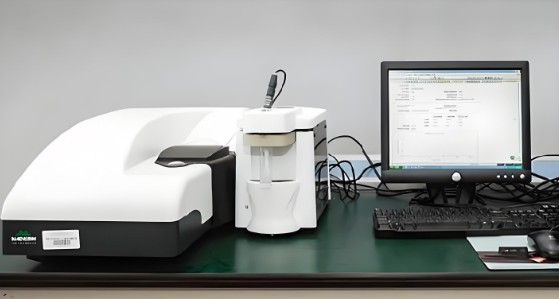
- Thermal conductivity by laser flash method per ASTM E1461 and ISO 22007-4 — the thermal diffusivity of the aluminum busbar material is measured and the thermal conductivity is calculated, verifying the conductor's heat dissipation capability for thermal management in high-current applications.
- Coefficient of thermal expansion per ASTM E228 — the linear thermal expansion of the aluminum busbar is measured to verify compatibility with adjacent copper, steel, and insulating components and to predict thermal stress at joints.
- Thermal cycling and thermal shock per IEC 60068-2-14 — the busbar assembly is rapidly cycled between hot and cold extremes to verify the material, plating, and insulation withstand thermal expansion and contraction without cracking or loss of electrical performance.
- Long-term thermal aging per ASTM D573 — the aluminum busbar is aged at elevated temperatures and the retained electrical conductivity, mechanical strength, and coating adhesion are measured to predict the thermal endurance and service life.
- Fire resistance of insulated busbar systems per IEC 60331 and customer protocols — for busbars used in emergency power and life safety circuits, the insulation system is tested for circuit integrity under fire conditions to ensure continued operation during a building fire.
- Flame retardancy of insulation and coatings per UL 94 and IEC 60695-11-10 — the insulating materials on the aluminum busbar are tested for flammability to verify they do not propagate fire in switchgear and distribution equipment.
Chemical Safety and Restricted Substance Compliance for Aluminum Busbars
- RoHS compliance per IEC 62321 and EU Directive 2011/65/EU — quantitative screening for lead, mercury, cadmium, hexavalent chromium, PBBs, and PBDEs in the aluminum alloy, plating, insulation, and any adhesives or coatings.
- REACH Annex XVII and SVHC screening — targeted analysis of Substances of Very High Concern including specific phthalate plasticizers and organotin stabilizers in polymeric insulation and coating materials.
- Heavy metals in packaging per EU Directive 94/62/EC — verification that lead, cadmium, mercury, and hexavalent chromium sum concentration in the packaging and labels is below the 100 ppm regulatory limit.
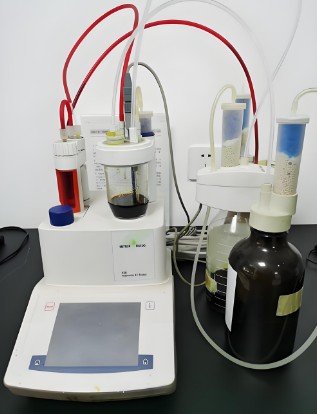
- Surface cleanliness and residual oil testing per ISO 787-2 — the busbar surface is extracted with solvent and the residue is weighed to ensure the conductor is clean and ready for plating, welding, or insulation application.
- Halogen content by combustion ion chromatography per EN 14582 — the total fluorine, chlorine, bromine, and iodine content is measured in the insulation and coatings to support halogen-free declarations for environmentally conscious electrical equipment.
Report Recognition and ISO/IEC 17025 Compliance
Every test method described in this aluminum busbar testing service is covered by our ISO/IEC 17025 scope of accreditation. Our technical reports and certificates of analysis are accepted by European notified bodies for electrical equipment, by North American switchgear and power electronics OEMs referencing ASTM and IEC standards, and by customs and procurement authorities across the Middle East, Australia, and Asia. Whether you require a complete qualification dossier for a new aluminum busbar product, a batch release inspection for an export shipment, or a root cause failure analysis of a conductor or connection performance issue, our laboratory provides the measurement accuracy and electrical distribution expertise that the global power equipment industry demands.