Adhesive Testing Service – Accredited Bond Strength and Durability Evaluation for Global Markets
Our internationally accredited laboratory delivers a comprehensive adhesive testing service that provides manufacturers, bonding‑system suppliers, automotive assemblers, construction‑product producers and electronics companies around the world with the independent, traceable data they need to validate the mechanical performance and long‑term durability of bonded joints. Every test is performed within the rigorous framework of ISO/IEC 17025, and each report carrying the ILAC mark is unconditionally accepted by regulatory authorities, notified bodies and supply‑chain partners in all major economies. This adhesive testing service covers the full spectrum of loading modes – tension, shear, peel and cleavage – and quantifies the force, stress, fracture energy and failure mode of the bond. For an automotive OEM qualifying a crash‑durable structural adhesive, a converter of pressure‑sensitive tapes exporting to multiple continents, or a manufacturer of wind‑turbine blades requiring certification to international standards, these measurements provide the legally robust foundation for CE marking, type‑examination and the issue of inspection certificates according to EN 10204 or equivalent national standards.
Product Samples We Regularly Subject to Adhesive Testing
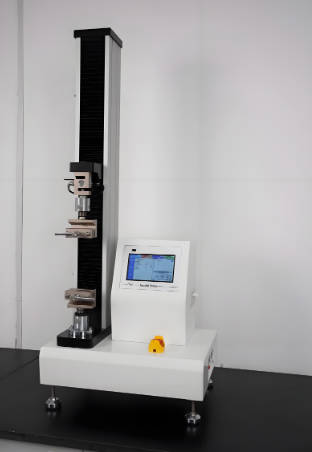
The servo‑hydraulic test frames, environmental chambers and specimen‑preparation tools in our facility accommodate everything from small single‑lap‑shear coupons to full‑scale bonded assemblies. The following categories represent the most frequently tested items:
- Structural adhesives and metal‑bonding systems – single‑component heat‑cure epoxies, two‑component acrylics and polyurethanes, and toughened adhesives for steel, aluminium and galvanised substrates
- Plastic and composite bonded joints – bonded polypropylene, polyamide, carbon‑fibre‑reinforced polymer and glass‑fibre‑reinforced polymer specimens, including plasma‑ or primer‑treated surfaces
- Pressure‑sensitive adhesive tapes and films – double‑sided foam tapes, transfer tapes, masking tapes, duct tapes and clear mounting tapes for indoor and outdoor use
- Labels, decals and graphic films – self‑adhesive paper and film labels, in‑mould labels and promotional stickers for global consumer‑goods packaging
- Laminates and multilayer composites – flexible packaging laminates, photovoltaic back‑sheets and automotive interior laminates
- Construction and assembly adhesives – cartridge‑dispensed polyurethane and MS‑polymer adhesives for timber, concrete, ceramic and metal, including anchors and dowel‑bonding mortars
- Sealants and elastic bond lines – silicone, polyurethane and hybrid sealants for façades, insulating glass units and sanitary applications
- Wood adhesives and glued timber joints – urea‑formaldehyde, melamine‑urea‑formaldehyde, phenolic and one‑component polyurethane adhesives for load‑bearing and non‑load‑bearing timber structures
Adhesive Tensile Shear Strength Testing – Lap‑Shear Evaluation According to ISO 4587 and ASTM D1002
- Determination of tensile lap‑shear strength of rigid‑to‑rigid bonded assemblies according to ISO 4587 and ASTM D1002: a single‑overlap joint specimen prepared from two rigid adherends – typically aluminium, steel, composite or plastic – is loaded in tension at a constant test speed. The shear stress at failure is calculated from the maximum force and the bonded area, and the type of failure – cohesive within the adhesive, adhesive at the interface, or substrate failure – is visually estimated and reported. This is the most frequently requested adhesive testing service for industrial bonding applications worldwide and directly supports the qualification of adhesives for structural steelwork and transport vehicles.
- Shear strength of bonded plastic and composite joints according to ASTM D3163 and internal procedures based on ISO 4587: the standard lap‑shear method is adapted for flexible and anisotropic adherends, with special attention to the alignment of the reinforcement direction. The shear strength and the fracture path through the laminate or the adhesive layer are reported.
- Shear stress‑strain behaviour and stiffness of the bond line using extensometry: a non‑contact video extensometer or a clip‑on gauge measures the relative displacement of the adherends during the lap‑shear test. The shear modulus of the adhesive and the elastic limit of the joint are calculated and included in the report, enabling the finite‑element analyst to model the joint with the correct constitutive data.
- Temperature‑ and rate‑dependent shear strength: the lap‑shear test is performed inside a thermal chamber at temperatures from -40 °C to +150 °C, and at test speeds from 0.5 mm/min to 500 mm/min. The influence of temperature and loading rate on the failure load and the failure mode is mapped, giving design engineers the envelope of safe operating conditions for bonded components.
Peel Strength Testing – Floating‑Roller, T‑Peel and 180‑Degree Peel According to ISO 8510-1, ISO 11339 and ASTM D3330
- Floating‑roller peel resistance of adhesives according to ISO 4578 and ISO 8510-1: a flexible adherend is peeled from a rigid one at a constant angle maintained by a floating‑roller fixture. The steady‑state peel force per unit width is reported in newtons per millimetre. This test is the standard method for evaluating the peel performance of structural adhesives on metal skins.
- T‑peel test for flexible‑to‑flexible bonded assemblies according to ISO 11339: two flexible strips bonded face‑to‑face are pulled apart in a T‑configuration, and the peel force is recorded. The test simulates the loading on a flexible packaging seal, a textile laminate or a shoe‑sole bond.
- 180‑degree peel test for pressure‑sensitive adhesive tapes and films according to ASTM D3330: the tape is applied to a standard stainless‑steel panel with a controlled roller, conditioned for a defined dwell time, and then peeled back upon itself at 180° and a constant speed of 300 mm/min. The average peel adhesion and the pattern of any adhesive transfer or jerky slip‑stick behaviour are reported. This adhesive testing service is the primary quality‑control tool for manufacturers of mounting tapes and label converters serving global markets.
- 90‑degree and variable‑angle peel for specific design geometries: using a motorised sliding‑stage peel fixture, the peel angle can be set to any value between 30° and 180° to replicate the actual loading on a bonded bracket or an automotive trim strip. The peel force as a function of angle is measured, and the data are fed into the design validation of the joint.
- Loop‑tack and quick‑stick measurement for pressure‑sensitive adhesives: a loop of tape is brought into contact with a substrate and immediately withdrawn without a dwell period. The maximum force recorded during debonding is reported as the loop tack, simulating the initial grab of a label or a tape on a production line.
Tensile Bond Strength, Pull‑Off and Cleavage Testing – Through‑Thickness and Butt‑Joint Evaluation
- Determination of the tensile strength of butt joints according to ISO 6922: two cylindrical adherends are bonded end‑to‑end, and the assembly is pulled in pure tension until failure. The tensile strength of the bond and the fracture surface are reported.
- Pull‑off adhesion of coatings, sealants and repair mortars according to ISO 4624 and ASTM D4541: a dolly is glued to the surface of the cured adhesive or the coating, and a portable pull‑off tester applies a tensile force perpendicular to the surface until detachment occurs. The pull‑off strength in megapascals and the nature of the fracture are recorded.
- Cleavage strength under wedge impact according to ISO 11343: a wedge is driven into the bond line of a lap‑joint specimen at high speed, and the energy required to propagate the crack is measured. The test characterises the crash resistance of toughened structural adhesives and is specified by automotive OEMs globally.
- Bond strength of wood adhesives in shear by compressive loading according to EN 205 and EN 302-1: a small lap‑shear specimen cut from a bonded beech or spruce joint is loaded in compression to shear the glue line. The shear strength and the percentage of wood failure are determined and compared with the minimum values required for the durability class.
Durability, Ageing and Fatigue – Adhesive Testing After Environmental Exposure
- Residual strength after exposure to heat, humidity and water immersion: bonded specimens are conditioned in a climatic chamber at elevated temperature and humidity – for example, 40 °C and 95 % relative humidity – or immersed in water at 23 °C or boiling water for prescribed periods. The lap‑shear, peel or tensile strength is then measured and compared with the unaged value. The retention factor is reported.
- Strength after salt‑spray exposure and cyclic corrosion testing: specimens are exposed to a neutral salt spray according to ISO 9227 or to a cyclic corrosion test before the mechanical test. This adhesive testing service is mandatory for adhesives used in automotive under‑bonnet and exterior applications and for bonded aluminium profiles in architectural façades.
- Creep rupture and static load resistance of adhesive bonds: a constant shear load – typically a percentage of the short‑term failure load – is applied to a lap‑joint specimen for 1 000 hours or longer. The time to rupture or the accumulated creep displacement is recorded, and the results are used to determine the safe working stress for a bonded joint that must support a permanent load.
- Fatigue strength under cyclic loading according to ISO 9664: lap‑shear or butt‑joint specimens are subjected to a sinusoidal tensile‑tensile or tensile‑shear load at a defined frequency and load ratio. The number of cycles to failure is recorded at several load levels, and an S‑N curve is constructed.
- Bond durability after UV radiation and artificial weathering: transparent and semi‑transparent adhesive joints are exposed to xenon‑arc or fluorescent‑UV radiation combined with moisture cycles according to ISO 4892-2. The change in appearance, the loss of adhesion and the reduction in mechanical strength are quantified.
Report Acceptance and Global Regulatory Compliance
All measurements performed within our adhesive testing service are executed under the fully accredited scope of our ISO/IEC 17025 quality management system. Each test report that carries the ILAC mark is therefore automatically recognised by regulatory authorities, notified bodies, customs offices and supply‑chain partners in all major economies. For bonding‑system suppliers, adhesive importers, construction‑product manufacturers and automotive component producers anywhere in the world, the report constitutes legally robust, internationally accepted evidence that the bonded joint meets the strength and durability requirements of the applicable ISO, ASTM, EN and customer specifications. The documentation can be directly used to support CE marking, FDA pre‑market notification, the issue of inspection certificates according to EN 10204 or equivalent national standards, and the resolution of commercial and technical disputes concerning the performance of adhesives and bonded products.