
Adhesive Backed Graphite Corrugated Tape Testing Service – Accredited Performance, Durability and Safety Evaluation for Global Markets
Our internationally accredited laboratory delivers a specialist adhesive backed graphite corrugated tape detection service that provides manufacturers of gasket materials, fuel‑cell components, heat‑management solutions, electronic thermal‑interface products and industrial sealing systems worldwide with the independent, traceable data they need to verify the mechanical resilience, thermal conductivity, electrical characteristics, adhesive bond strength and long‑term environmental stability of their flexible graphite‑based sealing tapes. Every test is conducted under the rigorous framework of ISO/IEC 17025, and each report bearing the ILAC mark is unconditionally accepted by regulatory authorities, notified bodies and supply‑chain partners in all major economies. The adhesive backed graphite corrugated tape detection programme subjects the product to a complete suite of physical, mechanical, thermal, electrical and chemical evaluations, quantifying the compressibility and recovery, the tensile strength, the thermal conductivity and the electrical resistivity, the peel adhesion of the pressure‑sensitive backing, the resistance to high‑temperature oxidation and the compatibility with the common automotive and industrial fluids. For a gasket converter certifying a new graphite‑based sealing solution for the electric‑vehicle battery pack, a fuel‑cell manufacturer qualifying the bipolar‑plate sealing material, or an importer verifying the consistency of a batch of the thermal‑interface tape, this service provides the legally robust, defensible data that underpin product certification, warranty validation and compliance with the relevant ASTM, ISO, EN and customer‑specified standards.
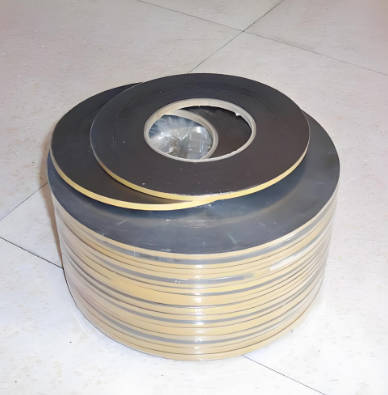
Product Samples We Regularly Subject to Adhesive Backed Graphite Corrugated Tape Detection
The compression‑set fixtures, universal tensile testers, laser‑flash thermal‑conductivity analysers, four‑point‑probe resistivity meters, environmental‑ageing ovens and chemical‑immersion baths in our facility accommodate a broad variety of flexible graphite tapes and their finished laminated forms. The following categories represent the most frequently tested items:
- Plain and corrugated flexible graphite foil tapes – the expanded‑graphite sheets that are embossed or corrugated to provide the conformability and the resilience, used as the gasket materials for the high‑temperature flanges, the exhaust‑system joints and the valve‑stem packings
- Self‑adhesive graphite tapes with a pressure‑sensitive adhesive backing – the tapes that are lined with an acrylic, a silicone or a rubber‑based adhesive for the easy, one‑step positioning and the fixture in the assembly, evaluated for the peel adhesion, the shear‑holding power and the adhesive‑transfer resistance at the elevated temperatures
- Graphite‑filled composite corrugated tapes – the products that blend the expanded graphite with the aramid, the carbon or the glass‑fibre reinforcement to improve the tensile strength and the blow‑out resistance, while retaining the excellent thermal and the chemical stability
- Multi‑layer graphite‑and‑adhesive laminates – the constructions that combine a graphite‑foil core, a polymeric adhesive layer and a release‑liner, designed for the automated die‑cutting and the robotic placement in the high‑volume manufacturing
- Graphite tapes with a protective top‑coating or a surface treatment – the products that are coated with a thin layer of a polymer, a metal or a ceramic to modify the surface‑energy, the electrical conductivity or the oxidation resistance
- Aged and field‑retrieved graphite tape specimens – the samples that have been subjected to the thermal cycling, the chemical exposure or the long‑term storage, submitted for the residual‑property assessment and the remaining‑life prediction
Mechanical and Physical Properties – Adhesive Backed Graphite Corrugated Tape Detection According to ASTM F36, ASTM D638 and ISO 1856
- Determination of the compressibility and the recovery by the platen‑compression method according to ASTM F36 (Standard Test Method for Compressibility and Recovery of Gasket Materials) and the internal procedures: the graphite tape specimen is placed between two rigid, parallel platens and subjected to a specified compressive stress – typically 35 MPa or 50 MPa – and the thickness under the load and after the removal of the load is measured. The compressibility and the recovery, expressed as a percentage of the original thickness, are reported. This adhesive backed graphite corrugated tape detection quantifies the ability of the material to conform to the flange imperfections and to maintain the seal under the fluctuating bolt‑load, which is the primary functional requirement for any gasket product.
- Tensile strength, the elongation at break and the Young's modulus according to ASTM D638 (Standard Test Method for Tensile Properties of Plastics) and the internal adaptations for the flexible, thin materials: a strip specimen is gripped between the non‑slip jaws and pulled at a constant crosshead speed until the fracture. The maximum force, the elongation and the modulus are reported for both the machine direction and the transverse direction, providing the data that the converter uses to guarantee the structural integrity of the tape during the die‑cutting, the handling and the installation.
- Flexibility and the bending‑crack resistance at the low and the elevated temperatures according to ISO 1856 (Flexible cellular polymeric materials – Determination of compression set) and the internal mandrel‑bend procedures: the tape is bent around a mandrel of a specified diameter at -20 °C and at the maximum service temperature, and the surface is inspected for the cracking, the flaking or the adhesive‑debonding, ensuring that the material remains conformable across the full operating‑temperature range of the application.
- Measurement of the thickness, the mass per unit area and the density according to the internal procedures: the thickness is measured by a calibrated micrometre under a defined contact pressure, and the grammage and the density are reported, providing the fundamental quality‑control parameters for the incoming‑goods inspection.
- Creep‑relaxation and the stress‑retention behaviour under the sustained compressive load according to ASTM F38 (Standard Test Methods for Creep Relaxation of a Gasket Material) and the internal procedures: the graphite tape is compressed to a defined initial stress, and the relaxation of the stress over a period of up to 1 000 hours at the elevated temperature is recorded, providing the data that the flange‑design engineer uses to calculate the residual bolt‑load and to schedule the re‑tightening interval.
Thermal, Electrical and Chemical Resistance – Adhesive Backed Graphite Corrugated Tape Detection According to ASTM E1461, ASTM D257 and ISO 175
- Determination of the thermal conductivity and the thermal diffusivity by the laser‑flash method according to ASTM E1461 (Standard Test Method for Thermal Diffusivity by the Flash Method) and ISO 22007‑4: a thin, parallel‑sided specimen of the graphite tape is irradiated on the front face by a short‑pulse laser, and the temperature‑rise curve on the rear face is recorded. The thermal diffusivity, the specific heat and the thermal conductivity in watts per metre‑kelvin are calculated and reported, providing the data that the thermal‑management engineer uses to predict the heat‑transfer performance of the graphite‑tape interface in the electric‑vehicle battery pack or the power‑electronics module. This adhesive backed graphite corrugated tape detection is mandatory for the qualification of the thermal‑interface materials.
- Measurement of the volume resistivity and the surface resistivity according to ASTM D257 (Standard Test Methods for DC Resistance or Conductance of Insulating Materials) and the internal procedures: the graphite tape is placed in a guarded‑electrode test fixture, and a defined direct‑current voltage is applied. The volume resistivity in ohm‑metres and the surface resistivity in ohms per square are calculated, providing the data that the designer uses to select the tape for the electrically conductive or the static‑dissipative applications, such as the grounding of the fuel‑cell stack components.
- Resistance to the oxidation at the elevated temperatures according to ASTM D6240 (Standard Test Method for Weight Loss of a Gasket Material at High Temperature) and the internal gravimetric procedures: the specimen is heated in an air‑circulating oven at a specified temperature – typically 300 °C, 400 °C or 500 °C – for a defined period, and the mass loss and the retained tensile strength are measured, quantifying the thermal‑oxidative stability and defining the maximum service temperature of the graphite tape in the air‑containing environments.
- Chemical‑resistance immersion test for the compatibility with the engine coolants, the oils, the fuels and the fuel‑cell fluids according to ISO 175 (Plastics – Methods of test for the determination of the effects of immersion in liquid chemicals) and the internal procedures: the specimen is immersed in the test fluid at the maximum rated service temperature for up to 168 hours, and the change in the mass, the dimensions and the mechanical properties is reported, ensuring that the graphite tape will not degrade, swell or lose its sealing capability in the intended chemical environment.
- Measurement of the linear thermal expansion coefficient by the thermomechanical analysis according to ISO 11359‑2 (Plastics – Thermomechanical analysis – Determination of the coefficient of linear thermal expansion): the dimensional change of the graphite tape with the temperature is recorded, and the CTE in parts per million per kelvin is reported, providing the data that the engineer uses to calculate the differential‑expansion stresses in the multi‑material assembly.
Adhesion, Cohesion and Surface Properties – Adhesive Backed Graphite Corrugated Tape Detection According to ASTM D3330, ASTM D1000 and ISO 29862
- Determination of the peel adhesion of the pressure‑sensitive adhesive backing by the 180‑degree peel test according to ASTM D3330 (Standard Test Method for Peel Adhesion of Pressure‑Sensitive Tape) and ISO 29862 (Self adhesive tapes – Determination of peel adhesion properties): the graphite tape is applied to a standardised stainless‑steel or a glass panel with a controlled roller, conditioned for a defined dwell time, and then peeled back upon itself at 180° and a constant speed. The average peel force per unit width in newtons per millimetre is reported, and the failure mode – the adhesive‑transfer, the cohesive‑splitting or the clean‑removal – is documented. This adhesive backed graphite corrugated tape detection verifies that the adhesive provides a reliable, secure bond to the intended substrate and that the tape can be positioned and the liner removed without the pre‑adhesion or the tearing.
- Static shear‑holding power and the resistance to the creep under a constant load according to ASTM D3654 (Standard Test Methods for Shear Adhesion of Pressure‑Sensitive Tapes) and the internal procedures: a defined area of the tape is adhered to a vertical stainless‑steel panel, and a static mass is suspended from the free end. The time to the failure or the displacement after a specified period is recorded, quantifying the ability of the adhesive to withstand the sustained shear loads that can occur during the assembly and the service life.
- Loop‑tack and the quick‑stick measurement according to ASTM D6195 (Standard Test Method for Loop Tack) and the internal procedures: a loop of the graphite tape is brought into contact with a substrate and immediately withdrawn without a dwell period, and the maximum force recorded during the debonding is reported, providing the rapid, comparative measure of the initial grab of the adhesive.
- Liner‑release force and the unwind‑tension measurement according to ASTM D1000 (Standard Test Methods for Pressure‑Sensitive Adhesive‑Coated Tapes Used for Electrical and Electronic Applications) and the internal procedures: the force required to peel the release‑liner from the adhesive layer is measured at a controlled speed, ensuring that the liner can be removed smoothly and without the excessive force that could deform or tear the graphite core.
- Surface‑energy and the wettability assessment of the graphite tape and the substrate by the contact‑angle goniometry according to ASTM D7490 (Standard Test Method for Measurement of the Surface Tension of a Solid Coating, Substrate or Pigment Using the Contact Angle Goniometer): the static and the dynamic contact angles of the water and the diiodomethane on the graphite surface are measured, and the surface‑free‑energy components are calculated, providing the data that the formulator uses to optimise the adhesion of the subsequent coatings or the potting compounds to the graphite tape.
Report Acceptance and Global Regulatory Compliance
All measurements performed within our adhesive backed graphite corrugated tape detection programme are executed under the fully accredited scope of our ISO/IEC 17025 quality management system. Each test report that carries the ILAC mark is therefore automatically recognised by regulatory authorities, notified bodies, customs offices and supply‑chain partners in all major economies. For flexible‑graphite‑tape manufacturers, gasket converters, fuel‑cell and electric‑vehicle system integrators and thermal‑management‑solution providers anywhere in the world, the report constitutes legally robust, internationally accepted evidence that the compressibility and the recovery, the tensile strength, the thermal and the electrical conductivity, the adhesive peel and the shear strength, and the thermal‑oxidative and the chemical resistance of the adhesive backed graphite corrugated tape have been determined in accordance with the applicable ASTM, ISO, EN and customer‑specified methods. The documentation can be directly used to support CE marking, the issue of inspection certificates according to EN 10204 or equivalent national standards, the compilation of the technical file for the type‑examination, and the resolution of commercial and technical disputes concerning the performance and the long‑term reliability of any adhesive‑backed graphite sealing or thermal‑interface product.




